€
2250
€
2250
€
Available
Available
Available
Dimensions
Height: 67 x Width: 93 x Depth: 93 cm - Height: 26 3/8 x Width: 36 5/8 x Depth: 36 5/8 inches
Worldwide delivery
These transport prices are an indication and might change due to circumstances.
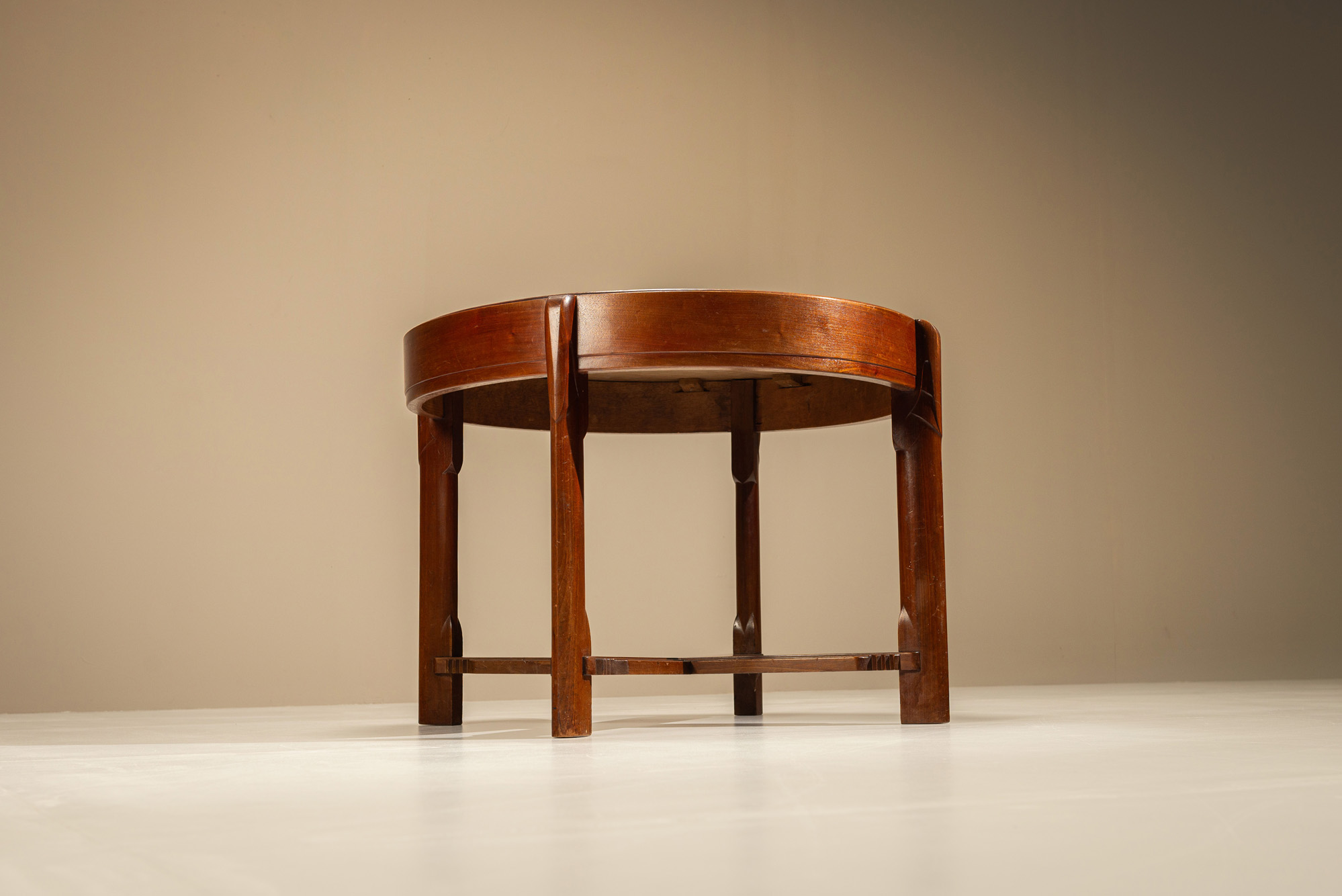
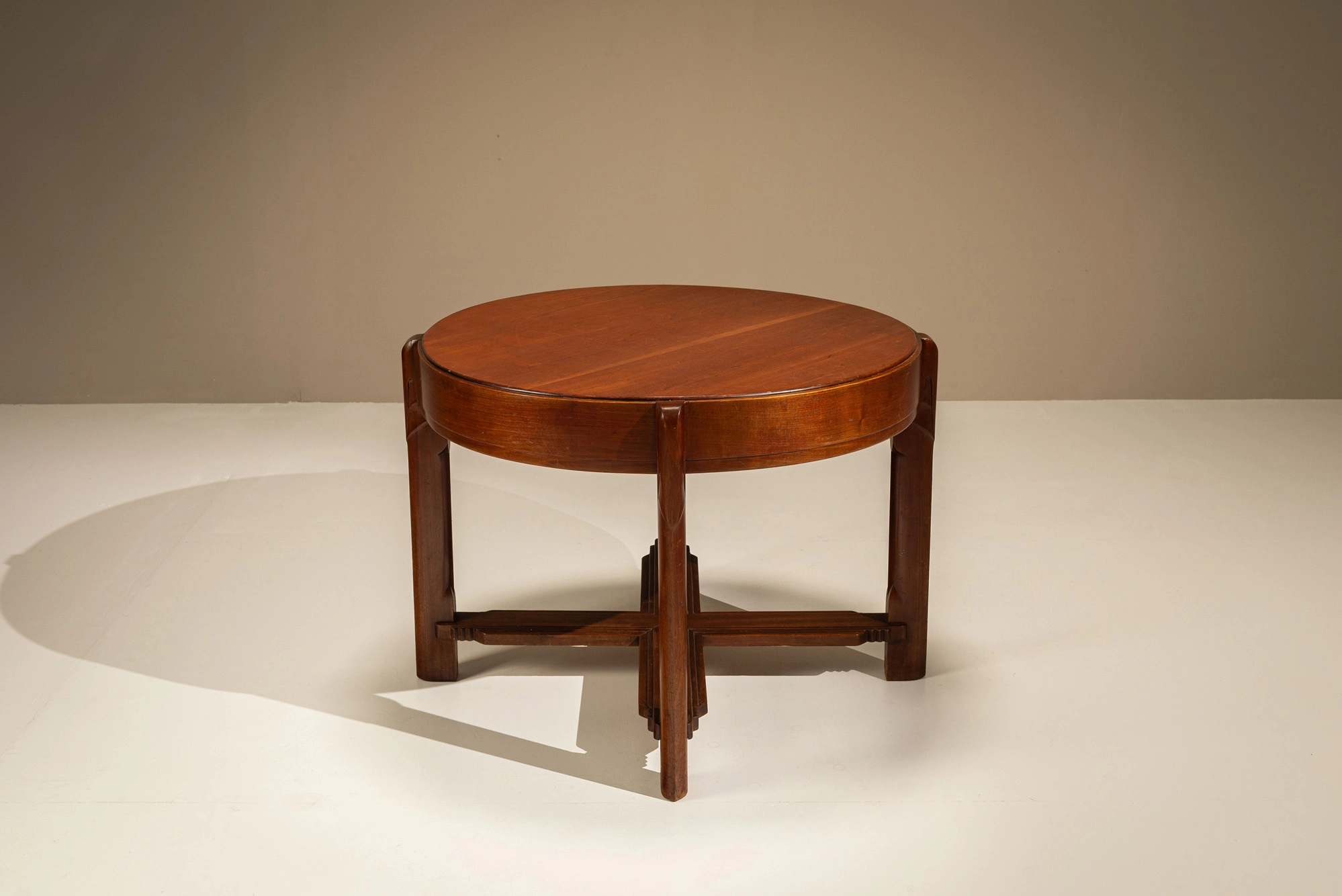
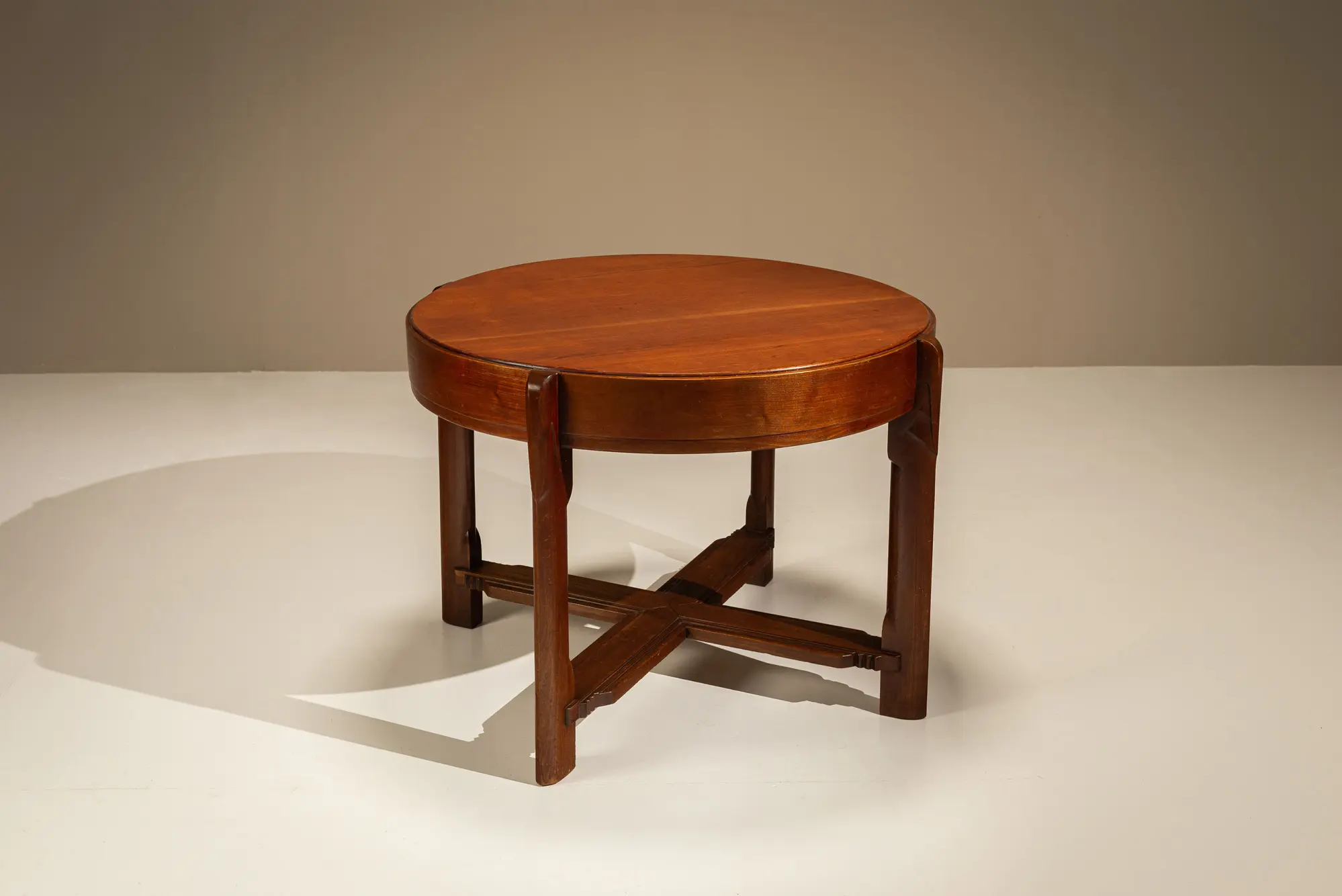
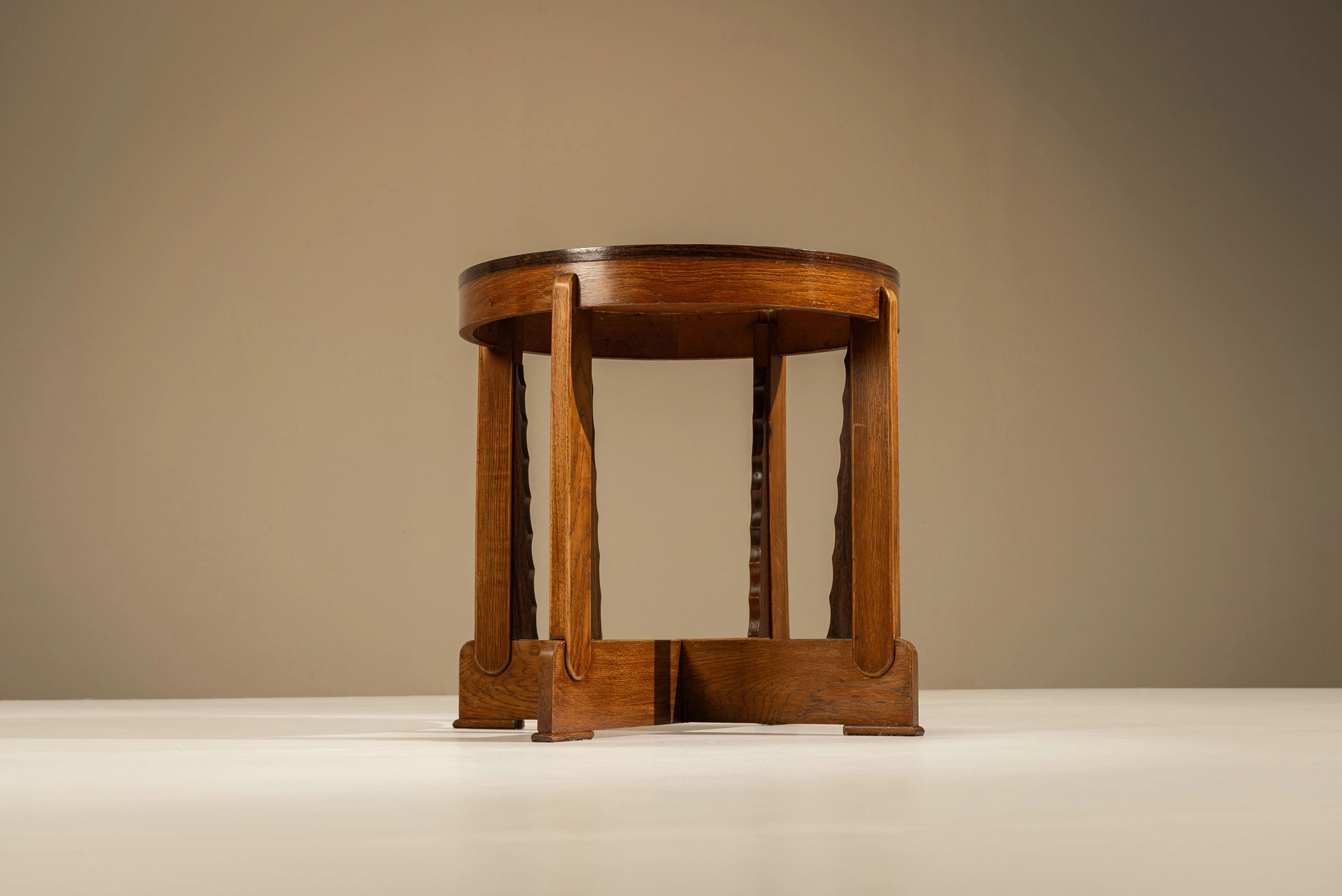
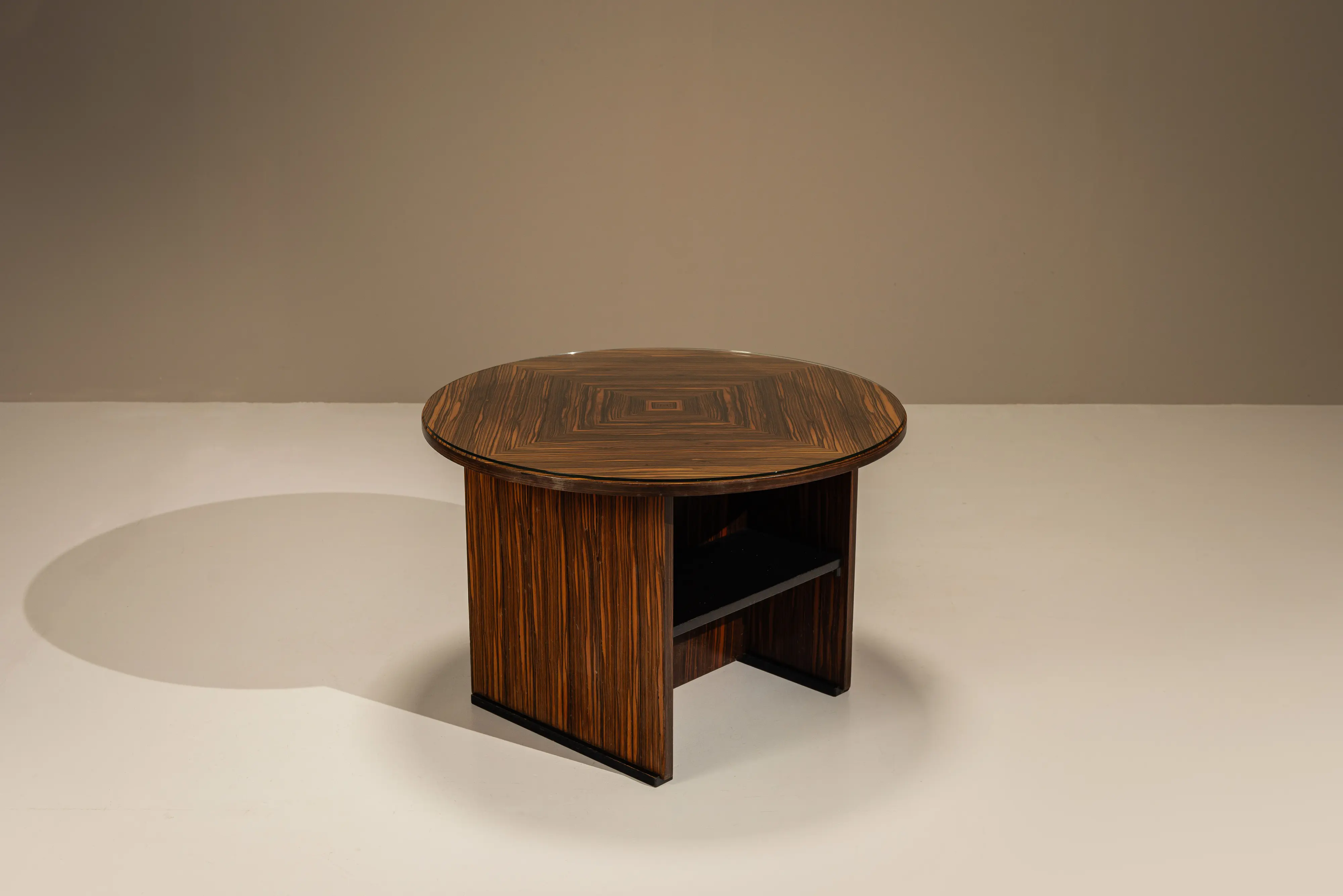
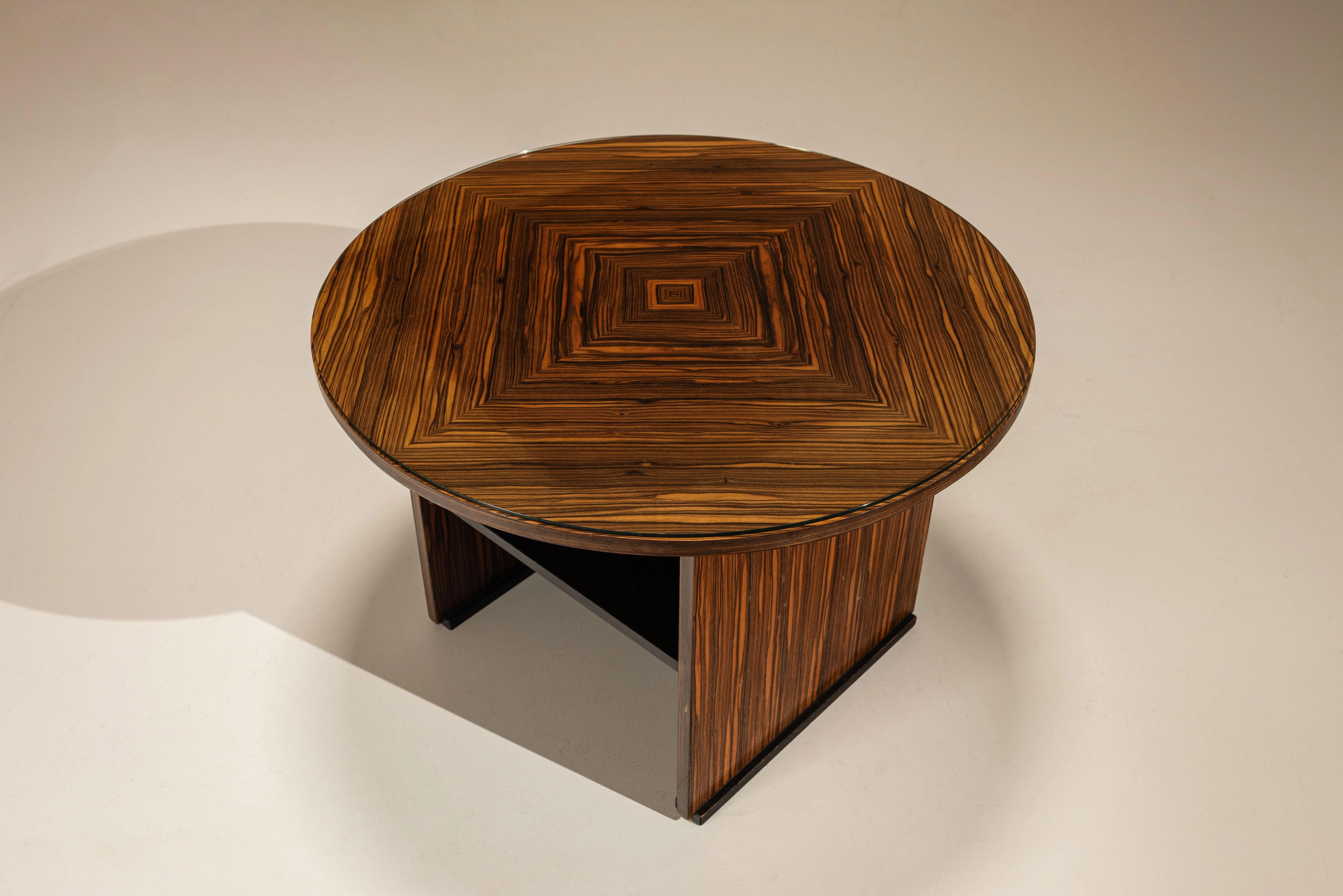
Architecture reduced to the scale of furniture gives this Amsterdam School side table its distinct character. Made in the Netherlands around the 1920s, the piece combines a restrained circular form with carved details and an unusually graphic base. The approach relates closely to Amsterdam School furniture, in which architectural construction and sculptural woodworking often became part of the decoration itself. Museum examples by leading figure Michel de Klerk demonstrate this close relationship between furniture and architecture.
Design
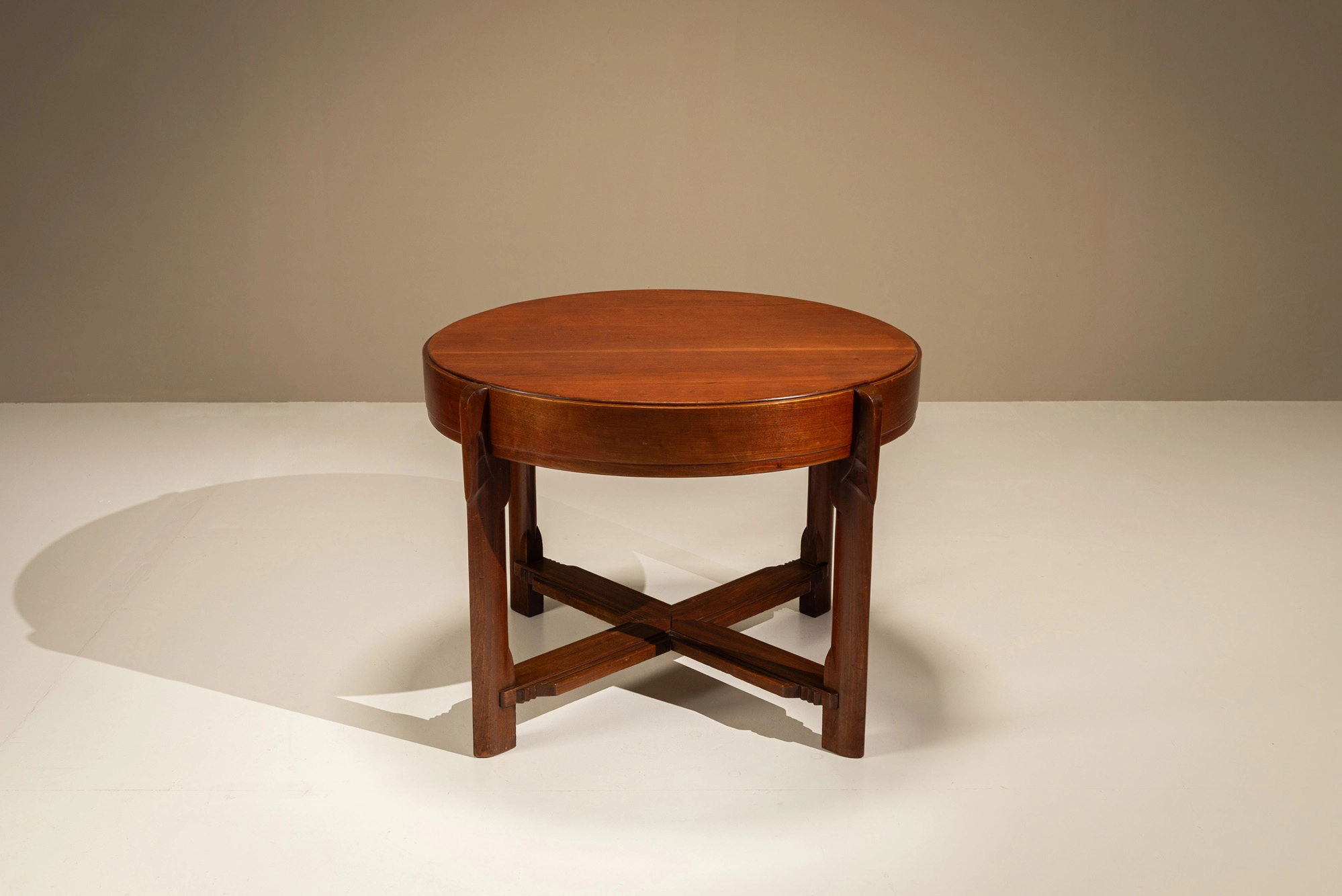
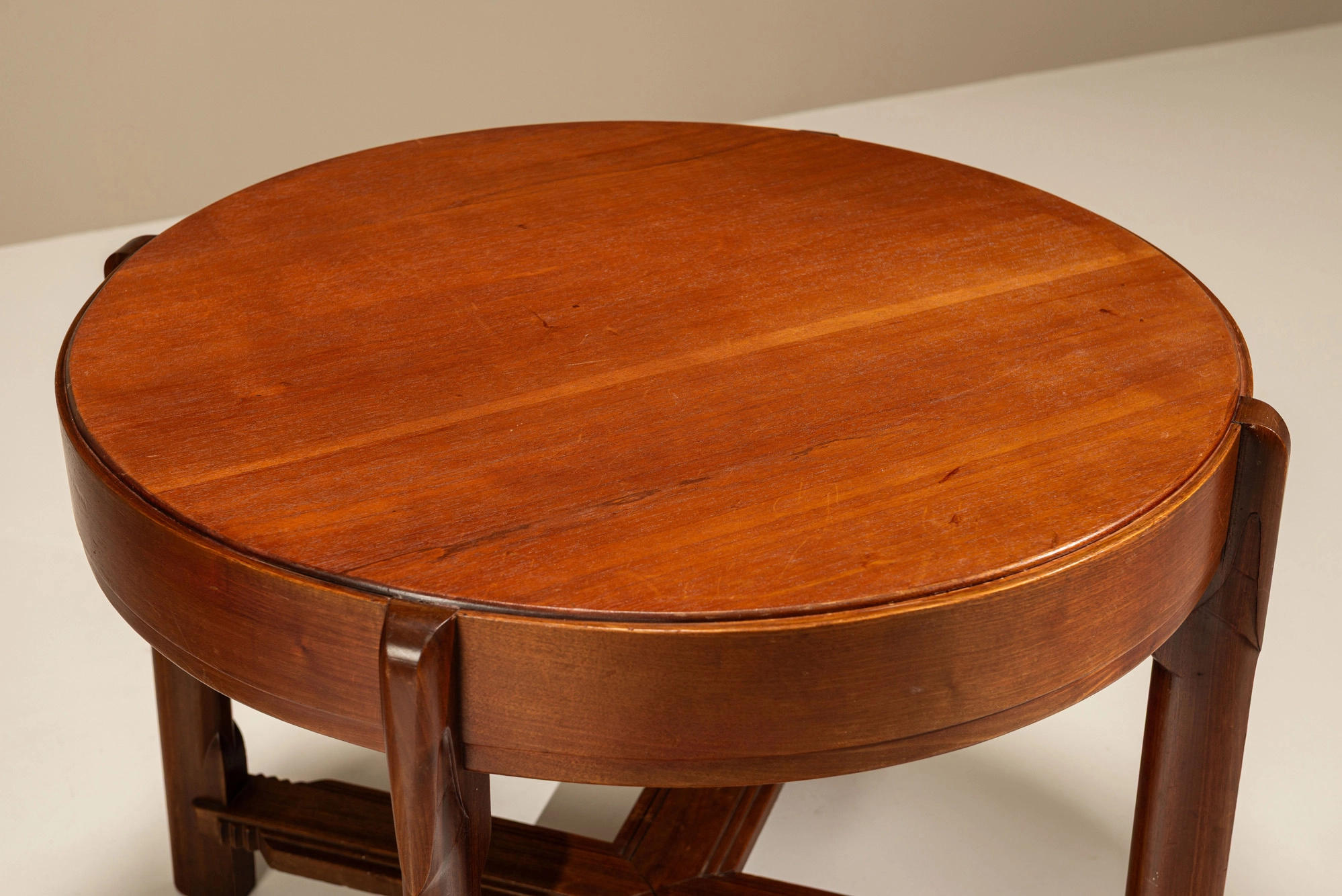
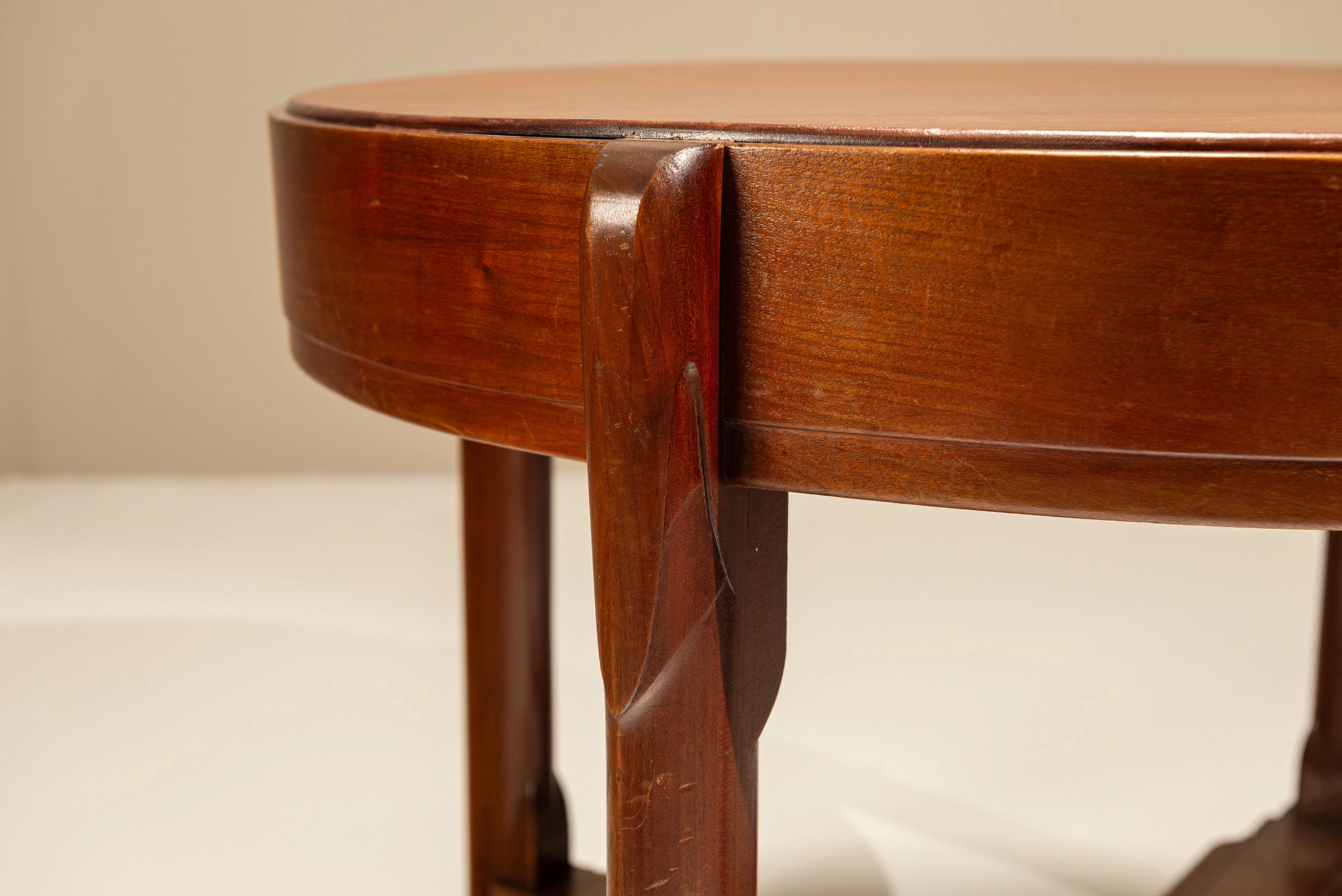
A circular mahogany top sits within a substantial apron, its rounded edge giving the upper section a compact, almost drum-like profile. Four legs continue upwards across the apron, visually connecting the base and top rather than treating them as separate elements. Each upright is shaped near the upper section with shallow carved facets, introducing a subtle organic quality without disturbing the table's clear geometry.
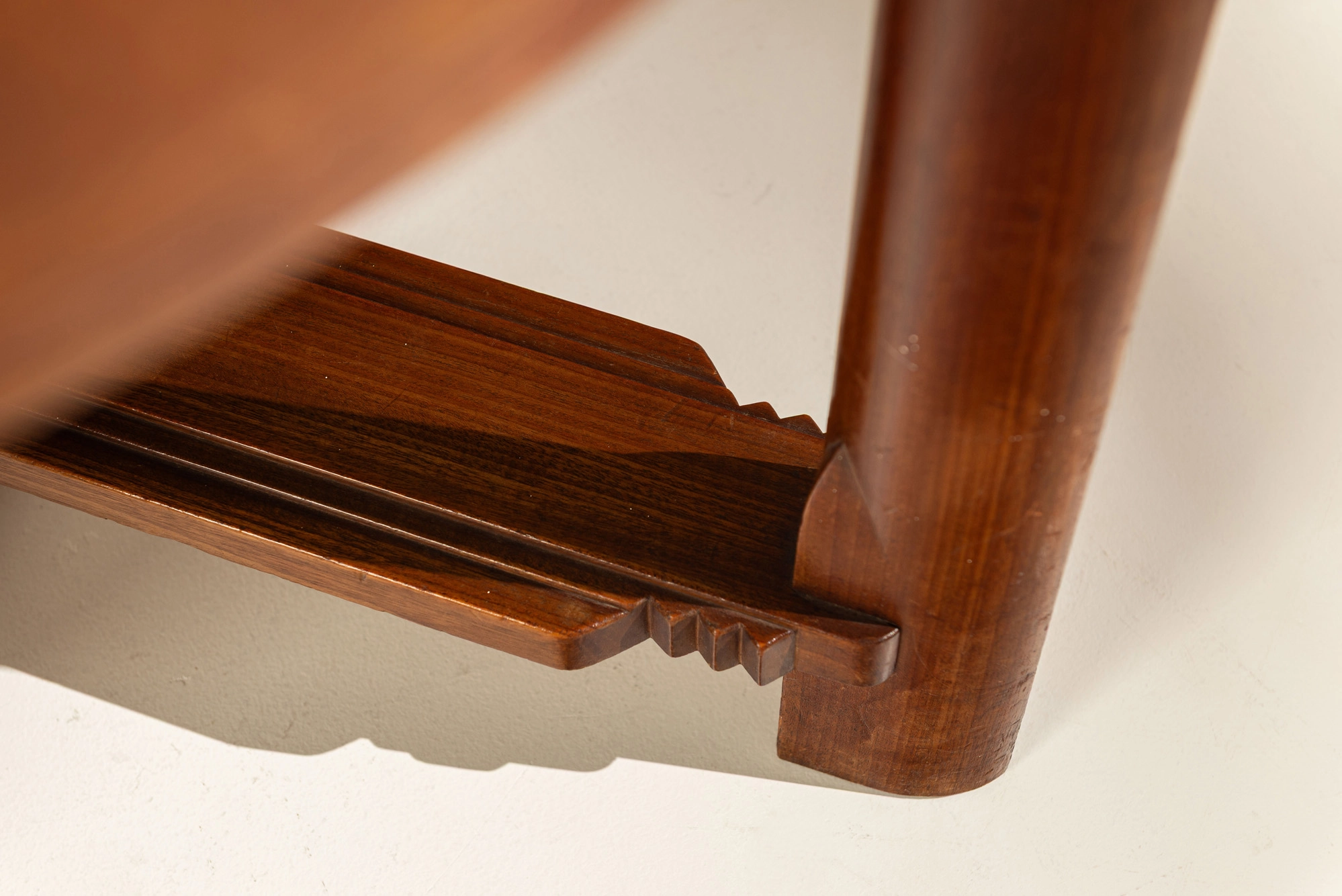
Below, four stretchers meet in a cross-shaped construction. Their moulded edges follow the lines of the legs, and small stepped cuts appear near the outer ends. Viewed from above, this X-shaped framework creates a second geometric composition beneath the circular top. Comparable cross-stretcher constructions appear in documented Amsterdam School furniture from the 1920s.
Mahogany was widely used. Here, the warm reddish-brown surface allows the grain and carved transitions to remain clearly visible. Rather than relying on applied ornament, decoration comes from the construction itself: curved edges, faceted uprights, moulded stretchers and the meeting of the four lower rails.
Compact in scale yet architecturally conceived, the table works well beside a sofa or lounge chair, or as an occasional table within an interior combining early twentieth-century and contemporary design. Its circular top and open lower structure give the piece presence without visual weight.
Condition
The table is in good vintage condition, showing surface marks, scratches and minor wear consistent with age and use. Small irregularities are visible around the top and lower framework.

This bar is amazing. Beautiful and exactly as described. A custom crate (which was a work of art itself) was built in order to ship the piece to the U.S. The bar arrived in perfect condition without a scratch. I will say that take the crate apart was not easy and was a two-person job. But worth it in the end
Excellent responsiveness, and with wonderful curatorial chops!
I just received the absolutely gorgeous credenza yesterday. It was professionally packaged and delivered just as promised. I cannot more highly recommend AtKris Studio.