€
9500
€
9500
€
Available
Available
Available
Dimensions
Height: 72.5 x Width: 204 x Depth: 186 cm - Height: 28 1/2 x Width: 80 1/4 x Depth: 73 1/4 inches
Worldwide delivery
These transport prices are an indication and might change due to circumstances.
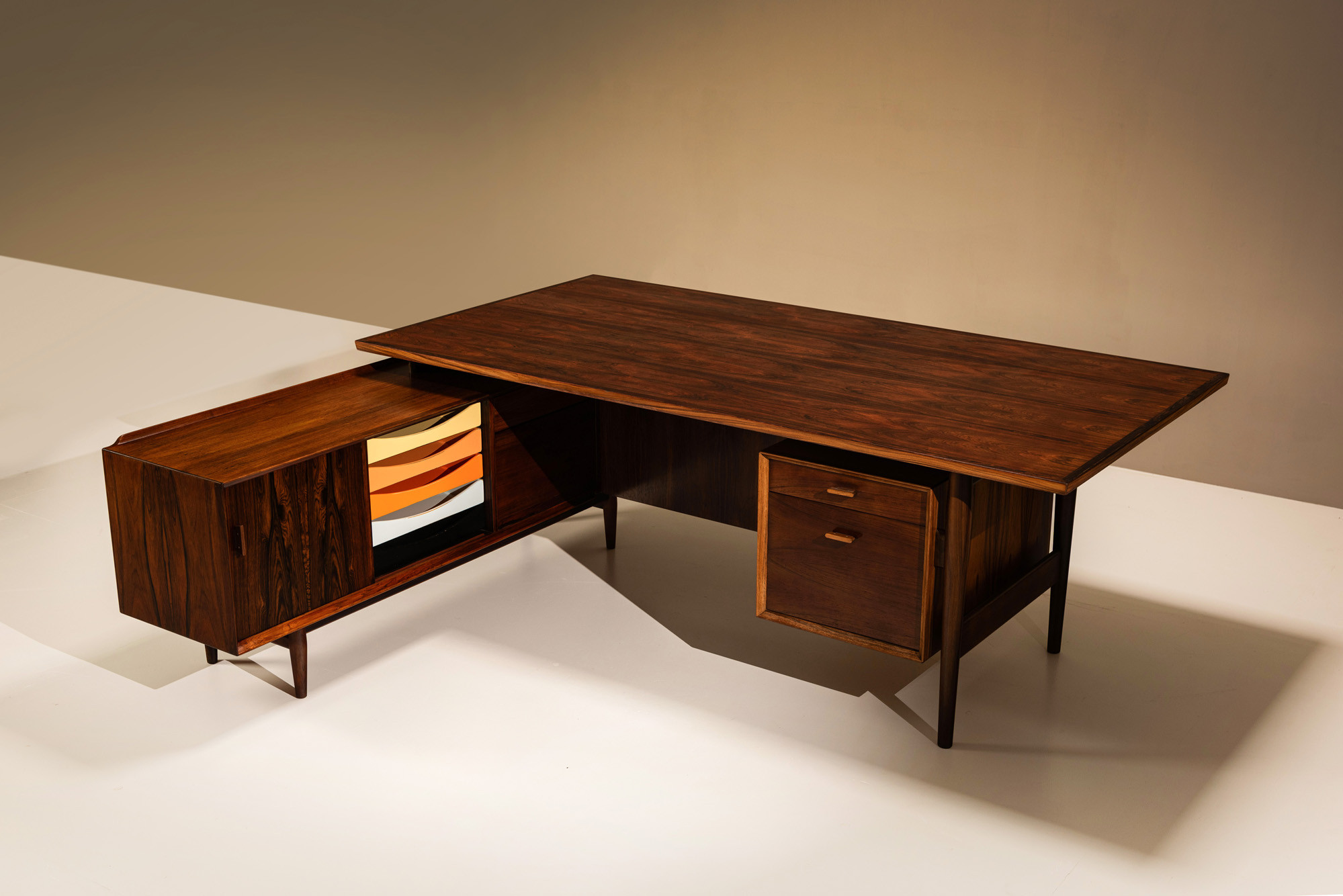
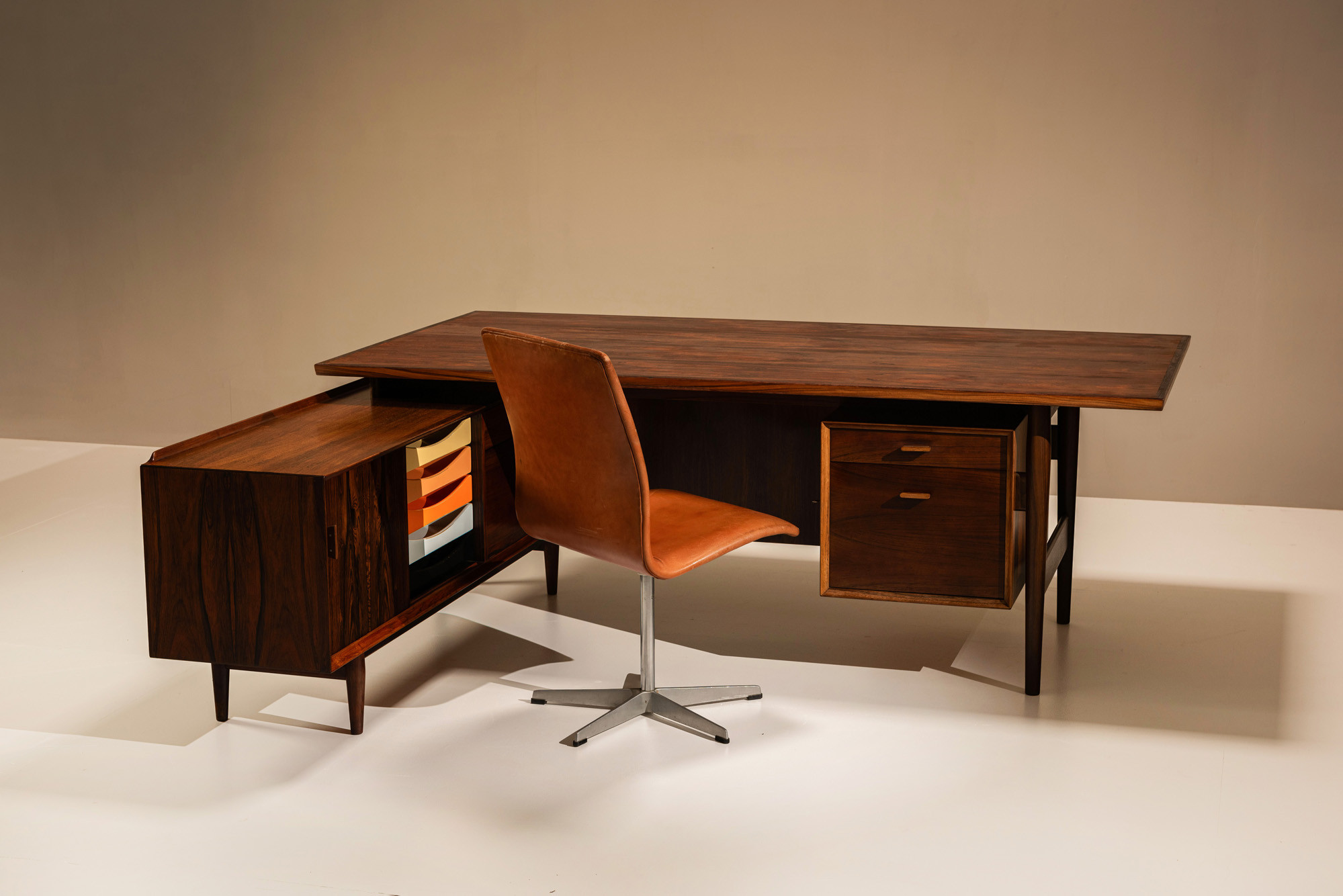
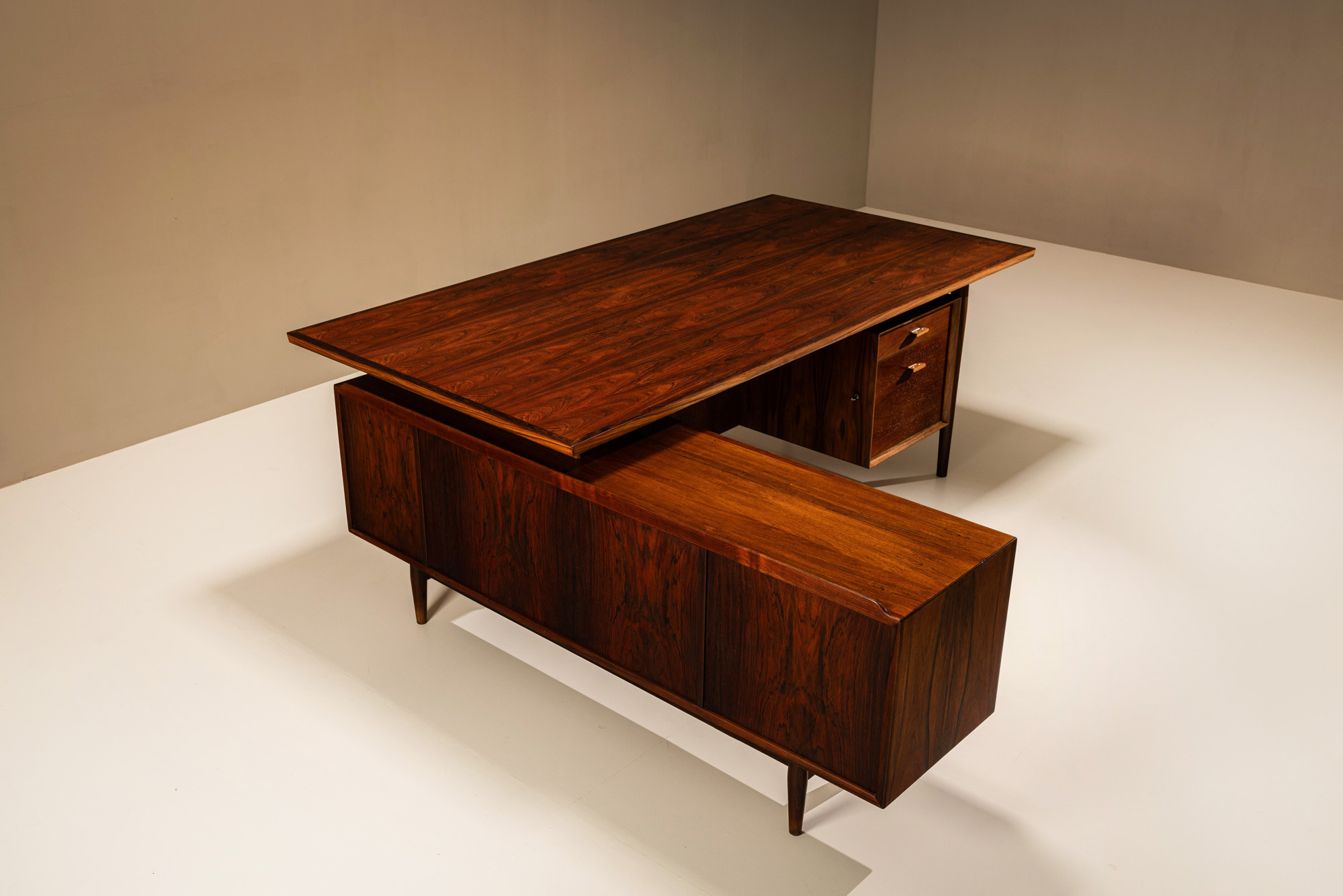
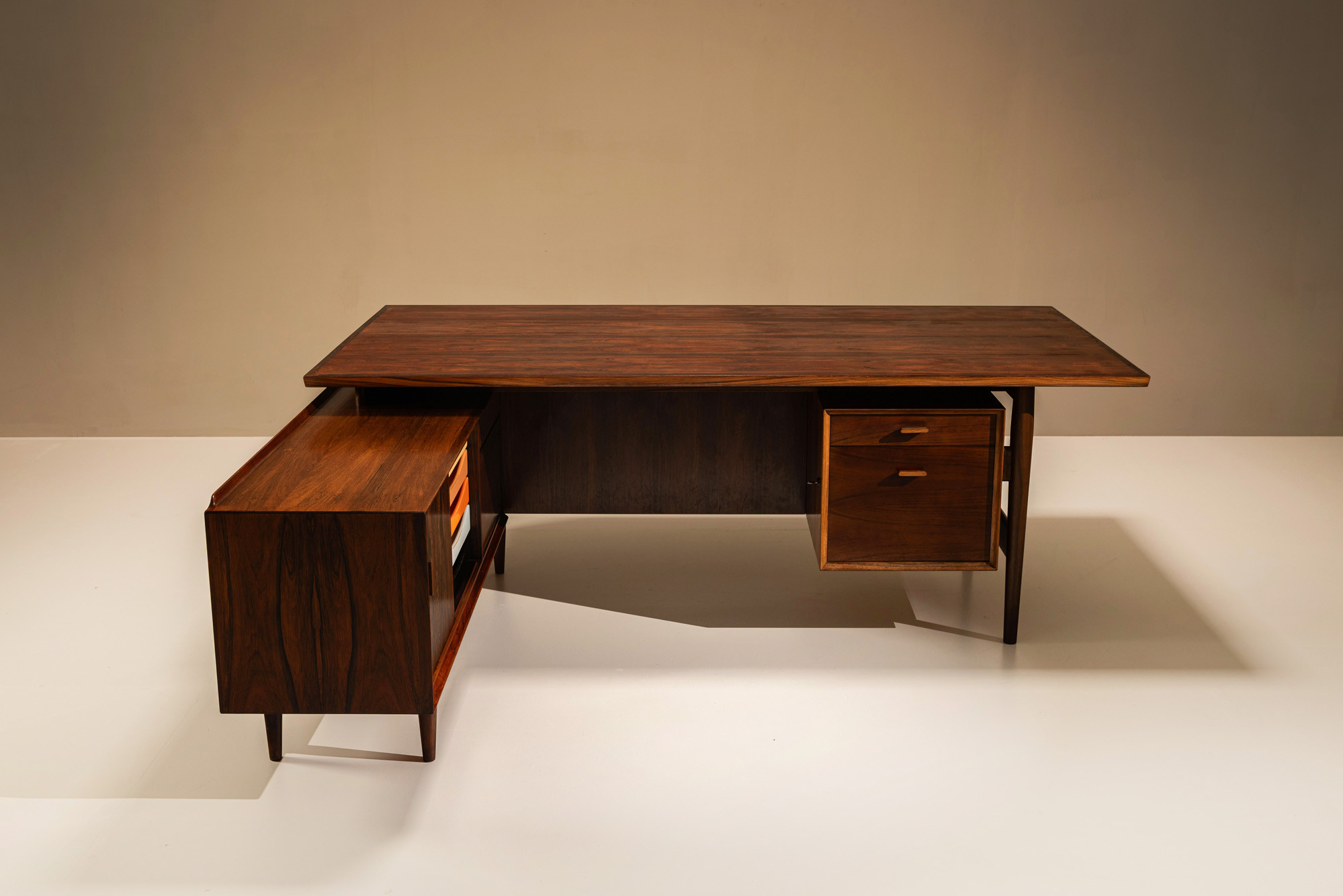
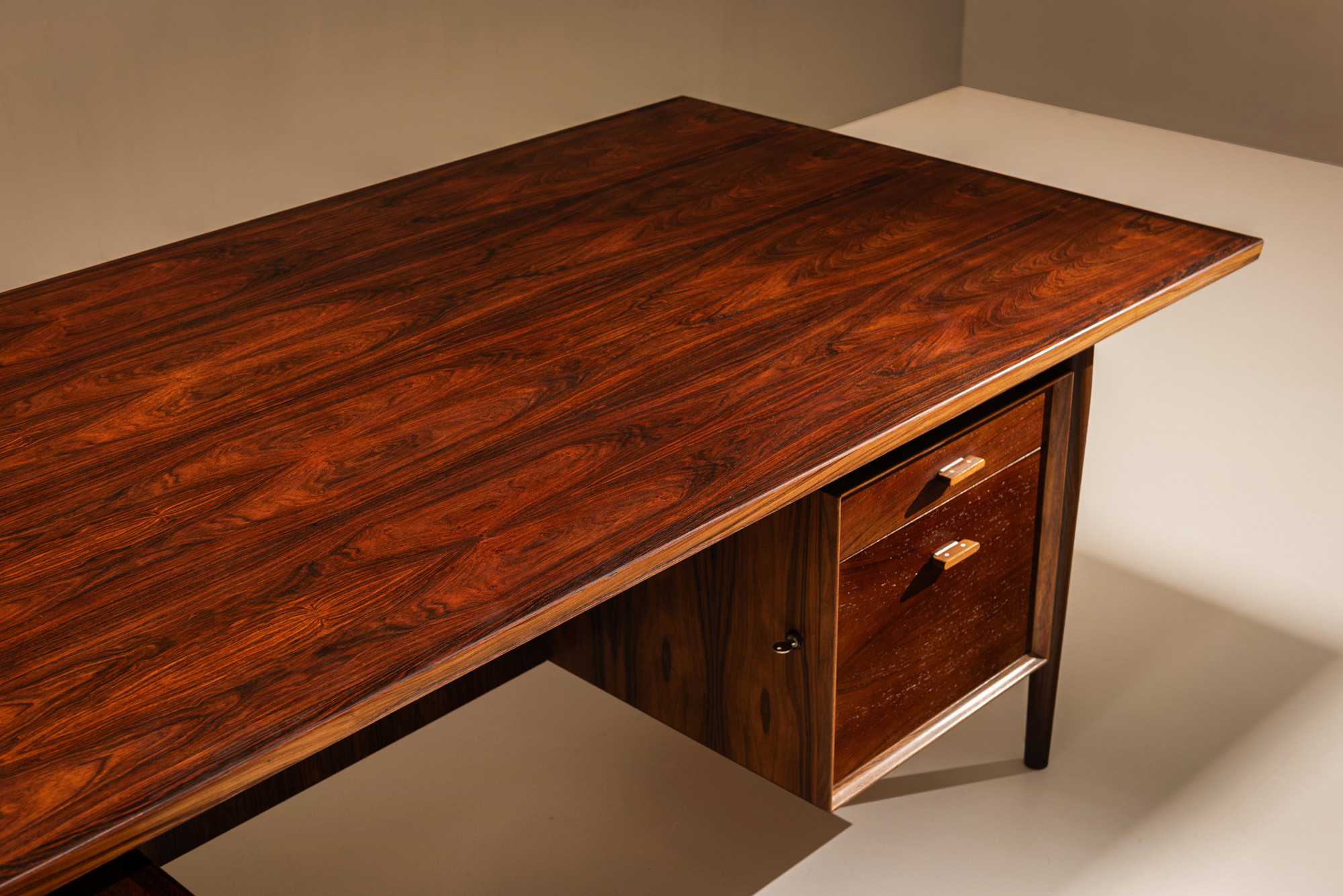
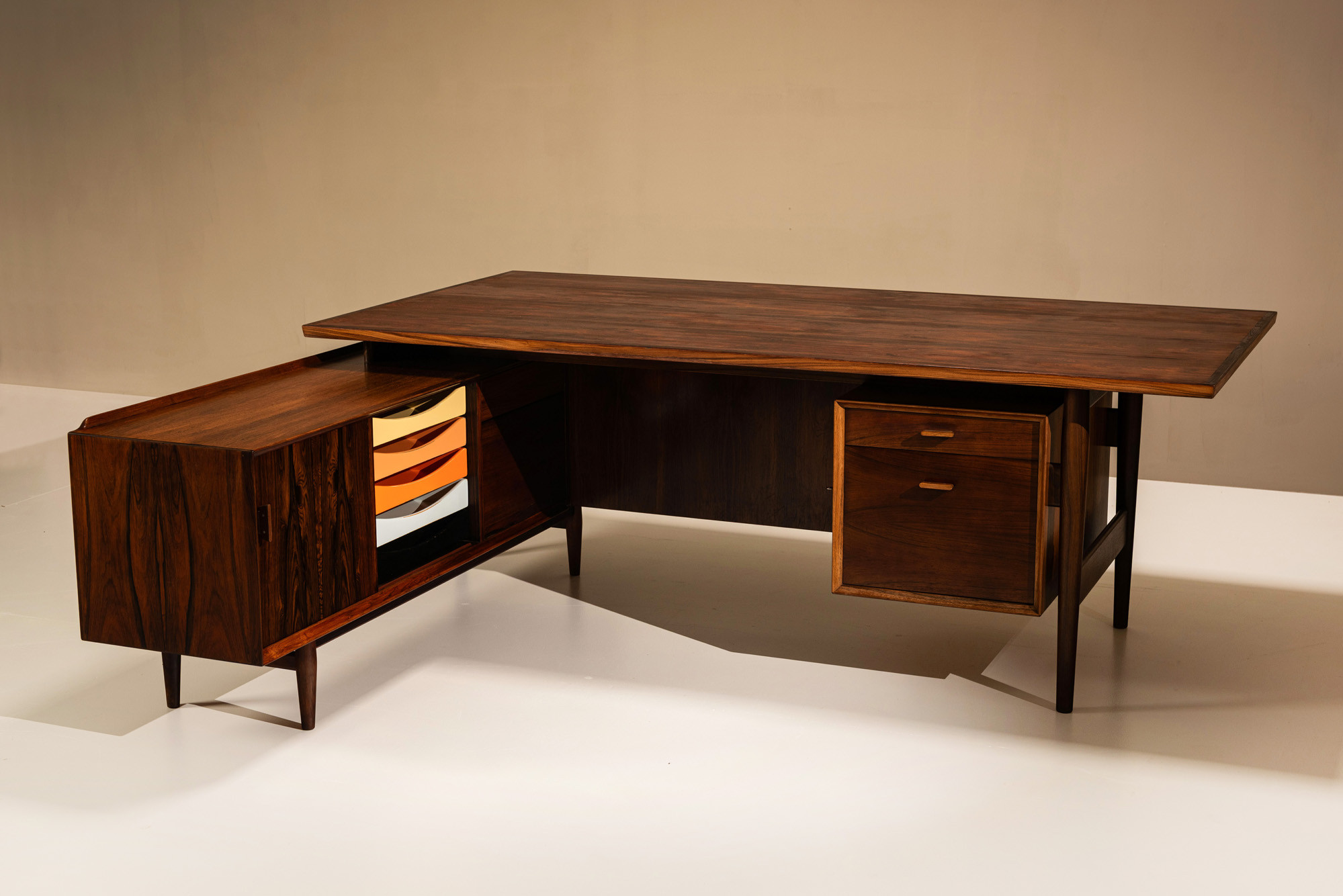
Arne Vodder’s Model 209 is an L-shaped desk with an attached return, produced by Sibast in Denmark and here shown in rosewood. The form is well documented within Vodder’s work for Sibast, and this example retains the arrangement of a broad floating work surface combined with a lower storage block that extends to one side.
Design
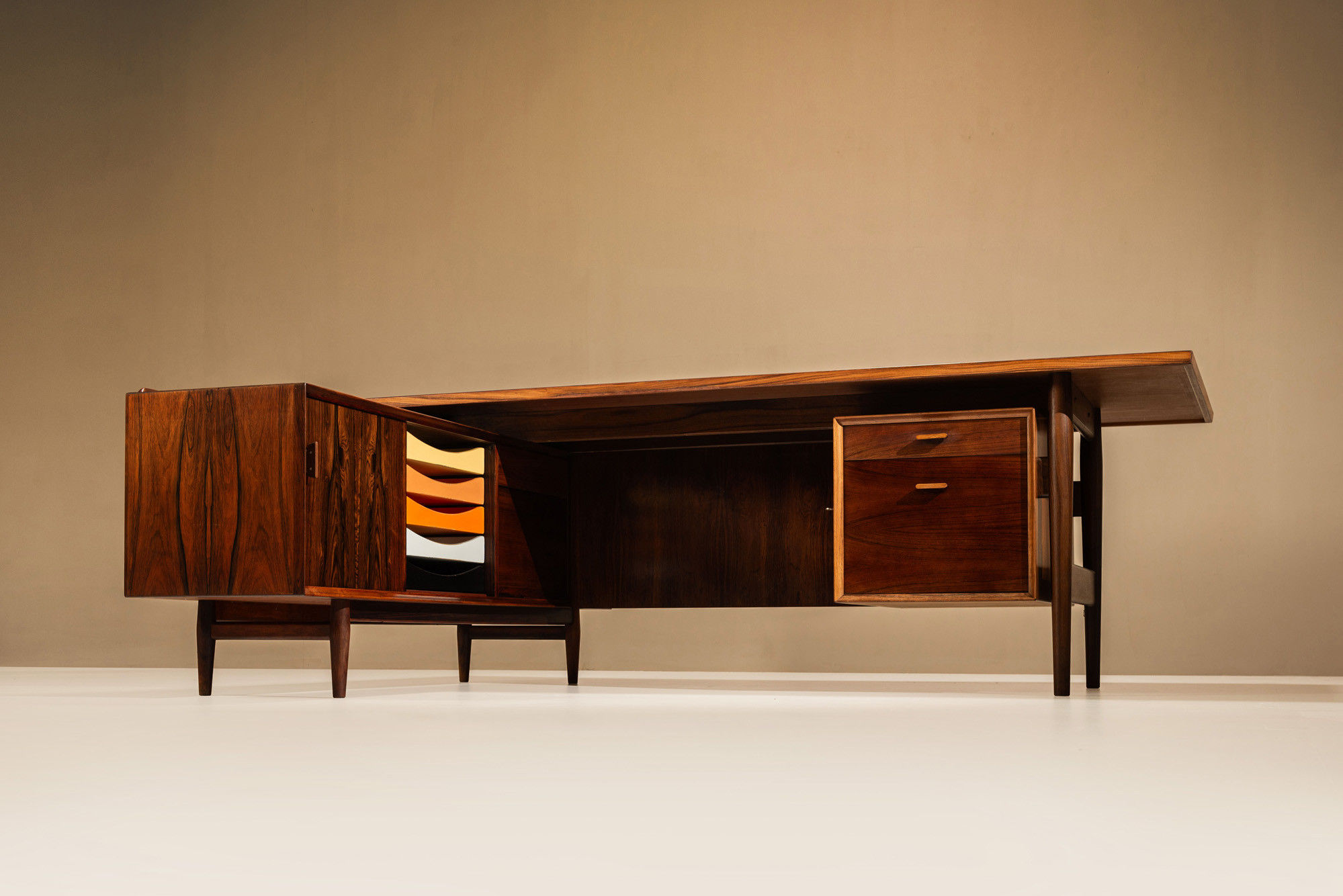
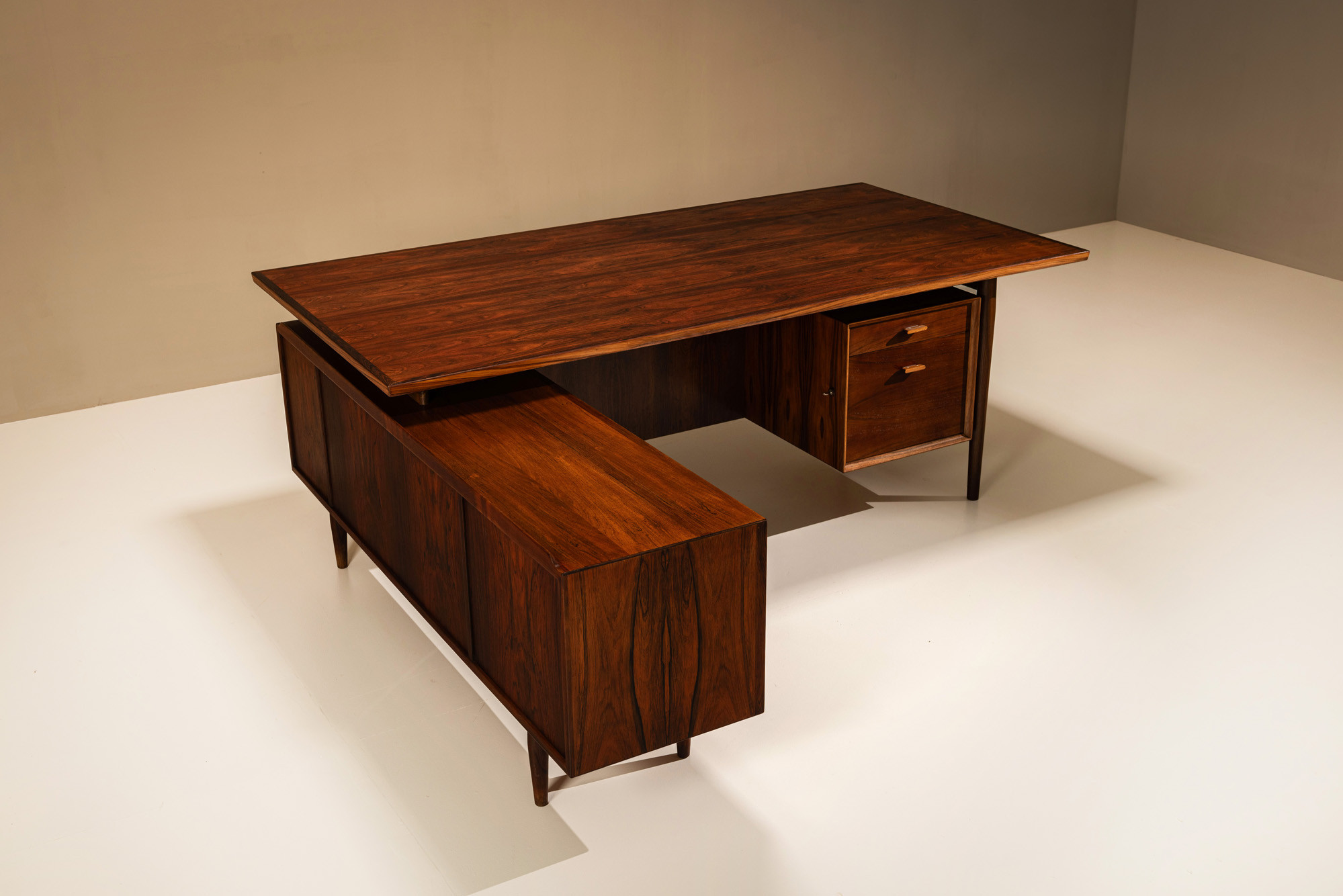
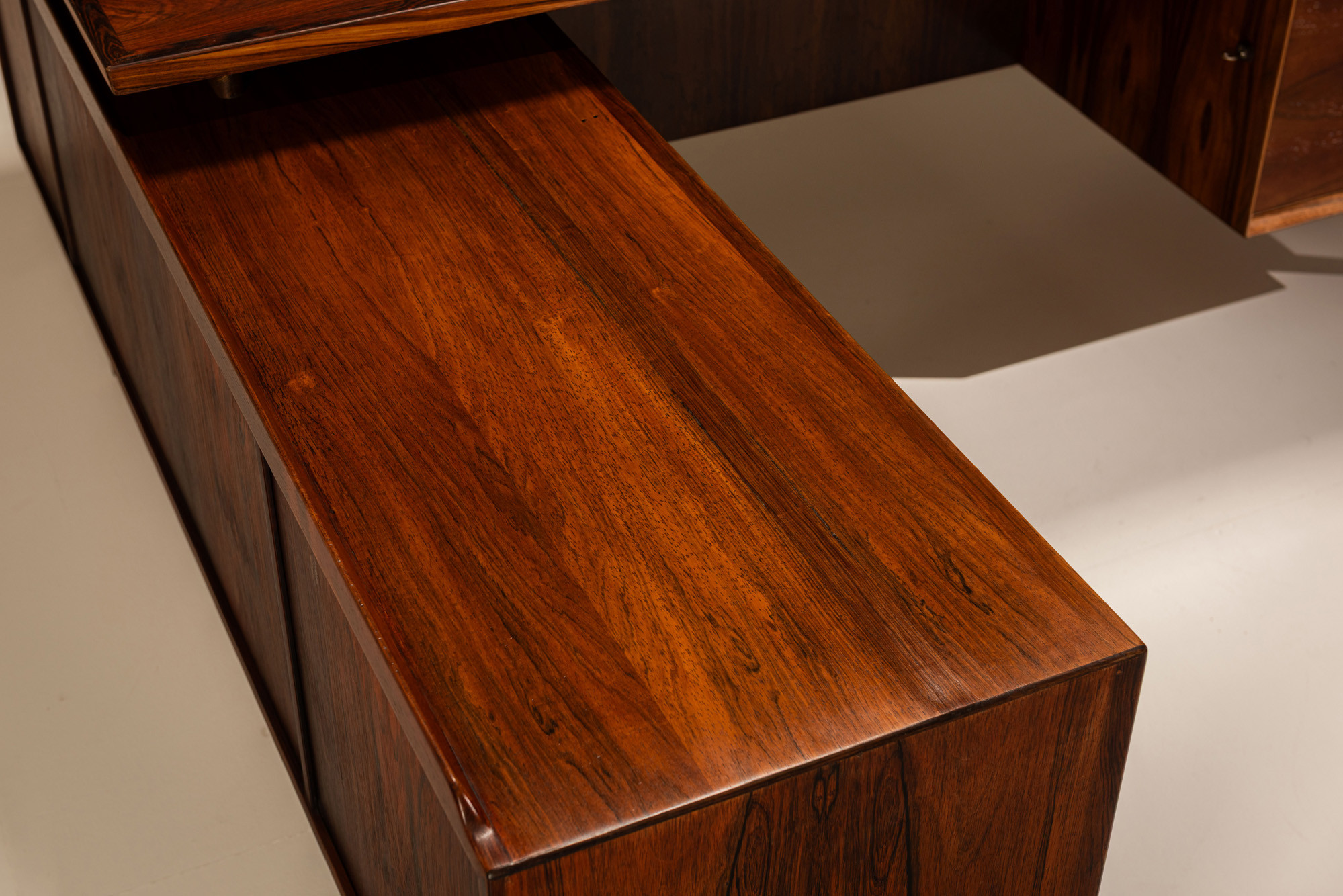
The desk is organised around two clearly distinct horizontal planes. A large rectangular top projects beyond its supports on all sides and reads as a separate surface, set above the lower return rather than absorbed into it. This overlap creates the L-shaped plan without closing the space beneath: from the front, the lower unit extends into the room under the top; from above and from the side, the gap between the two levels remains visible, so the desk reads as a work surface laid over cabinetry rather than a fully boxed executive block.
That separation continues in the support structure. The return stands on tapered round legs and the main desk uses a narrower leg frame at the outer end, leaving open floor area beneath both sections. Between them, the suspended drawer unit hangs under the top instead of reaching the floor. Seen from the user’s side, this arrangement breaks the mass into three parts: the long top, the dark modesty panel, and the framed drawer box to the right. The effect is particularly clear in profile, where the desk keeps a long horizontal line across the top and a more interrupted line below.
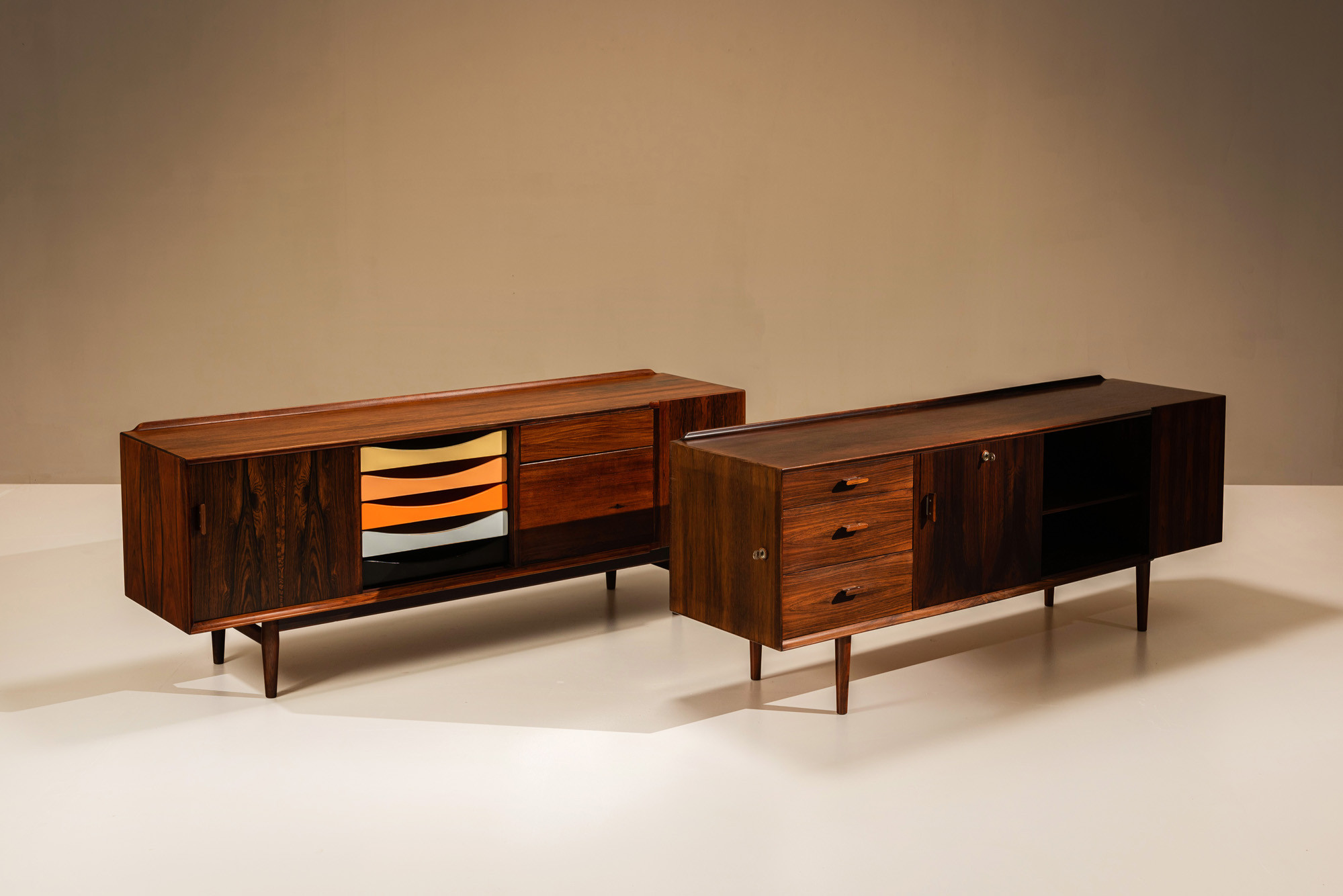
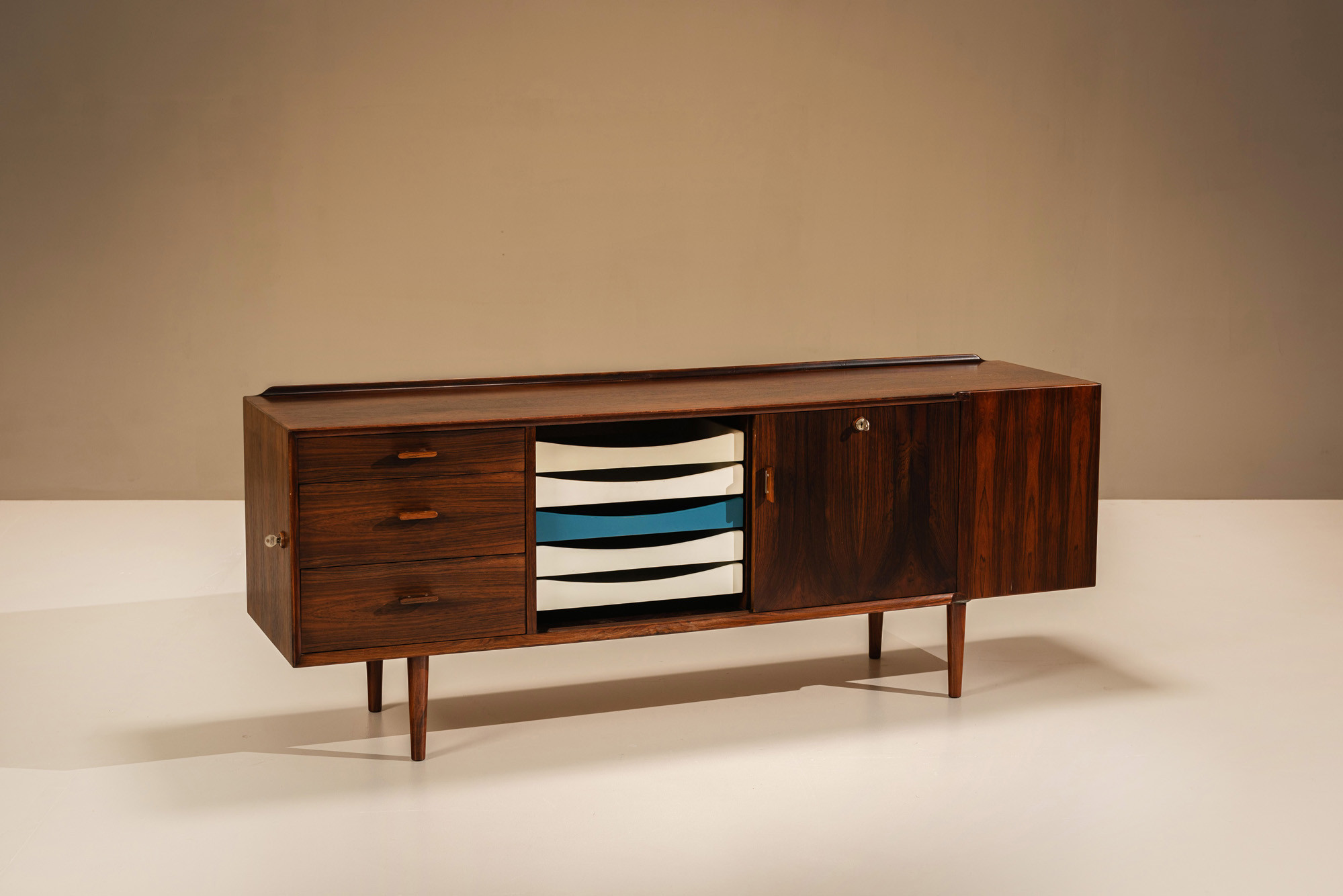
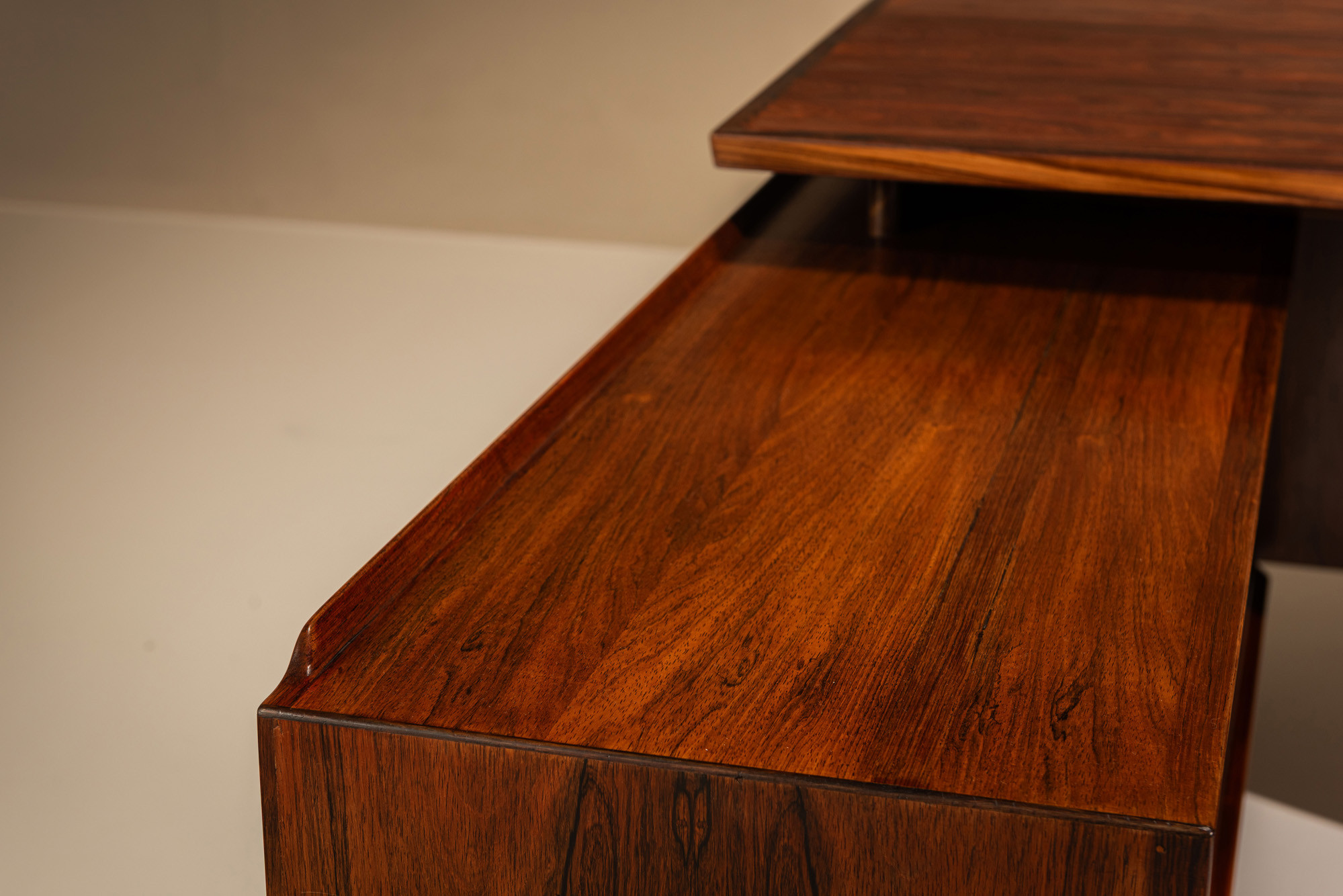
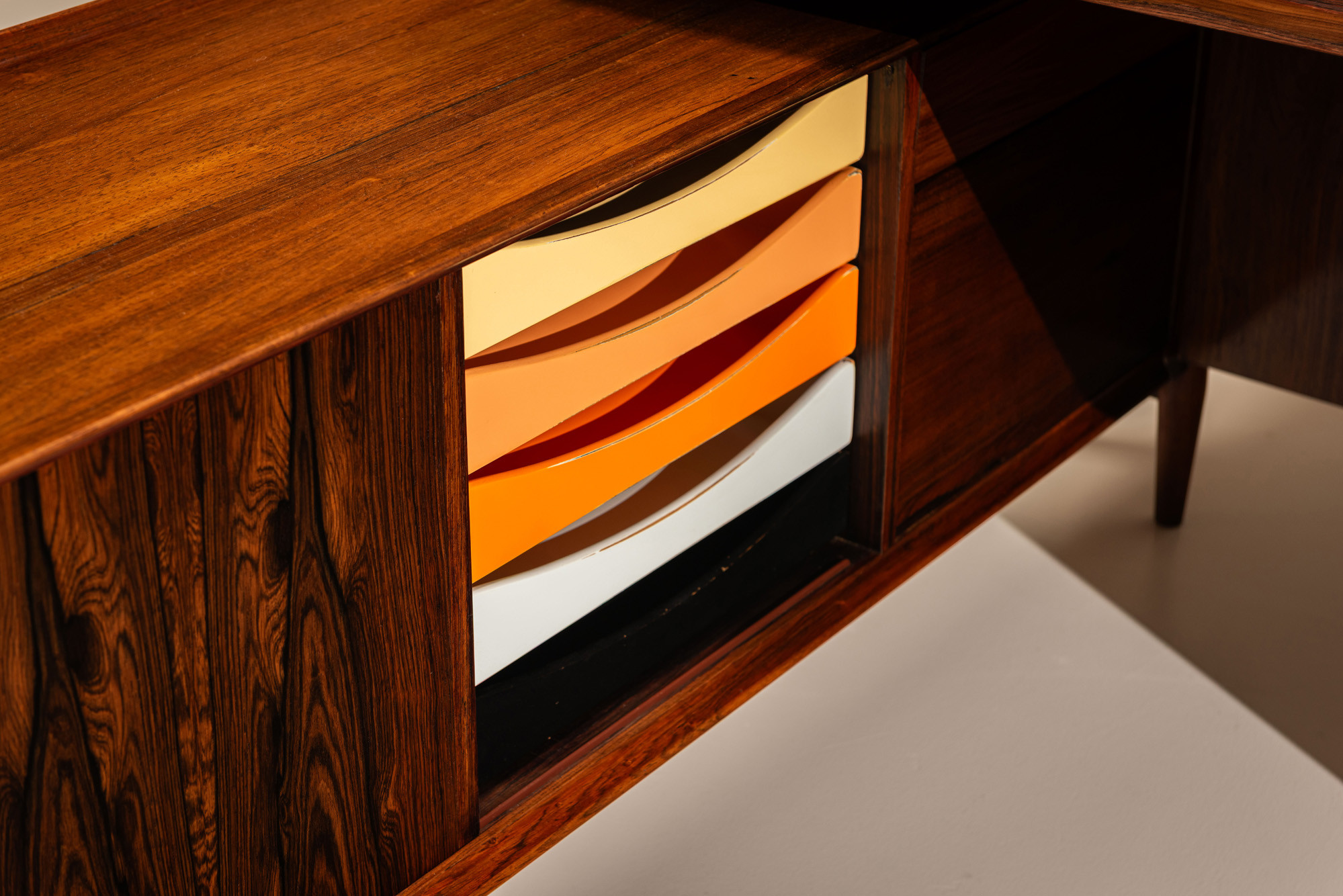
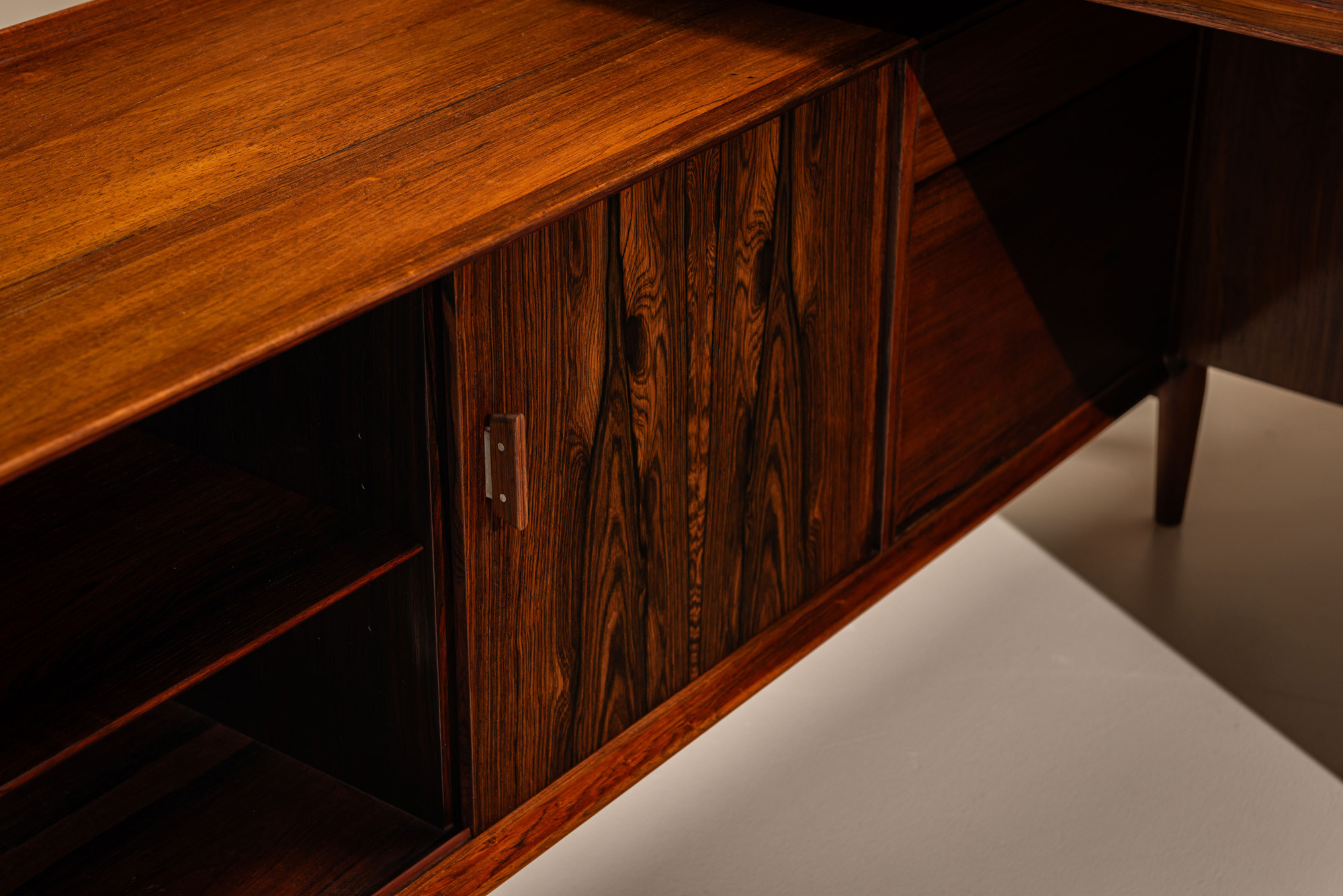
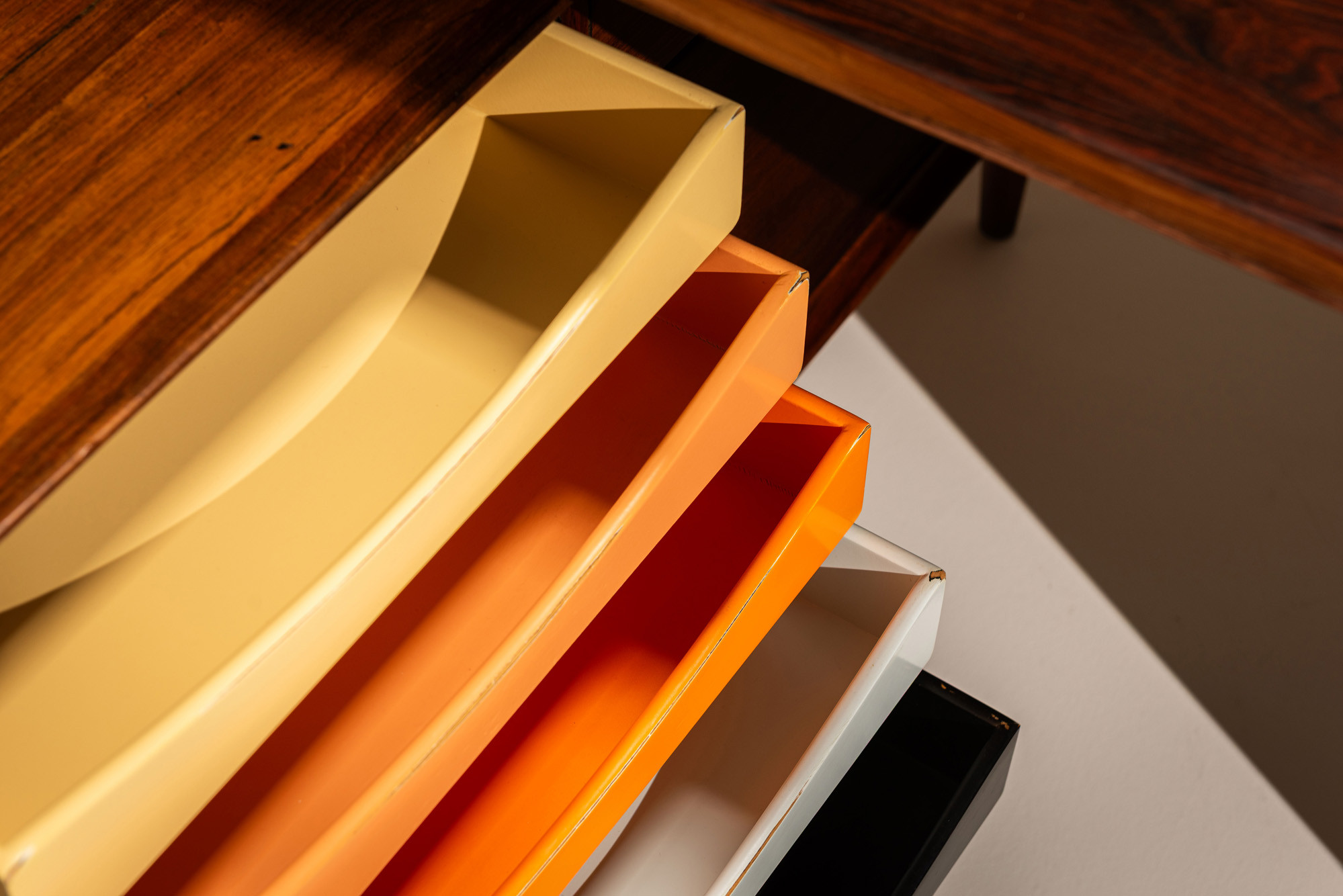
Storage is distributed across the return in a way that remains visible from both sides. One face combines a sliding-door compartment with a stack of coloured trays set within a rosewood frame, followed by an open shelf area. The opposite face reverses the balance with three drawers at one end, a central bay of trays, and a door compartment at the other. These components are not hidden behind a single front: their varied openings, handles and tray colours break up the elevation and make the return legible as a working cabinet from more than one viewpoint. The raised gallery along the return top also sets that lower surface apart from the main desk top, giving it the character of an auxiliary station rather than a continuation of the writing plane.
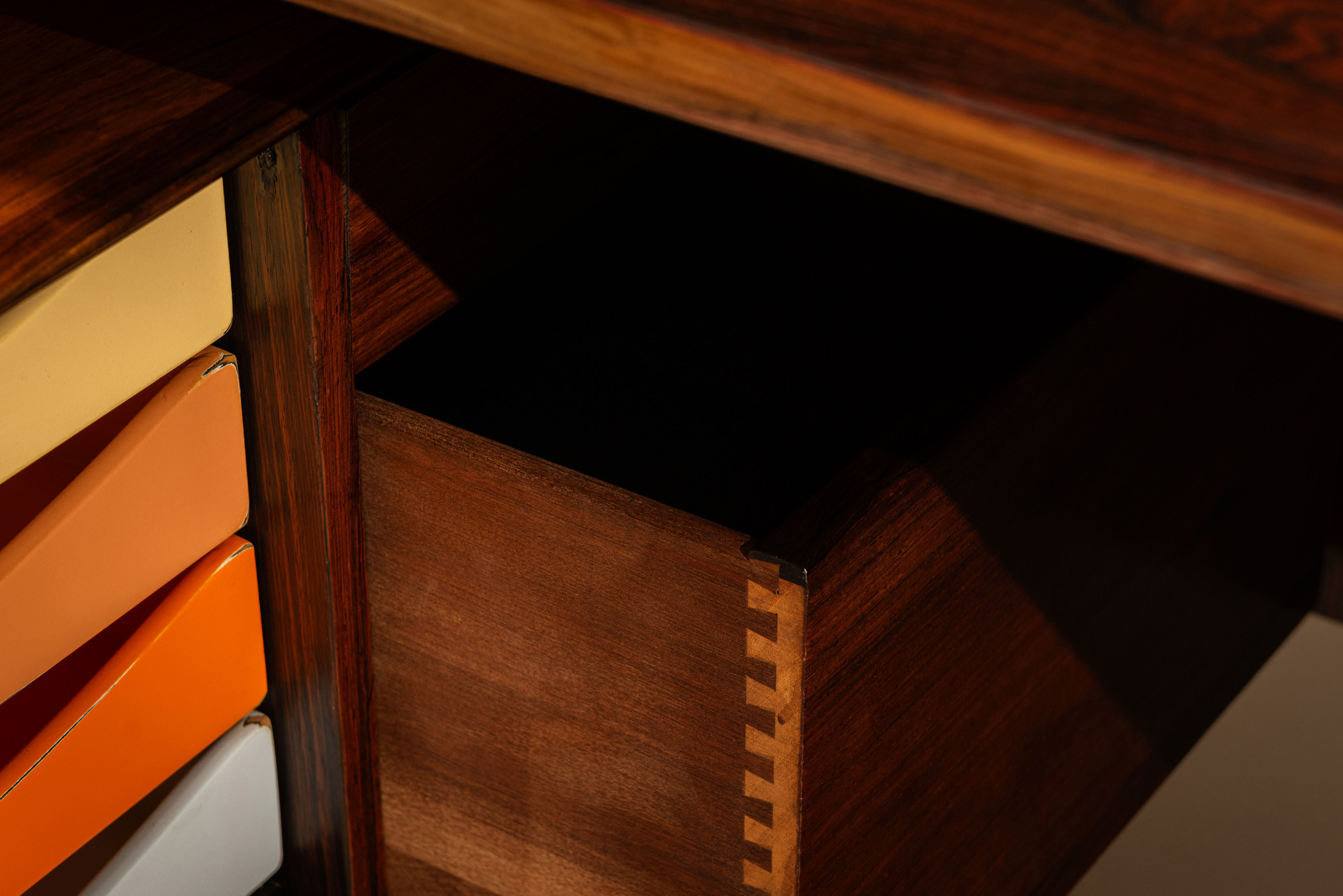
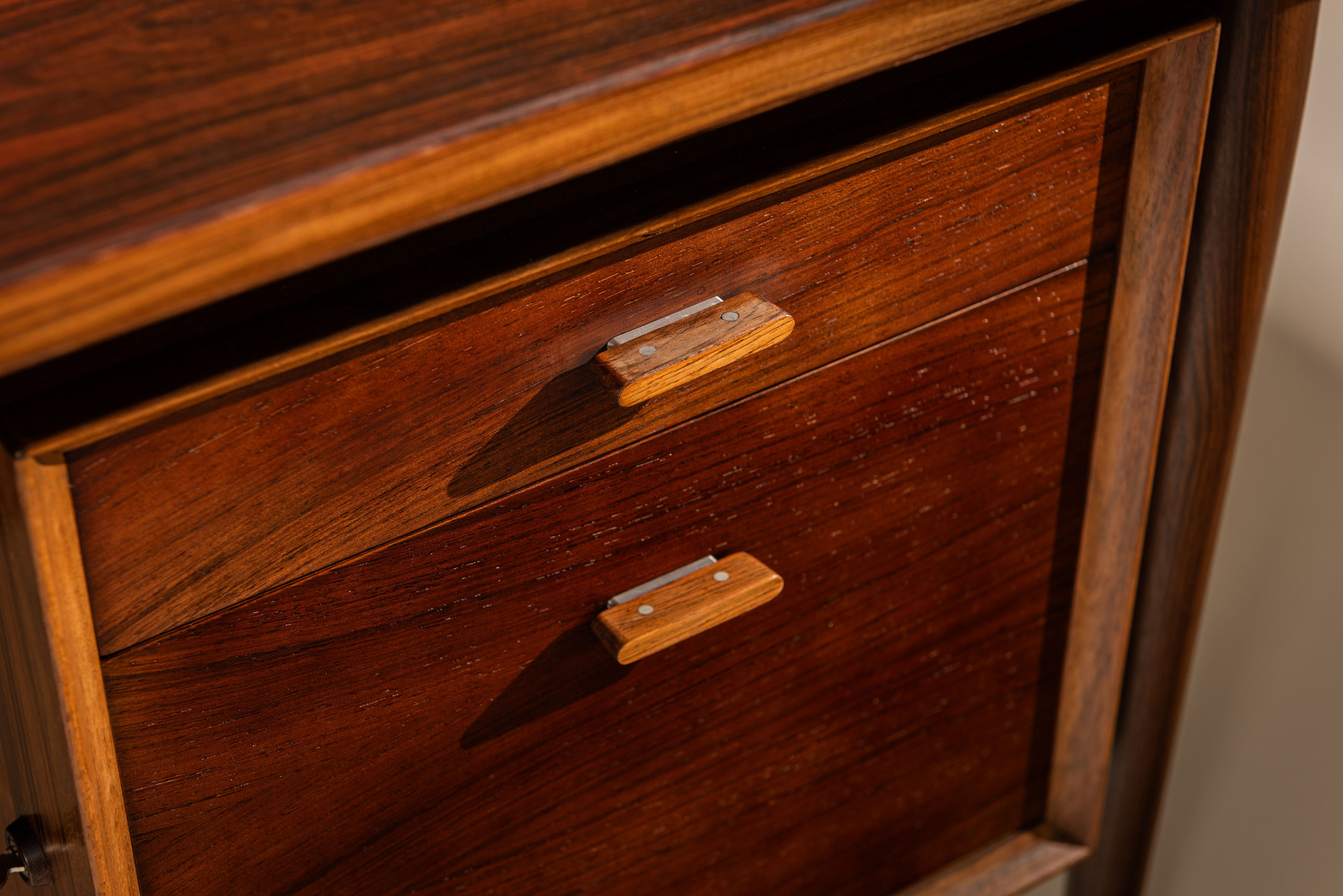
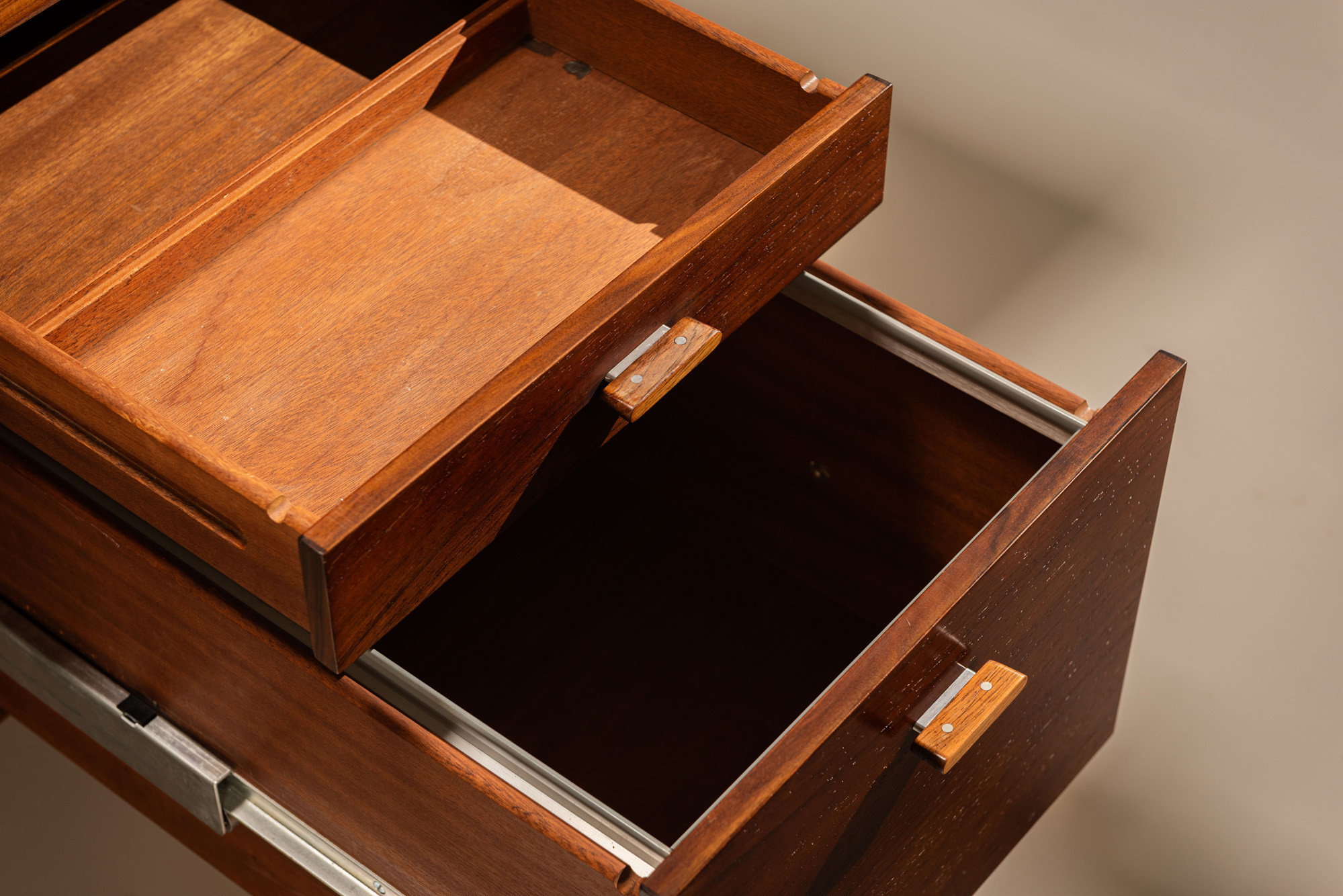
The rosewood veneer is used to emphasise broad surfaces and edges rather than applied ornament. Strong dark figuring runs across the main top, cabinet sides and drawer fronts, giving the wide planes movement within an otherwise controlled outline. Close views show a framed construction to the hanging pedestal, with the two small drawers set above a deeper lower drawer, each fitted with wooden pulls mounted on metal plates. Inside, dovetail joinery is visible on at least one drawer, and the coloured trays introduce a second material and colour register within the darker timber body.
Condition
This piece is partially restored and in good vintage condition with some visible age and use. The photographs show some scattered surface marks and wear to the rosewood, pale spotting and finish wear to the large lower drawer front on the desk pedestal, and minor nicks and losses to some edges and corners of the coloured trays.
We also have a matching sideboard or part of the desk - see the photographs. We are happy to discuss the preference of the customer for adding- or exchanging this part of the desk.

Table arrived very well crated, seller made process seamless.
Excellent responsiveness, and with wonderful curatorial chops!
Quality, flexibility, very good communication, very happy with the coffee table I bought.