€
2950
€
2950
€
Available
Available
Available
Dimensions
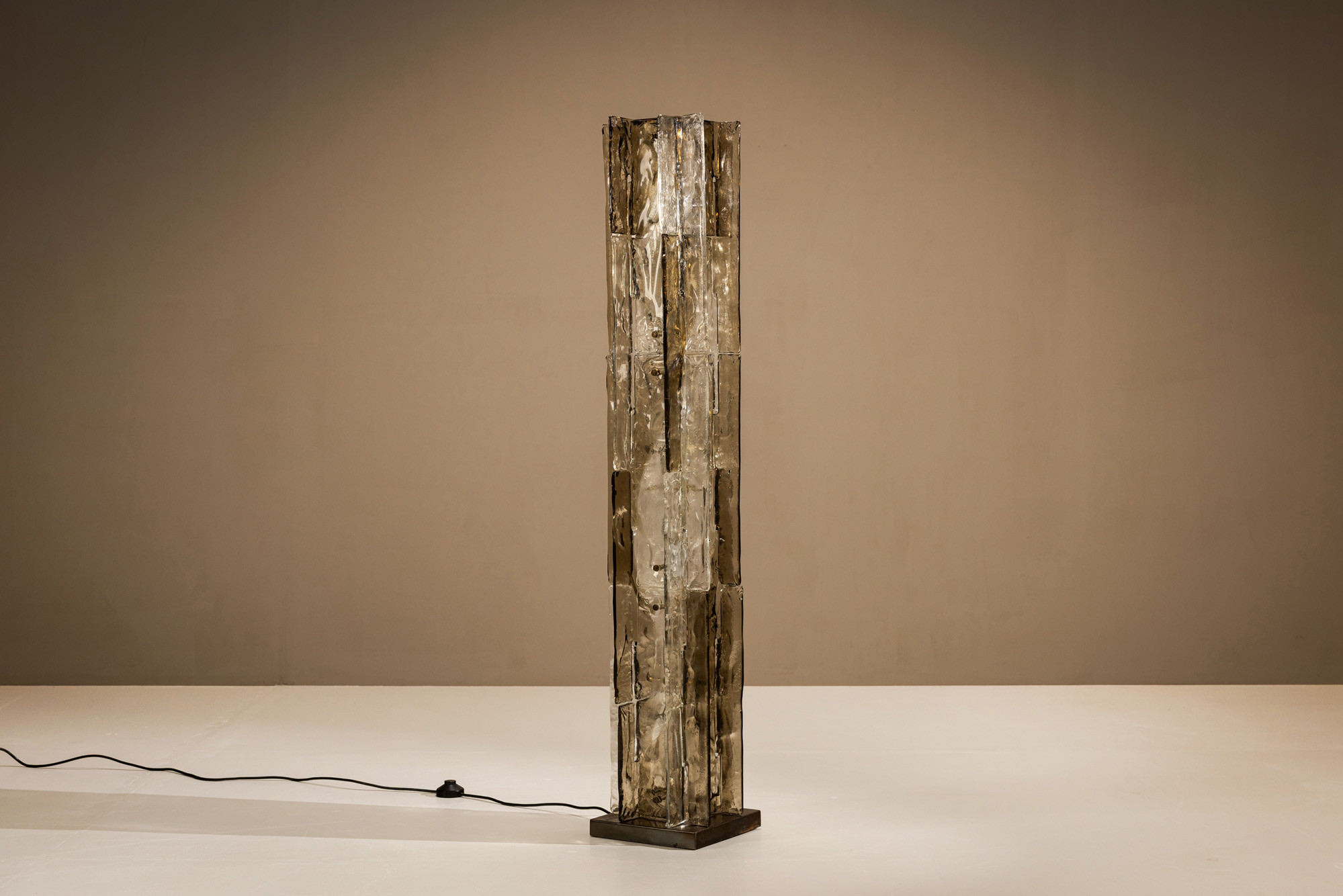
Height: 192 x Width: 35 x Depth: 35 cm - Height: 75 5/8 x Width: 13 3/4 x Depth: 13 3/4 inches
Worldwide delivery
These transport prices are an indication and might change due to circumstances.
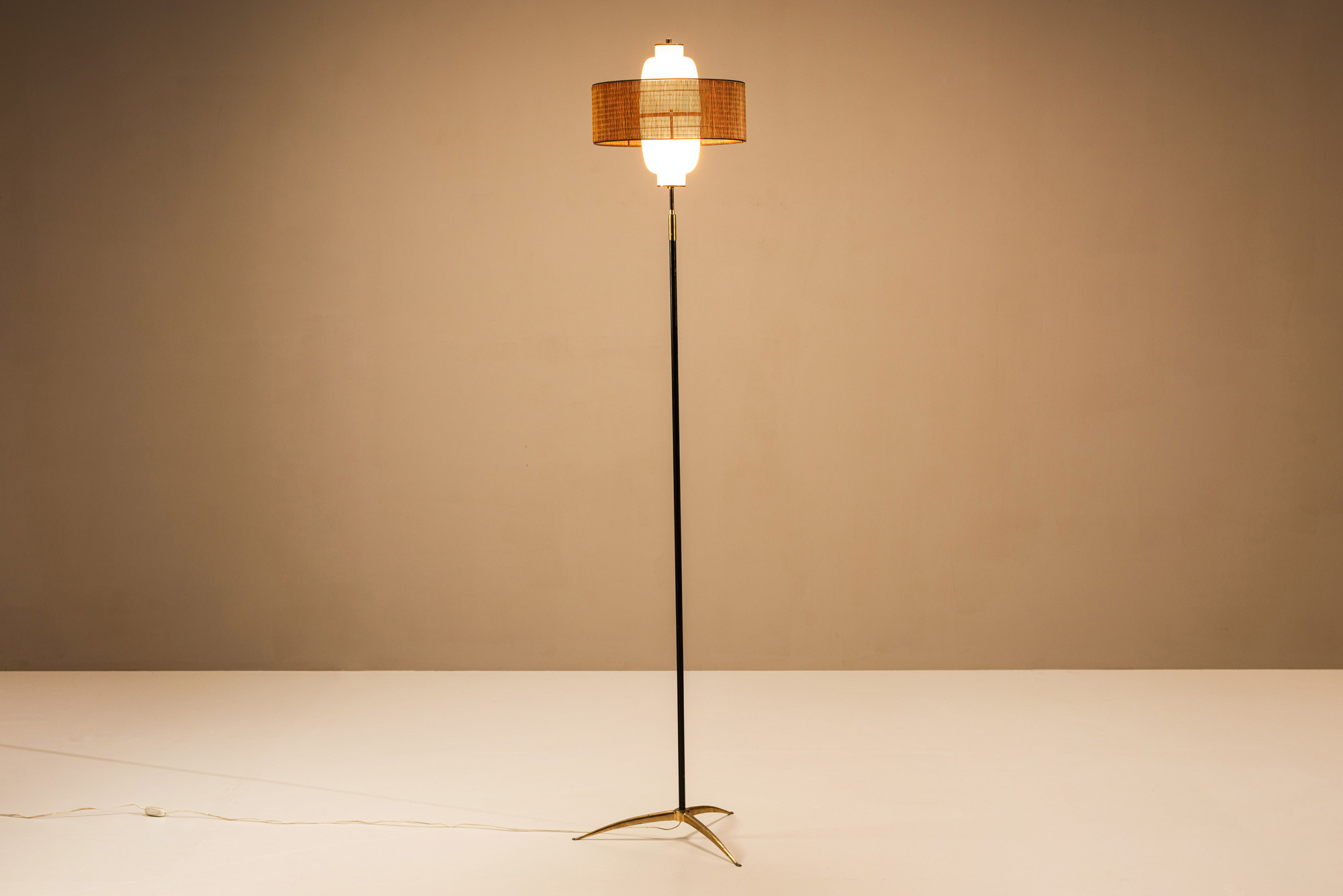
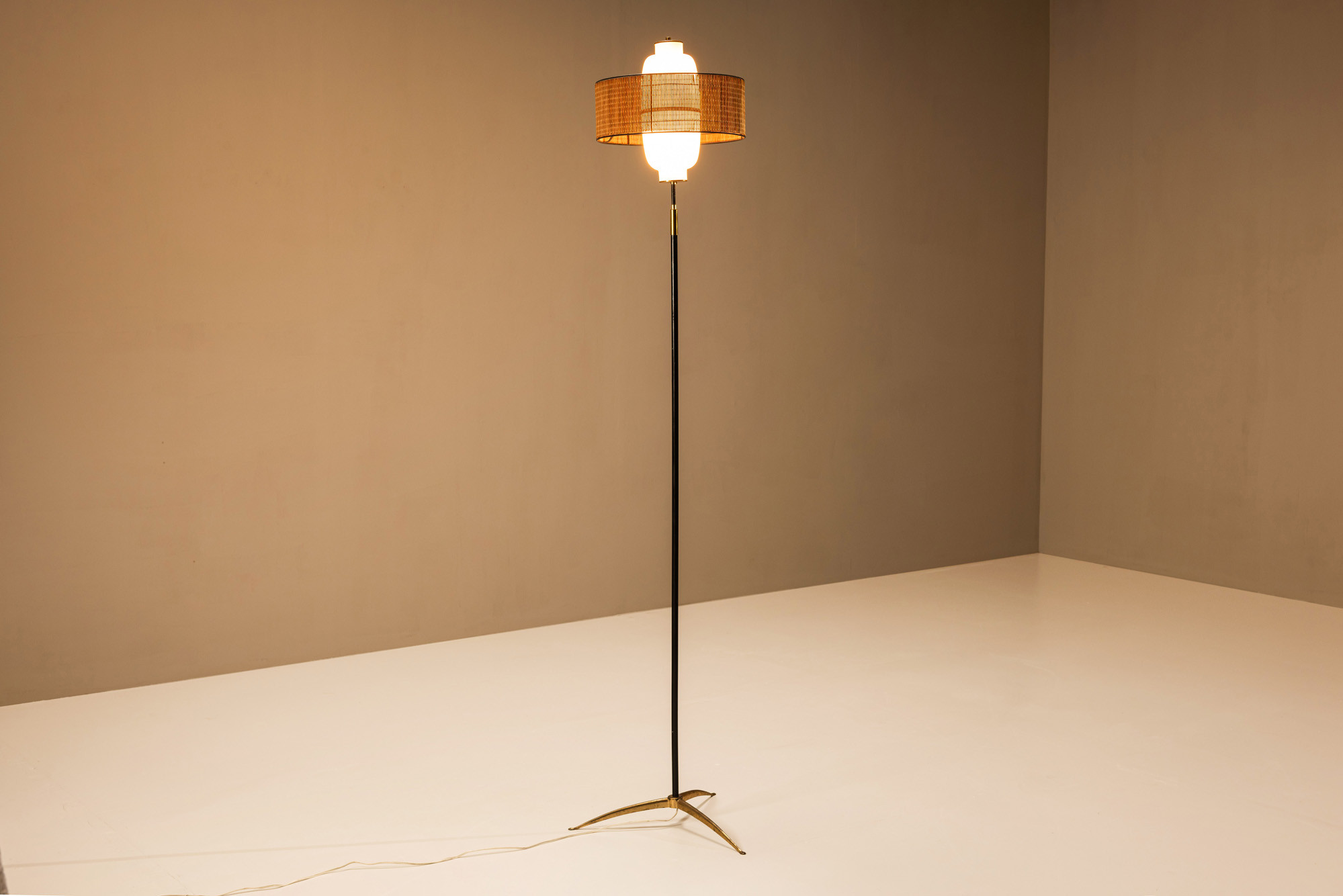
Bruno Gatta founded Stilnovo in Italy in 1946, and floor lamps attributed to him and to the firm are regularly placed within the 1950s. This example follows that broad context through a tall, spare composition that sets a dark vertical stem, a brass-toned three-point base and a layered head combining opaline glass with an open circular shade.
Design
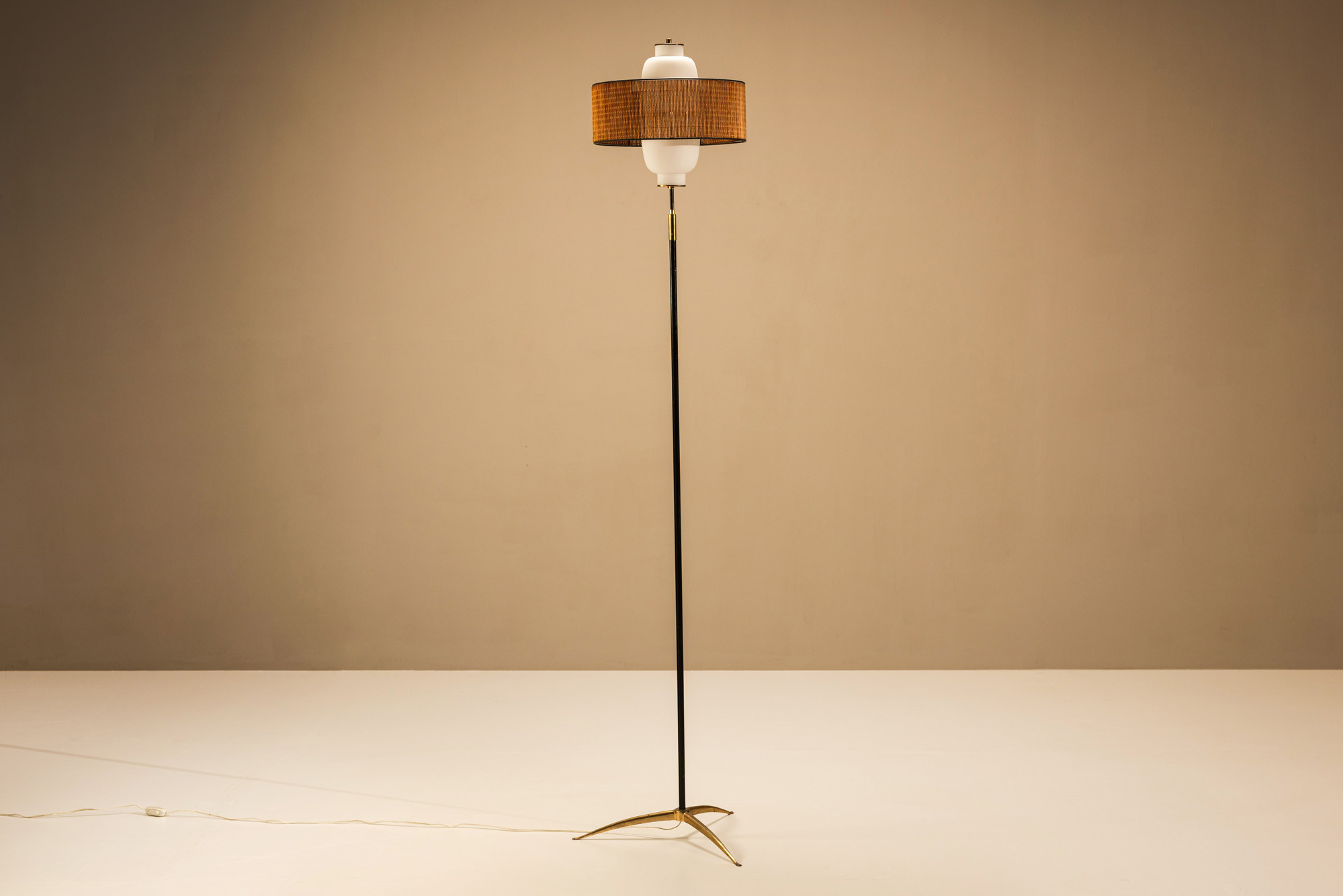
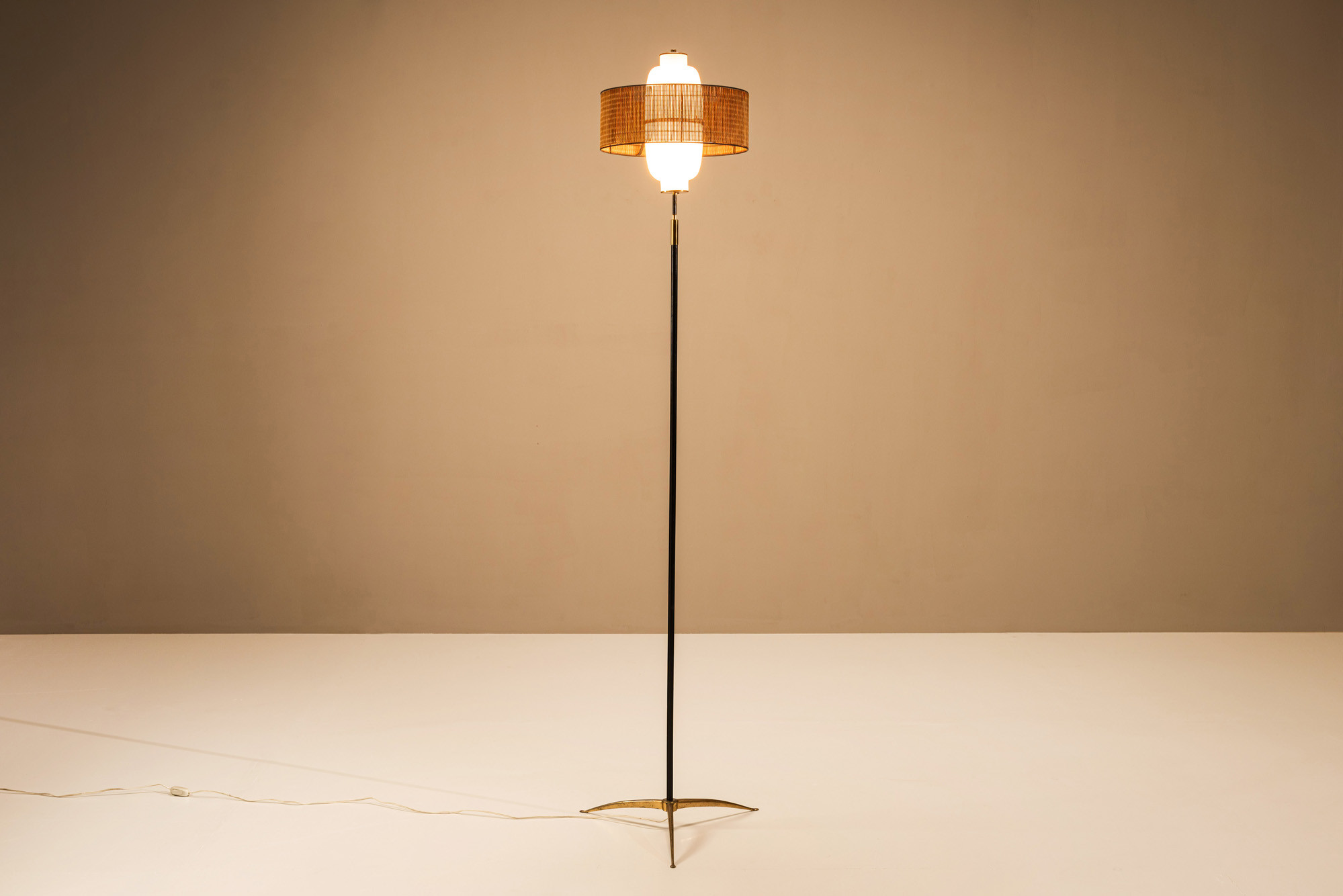
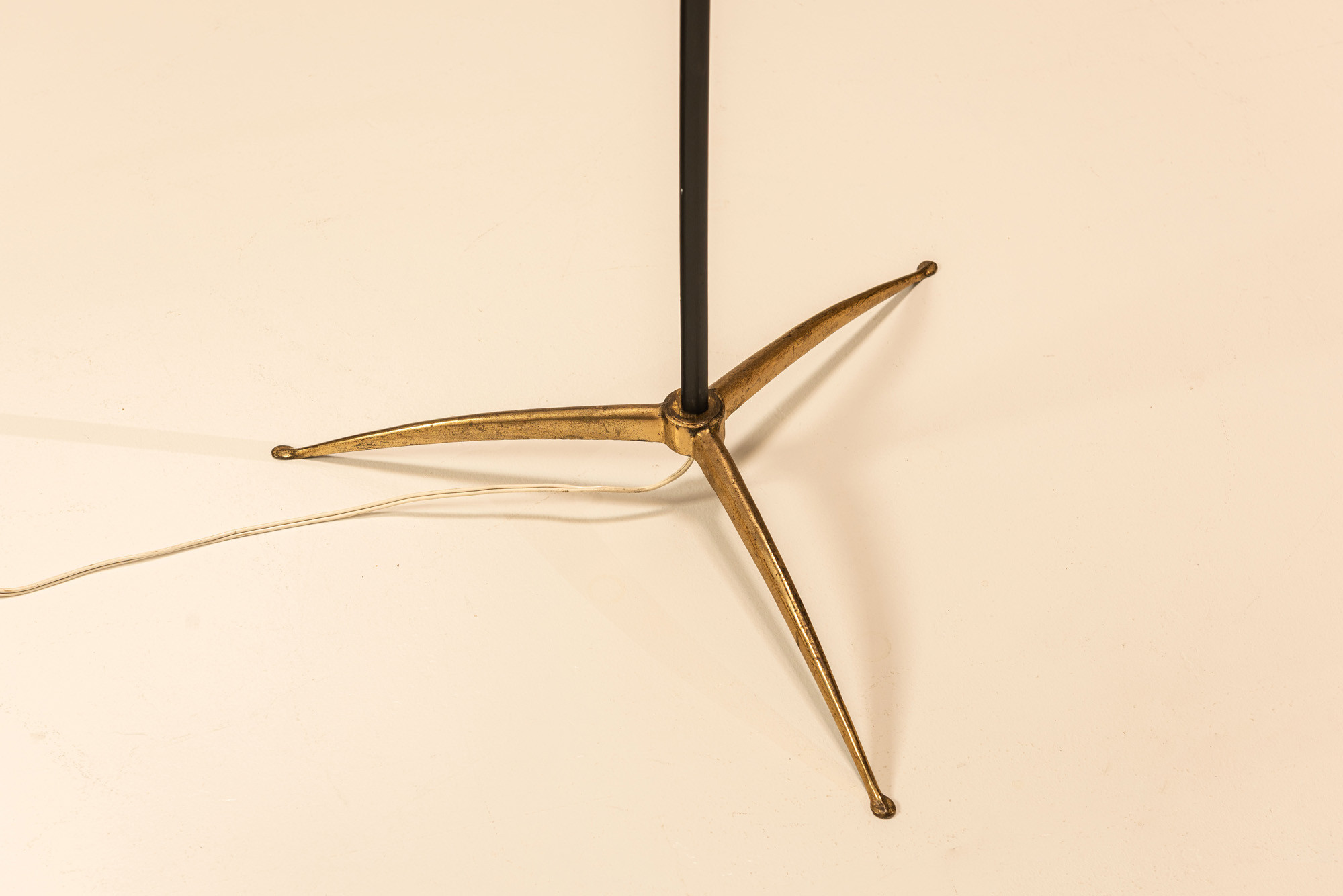
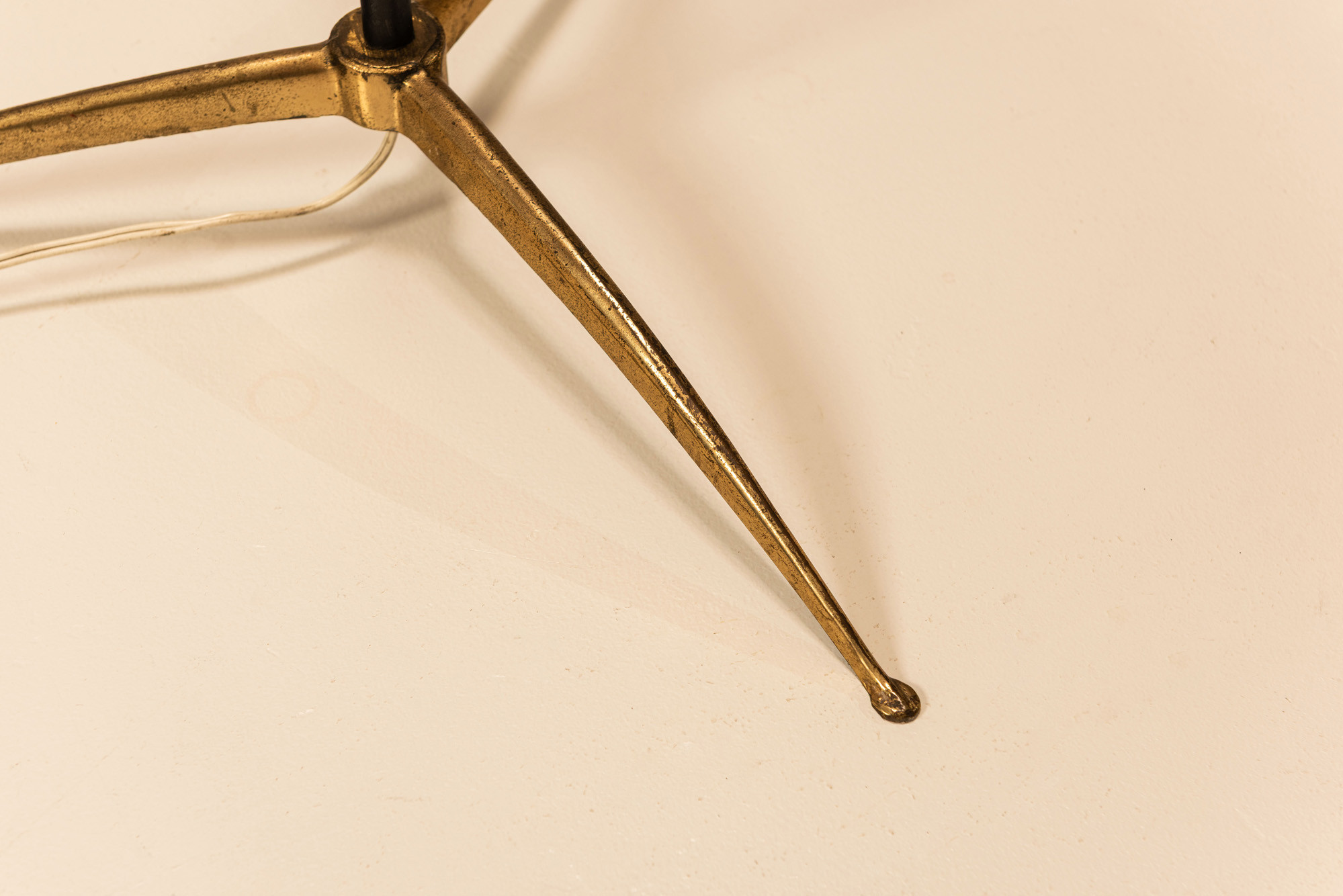
The lamp is built around a single dark stem that rises with very little interruption from the floor to the head. That continuous line gives the piece most of its visual character: from a distance it reads first as a narrow vertical marker, with the broader elements reserved for the top and bottom. At floor level the stem is anchored by a three-armed base in brass-toned metal, each arm tapering outward and ending in a small rounded foot. The base spreads widely in relation to the thin upright, so the lamp keeps an open footprint rather than a solid plinth. In frontal and three-quarter views, the long, low arms register almost as drawn lines across the floor, which makes the central column appear lighter and taller by comparison.
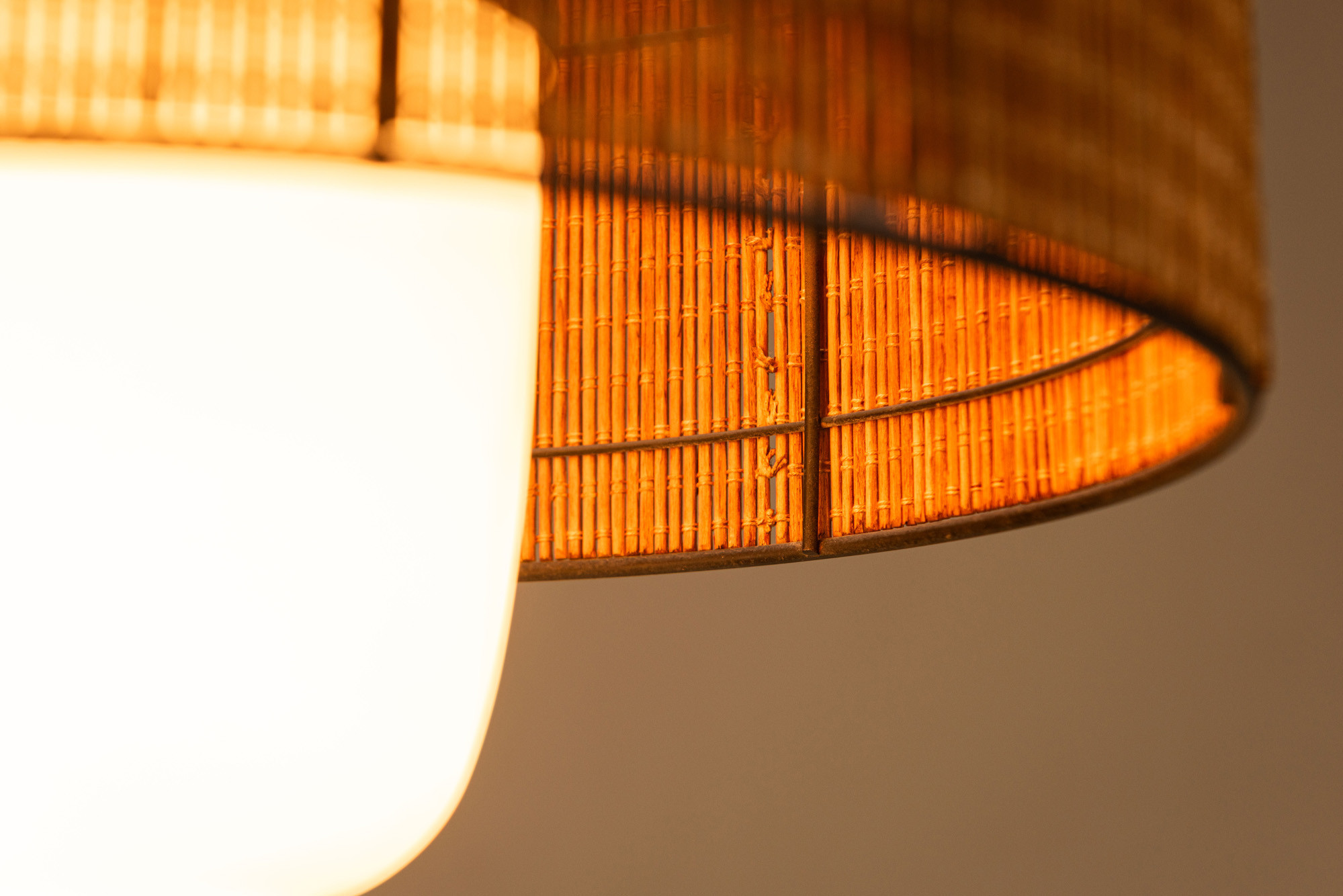
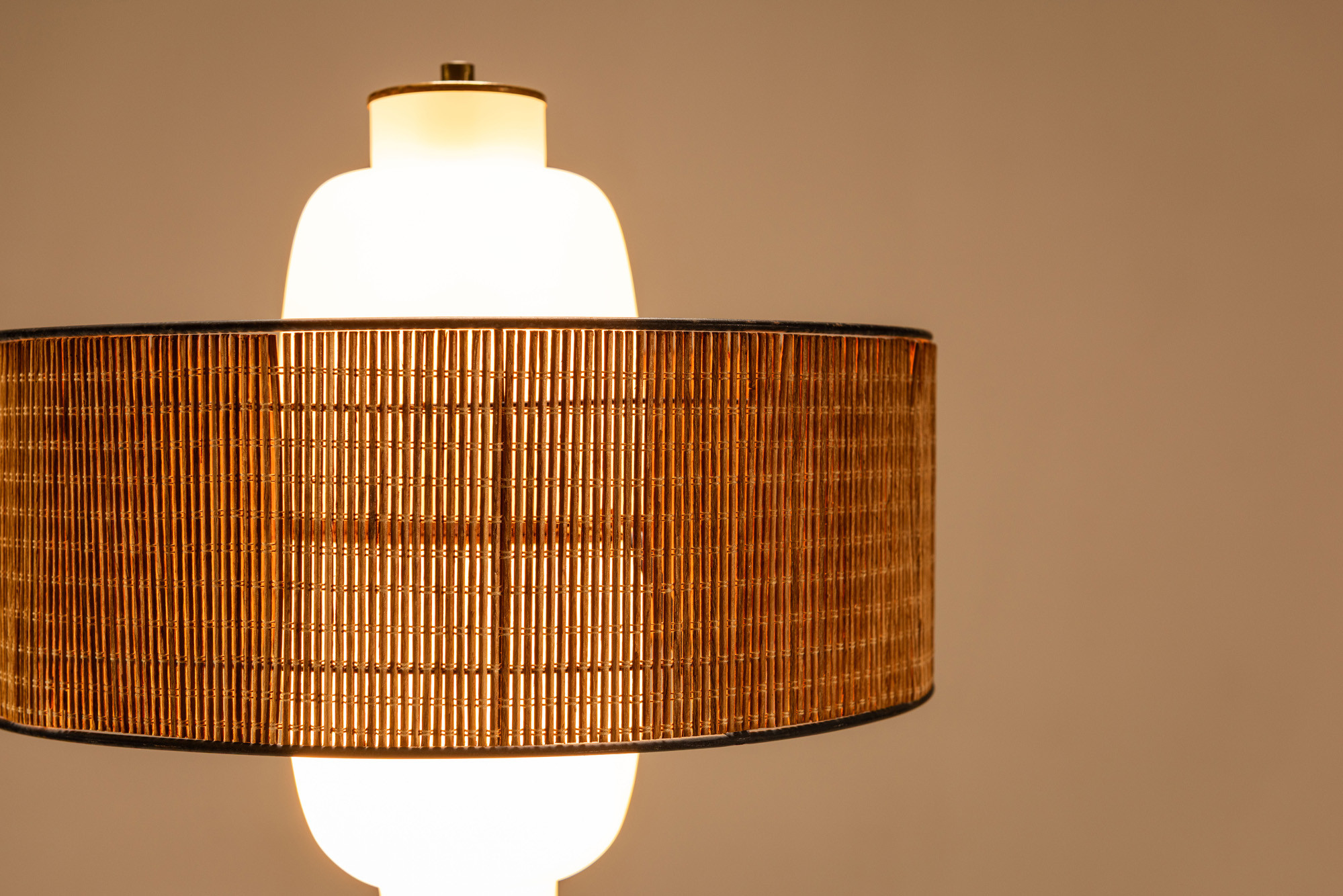
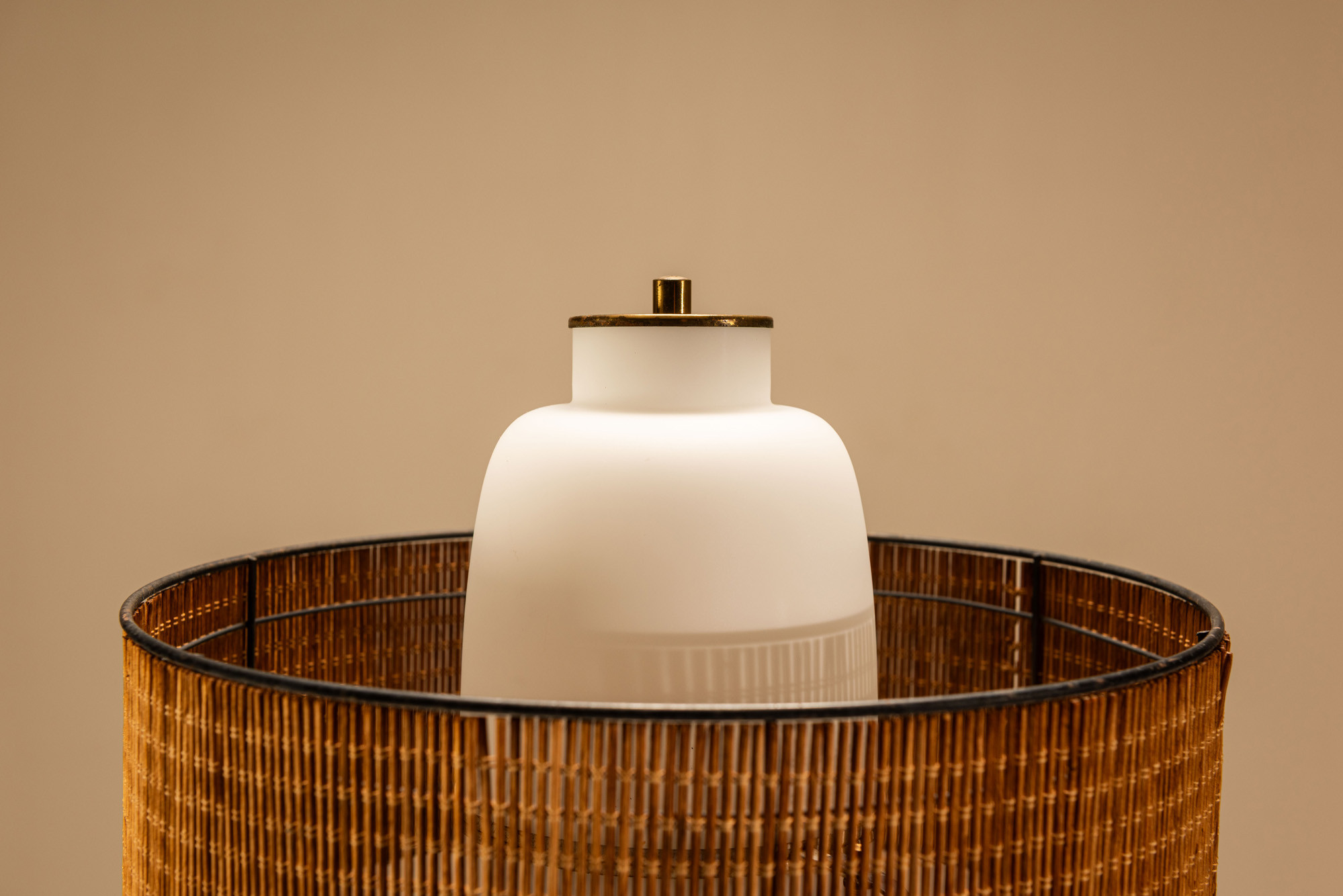
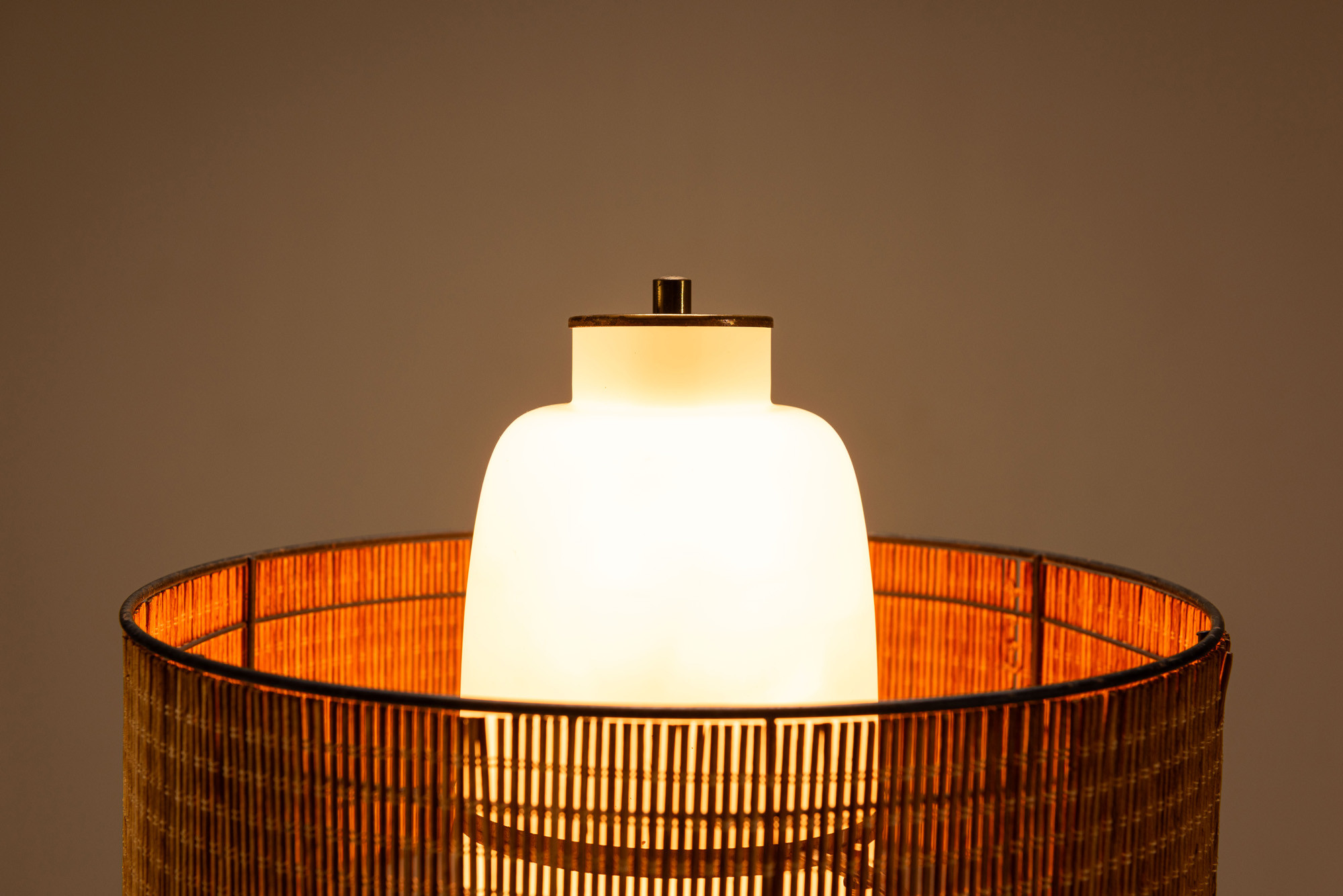
The upper section depends on the relationship between two separate elements: an opaline glass diffuser at the centre and a circular outer shade around it. The glass body has a broader rounded middle with narrower cylindrical sections above and below, so its silhouette changes gently rather than holding a strict tube. Around that volume sits an open drum made from closely spaced vertical cane or reed elements contained within a dark metal frame. This outer ring does not close the light off completely. Instead, the vertical spacing leaves the central glass legible through the shade, and when the lamp is lit the warmer glow caught in the cane or reed contrasts with the denser white light of the opaline core. The head therefore reads as a layered construction rather than a single enclosed shade.
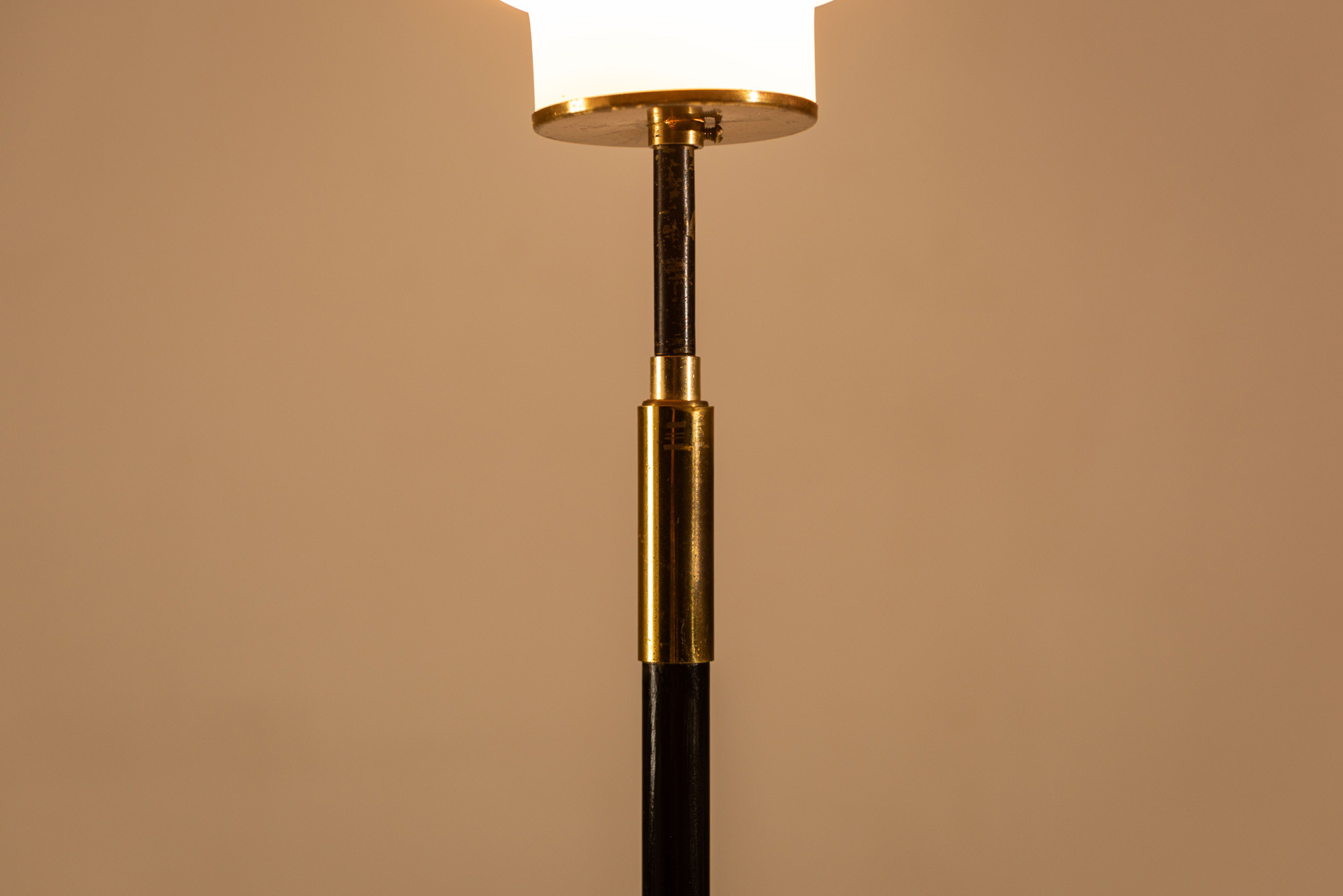
A small brass-toned collar beneath the head forms the main transition between stem and diffuser. Its short cylindrical length interrupts the otherwise dark upright and gives the eye a clear stop before the composition opens out into glass and shade. That contrast matters in the close views: the painted stem stays narrow and recessive, the collar catches light, and the diffuser appears to sit above it with a clearer separation from the support below. Seen unlit, the opaline glass remains the visually fullest part of the top section. Once illuminated, its shape becomes brighter and less sharply bounded, and the circular shade around it turns into a darker ring holding a warm internal glow. The lamp's outline is therefore altered by light, even though the structure itself stays simple.
From different angles, the circular shade and three-point base establish a repeated geometry around the same central axis. The base opens as three radiating arms close to the floor, and above, the drum shade extends horizontally around the diffuser, so the composition broadens at both ends and stays narrow through the middle. This gives the lamp a measured rhythm from bottom to top: spread at the base, contraction through the stem, then expansion again at eye level. The outer shade is also handled as a visibly assembled object. Vertical supports and the dark upper and lower rims remain apparent, and in the close photographs one join shows wear where strands have frayed or broken. That exposed construction is part of the lamp's appearance, making the head read as a light frame wrapped with linear material rather than as an opaque solid band.
Condition
Vintage condition with visible age and use in the supplied photographs. The dark-painted stem shows rubbing and small losses, the brass-toned collar and base have patination and surface marking, the outer cane or reed shade shows wear with fraying or broken strands at one join, and a white cord with inline switch is present. However, all adding to the beautiful patina of this lamp.

Excellent responsiveness, and with wonderful curatorial chops!
I just received the absolutely gorgeous credenza yesterday. It was professionally packaged and delivered just as promised. I cannot more highly recommend AtKris Studio.
This bar is amazing. Beautiful and exactly as described. A custom crate (which was a work of art itself) was built in order to ship the piece to the U.S. The bar arrived in perfect condition without a scratch. I will say that take the crate apart was not easy and was a two-person job. But worth it in the end