€
1650
€
1650
€
Available
Available
Available
Dimensions
Height: 20 x Width: 25 x Depth: 20 cm - Height: 7 7/8 x Width: 9 7/8 x Depth: 7 7/8 inches
Worldwide delivery
These transport prices are an indication and might change due to circumstances.
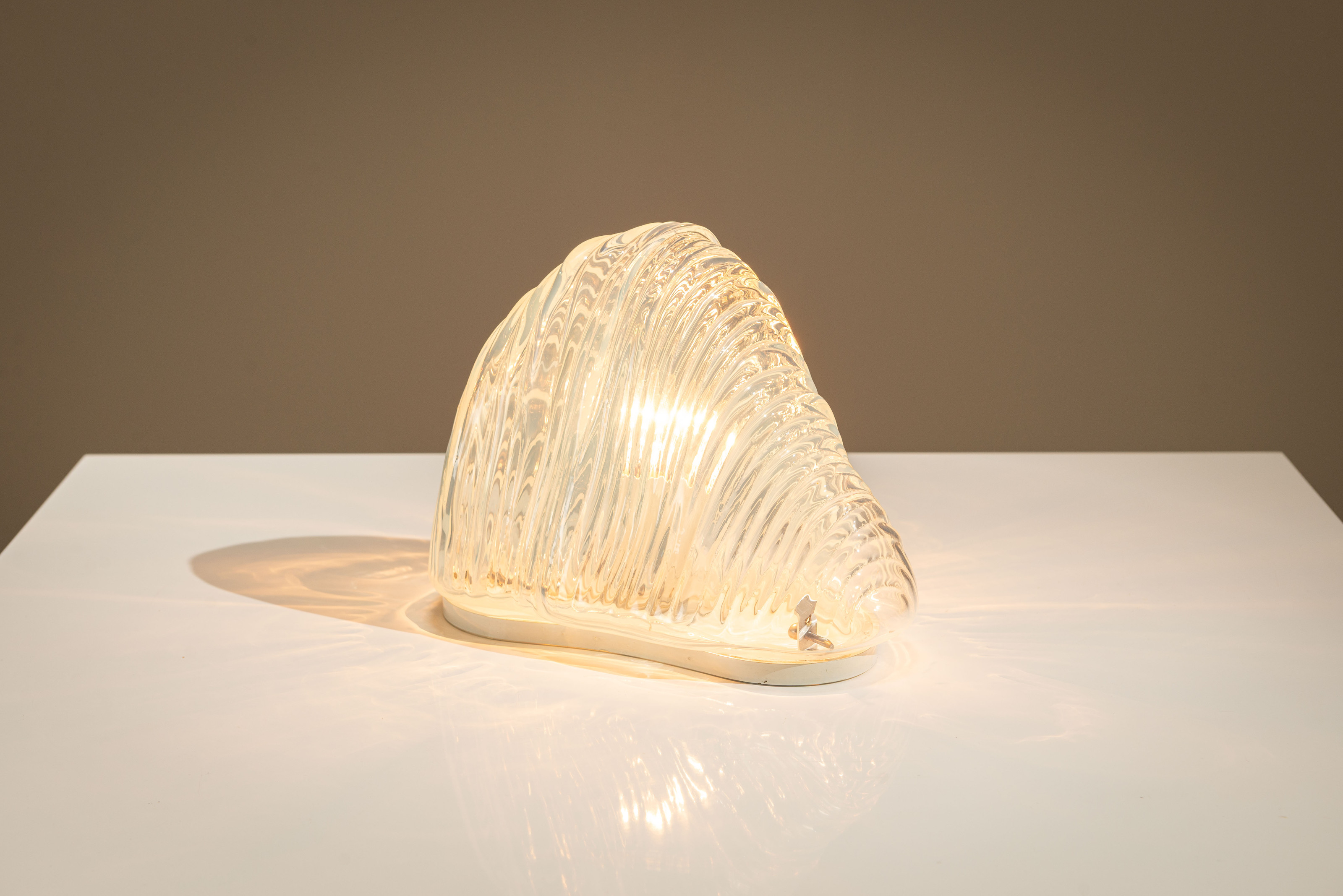
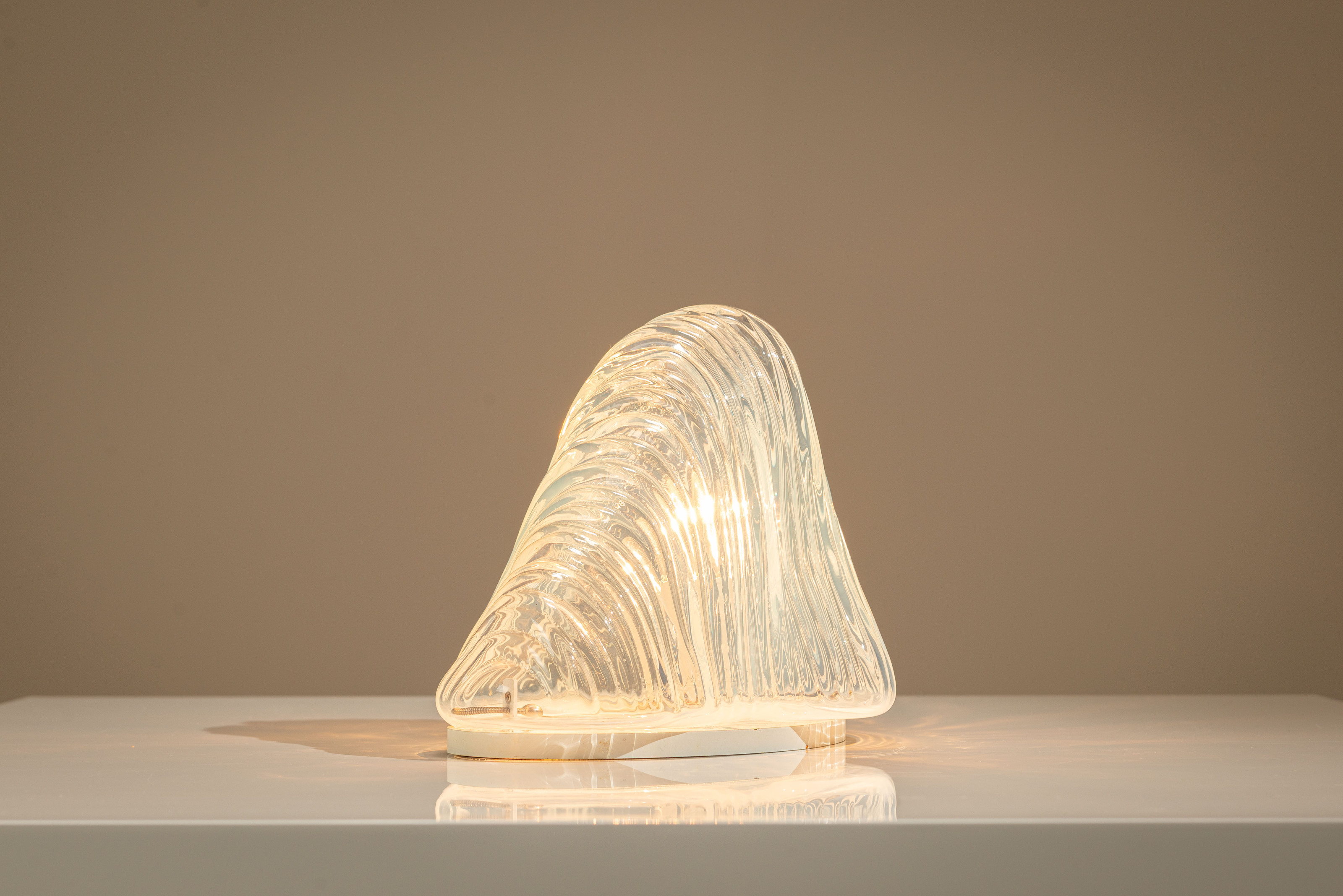
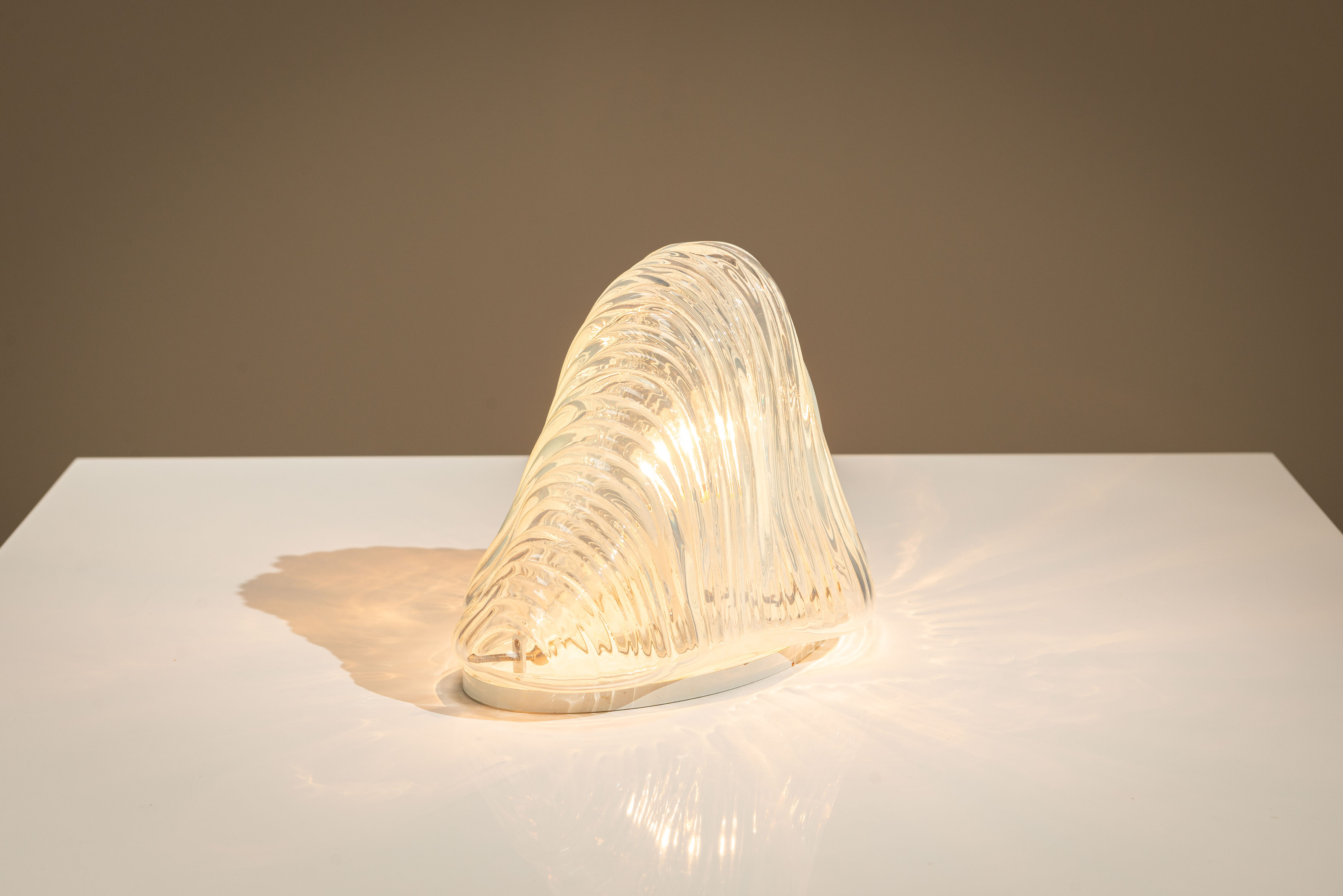
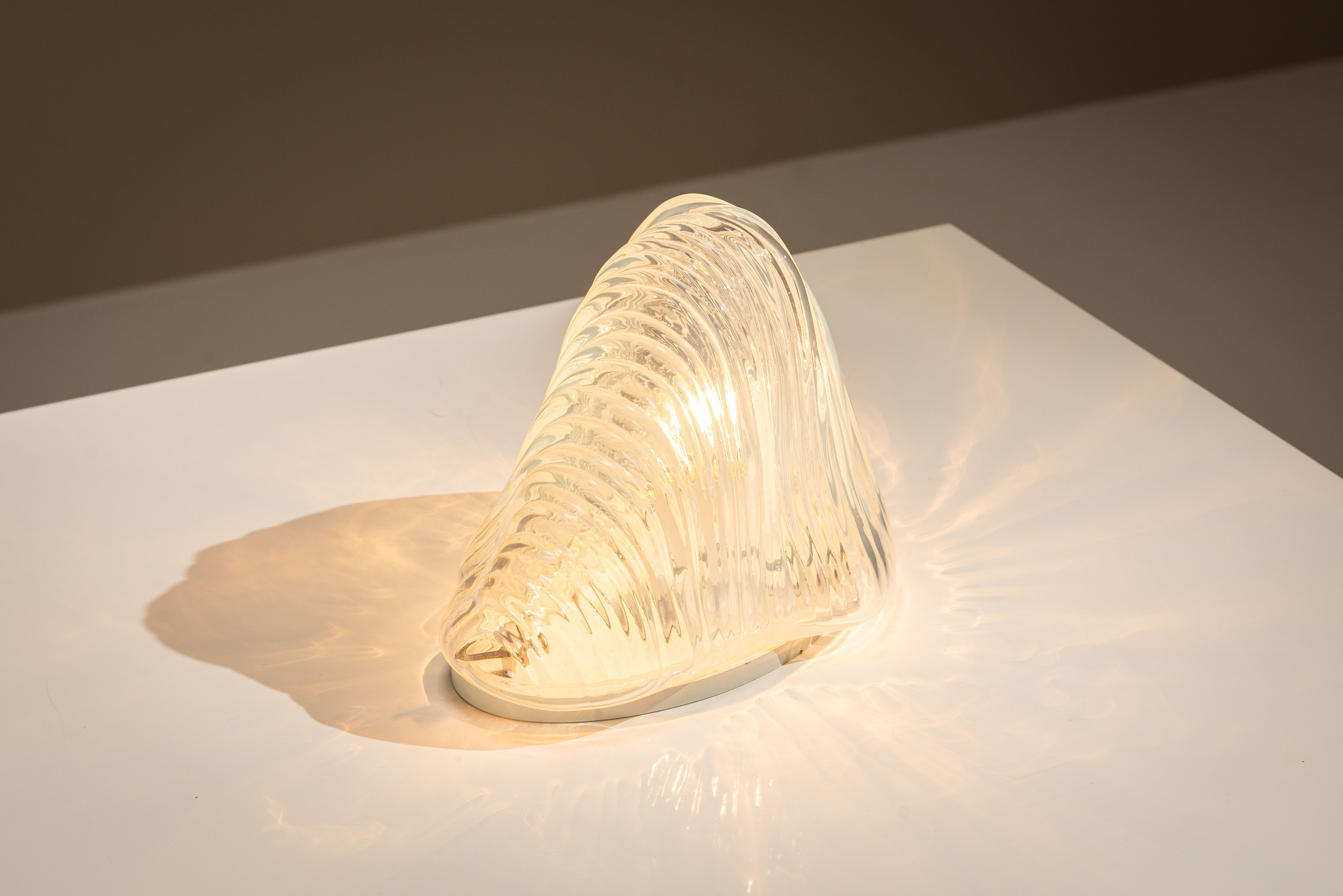
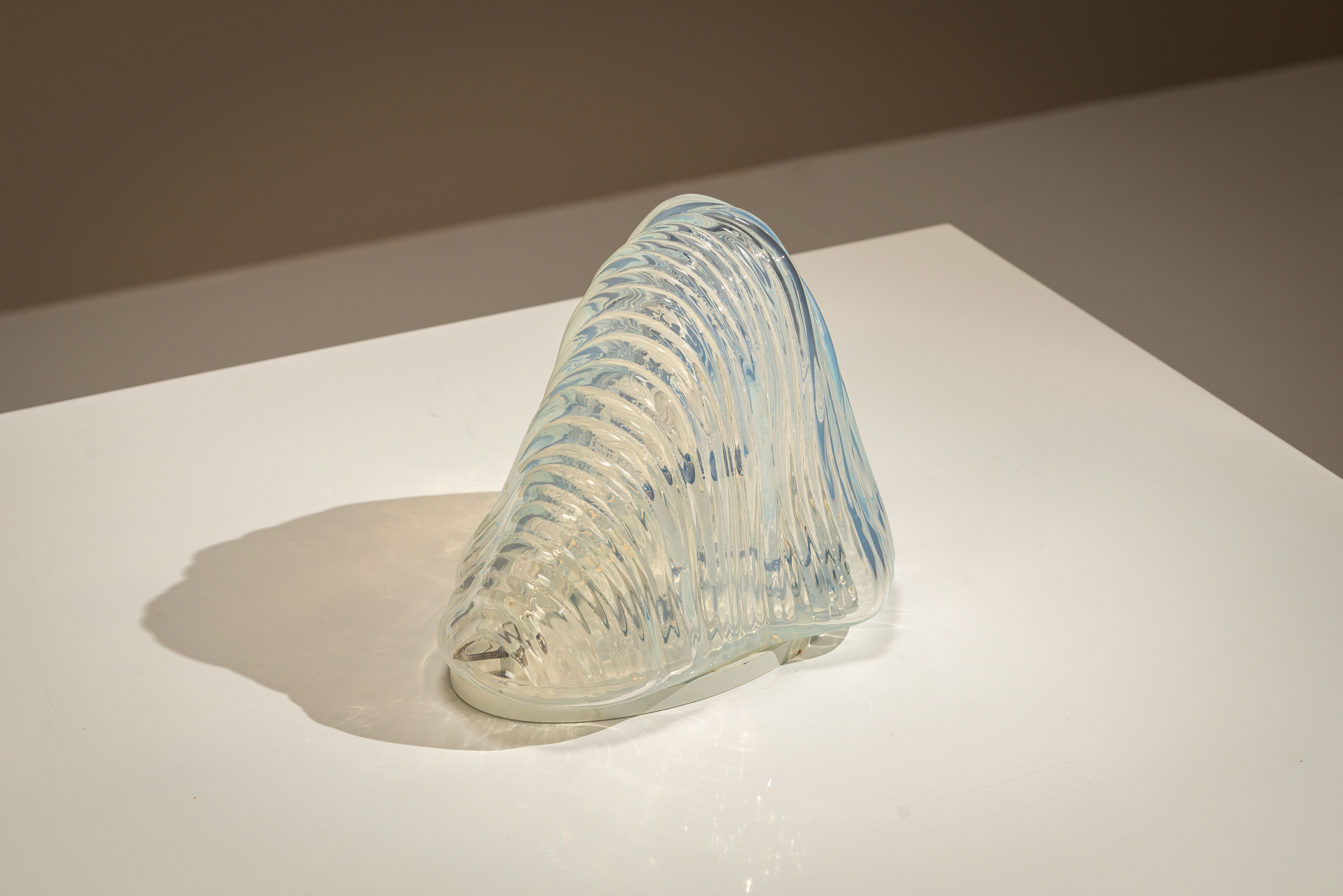
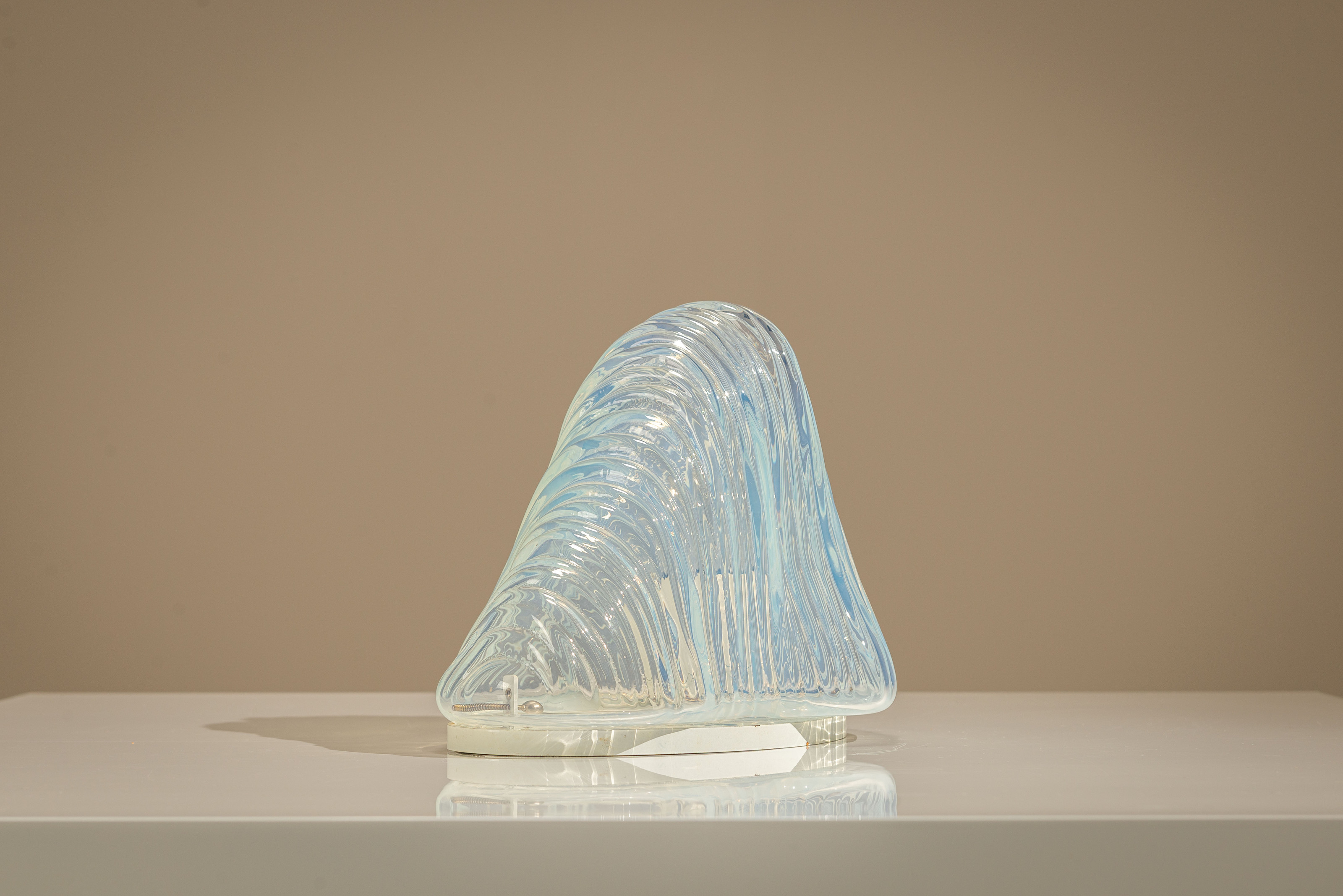
Attributed to Carlo Nason for Mazzega, this Murano glass table lamp corresponds with the 'Iceberg' model documented in published sources from Italy, with 1968 cited there as the design date. The present example shows the model’s characteristic asymmetrical glass volume on a low metal base, with the changing appearance of the glass visible both unlit and illuminated.
Design
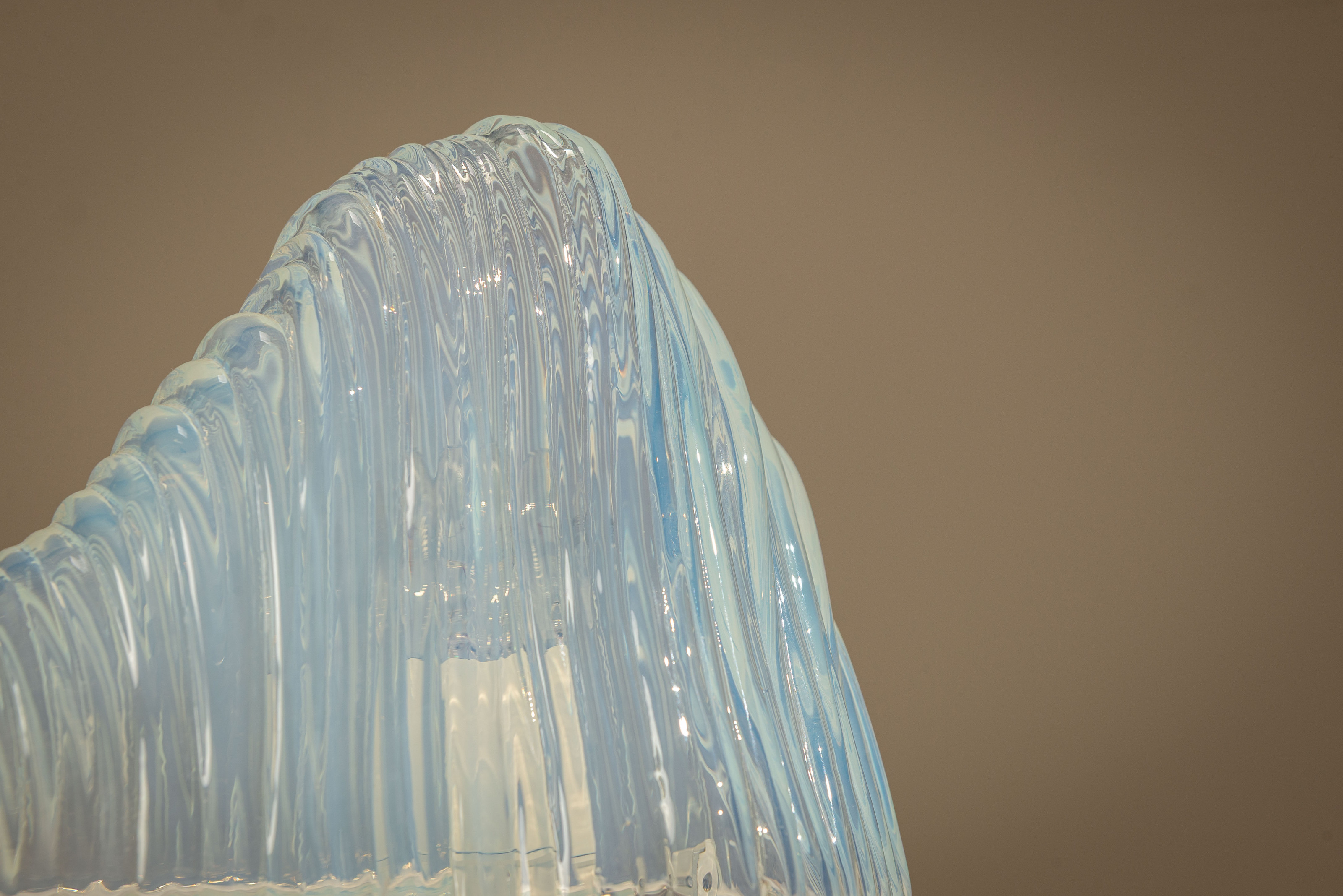
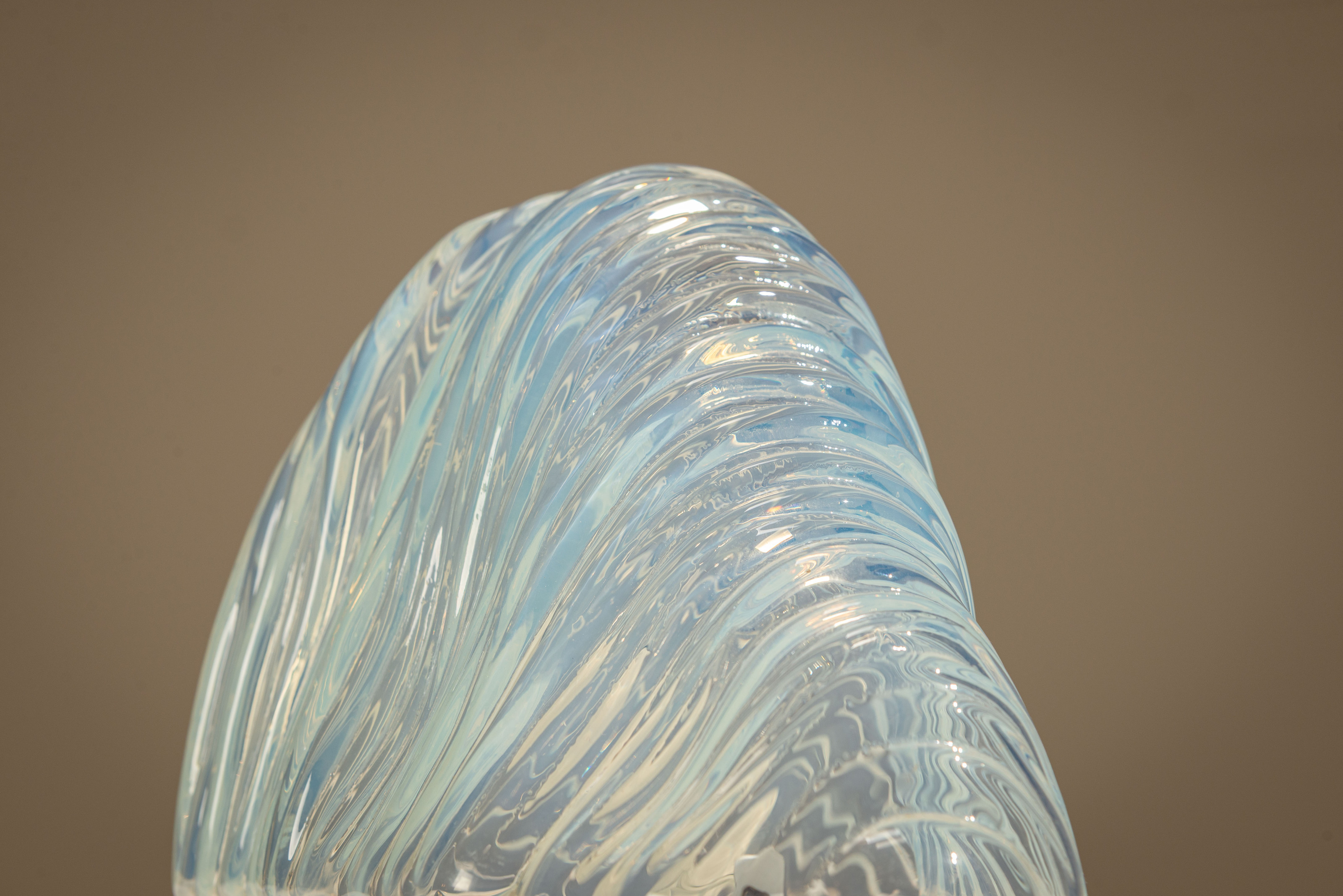
The lamp is formed as a single compact mass of glass set low against the table, yet its outline is uneven rather than symmetrical. From one end the body begins as a narrow pointed tip close to the base, then rises in a broad sweep to a rounded crest before dropping more abruptly at the opposite side. That changing profile gives it a different reading from each viewpoint: flatter and more extended from the lower side, steeper and more vertical where the glass reaches its highest point.
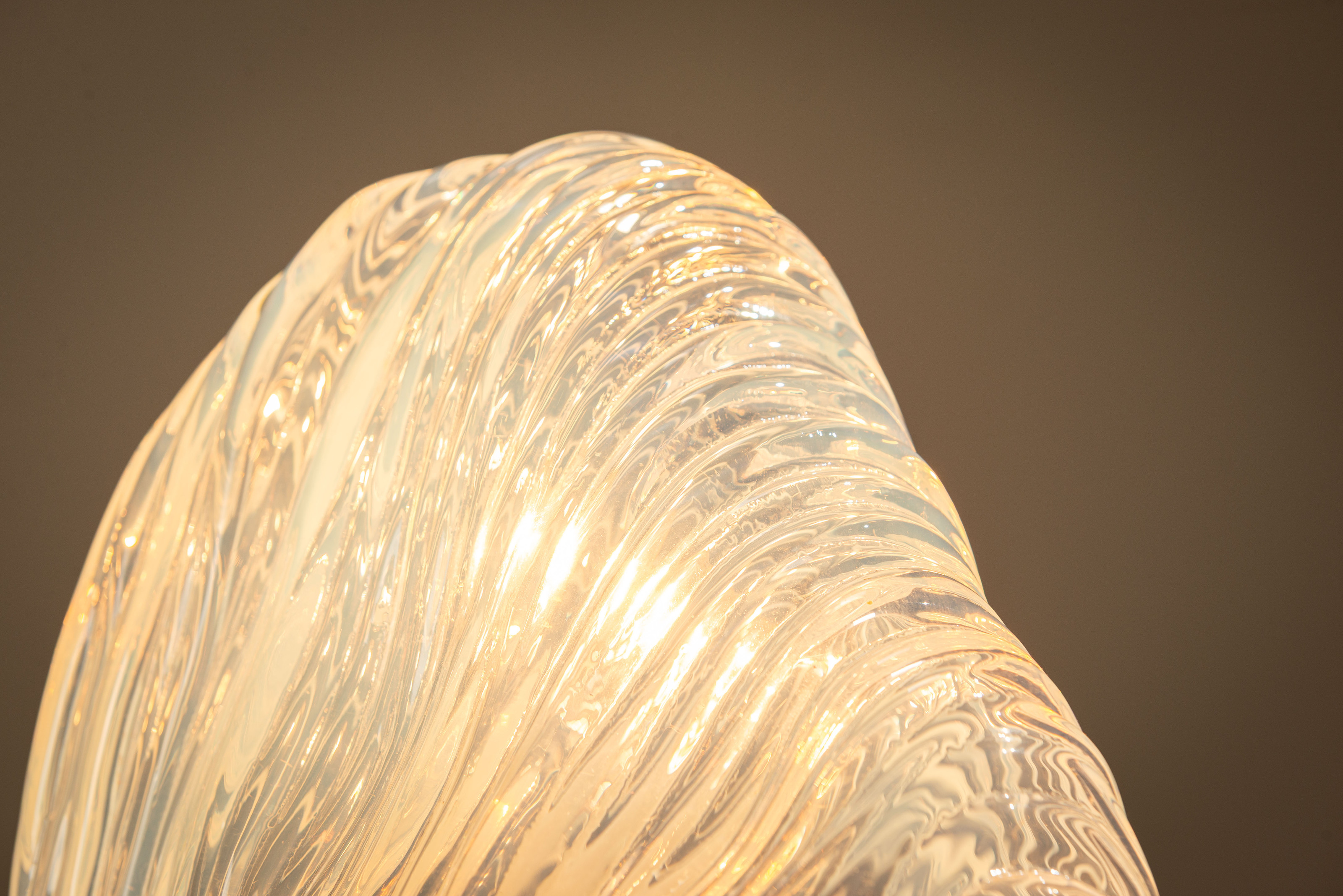
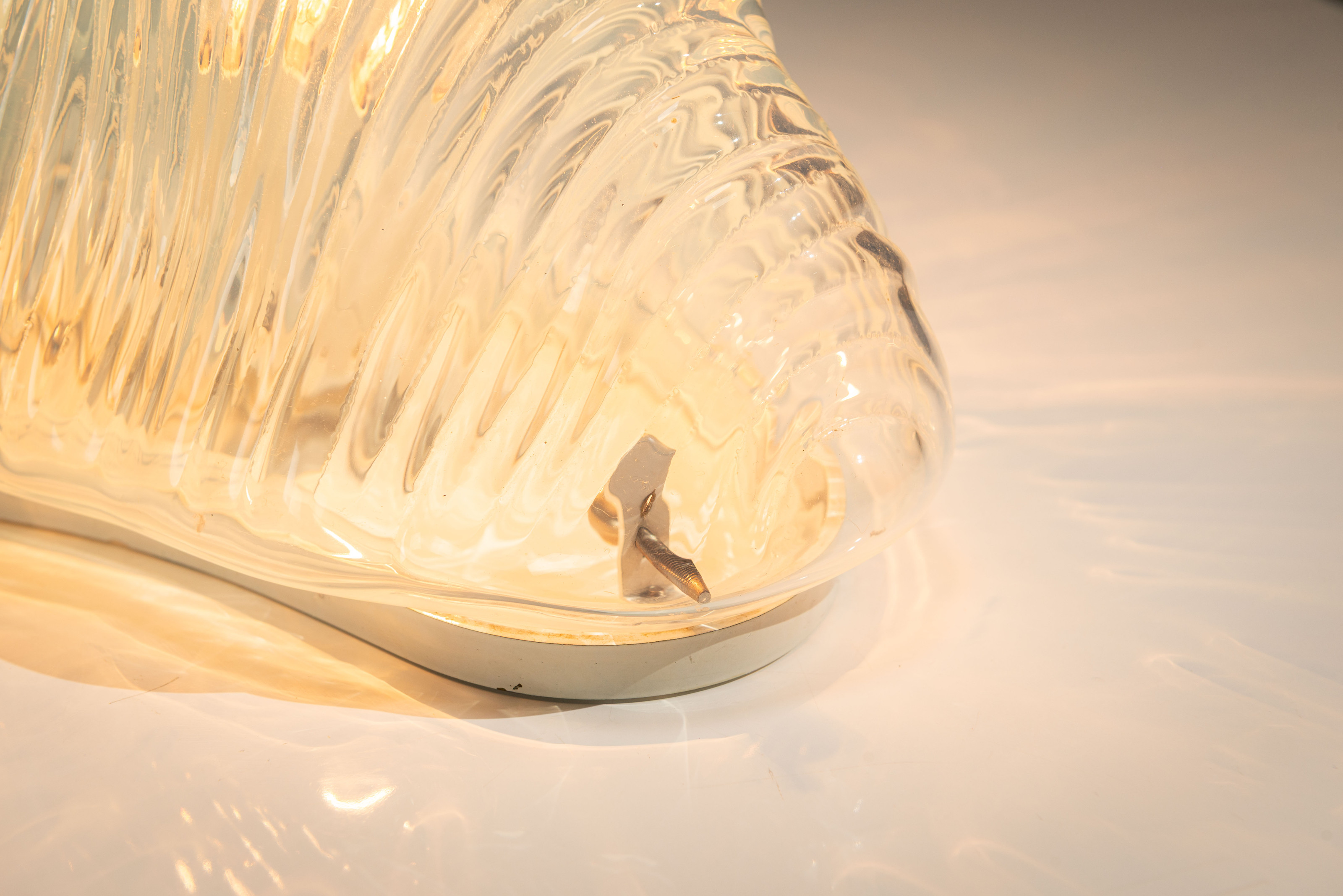
A continuous ribbed pattern travels over the whole glass body, running in close parallel bands that bend with the changing contour. Near the lower pointed end these ribs appear tighter and more compressed; across the taller section they lengthen into broader vertical lines. This surface pattern breaks up the mass of the glass and alters the way light is carried through it. In the photographs taken switched on, the ribs catch and scatter the light so that the edge of the lamp projects wavering reflections onto the table around it.
The relationship between glass and base is kept deliberately direct. The heavy upper element sits on a low white-painted metal platform cut to an irregular rounded outline that follows the footprint of the shade rather than extending far beyond it. This keeps the base visually subordinate in side view, leaving the glass to define the object’s silhouette. Metal fixing clips remain visible near the lower edge, making the method of attachment legible and introducing small industrial accents against the flowing glass surface.
The lamp changes character noticeably between its unlit and illuminated states. Unlit, the glass appears cooler, with a faint bluish cast visible in several photographs, and the ribbed moulding reads primarily as a surface structure. Once illuminated, the body becomes warmer and more translucent, and the internal light source is softened by the thickness of the glass. The result is not an even opaque glow; brighter zones remain visible within the taller section, and the moulded ridges produce a ring of reflected light around the base on the supporting surface.
Seen from different angles, the lamp shifts between a low horizontal object and a taller rising form, which helps explain the persistence of the 'Iceberg' name in published references. Its effect depends less on added ornament than on the interaction between a heavy ribbed glass shell, the compact base beneath it and the light passing through the body.
Condition
Vintage condition with visible age and use. The white-painted base shows marks, rubbing and small losses to the paint, and age-related wear is visible around the lower edge and fittings; no chips or cracks are clearly apparent in the supplied photographs, but the attribution, exact model designation, date, markings and full electrical assessment have not been confirmed from the evidence provided.

Excellent responsiveness, and with wonderful curatorial chops!
Table arrived very well crated, seller made process seamless.
I just received the absolutely gorgeous credenza yesterday. It was professionally packaged and delivered just as promised. I cannot more highly recommend AtKris Studio.