€
3950
€
3950
€
Available
Available
Available
Dimensions
Height: 79 x Width: 180 x Depth: 100 cm - Height: 31 1/8 x Width: 70 7/8 x Depth: 39 3/8 inches
Worldwide delivery
These transport prices are an indication and might change due to circumstances.
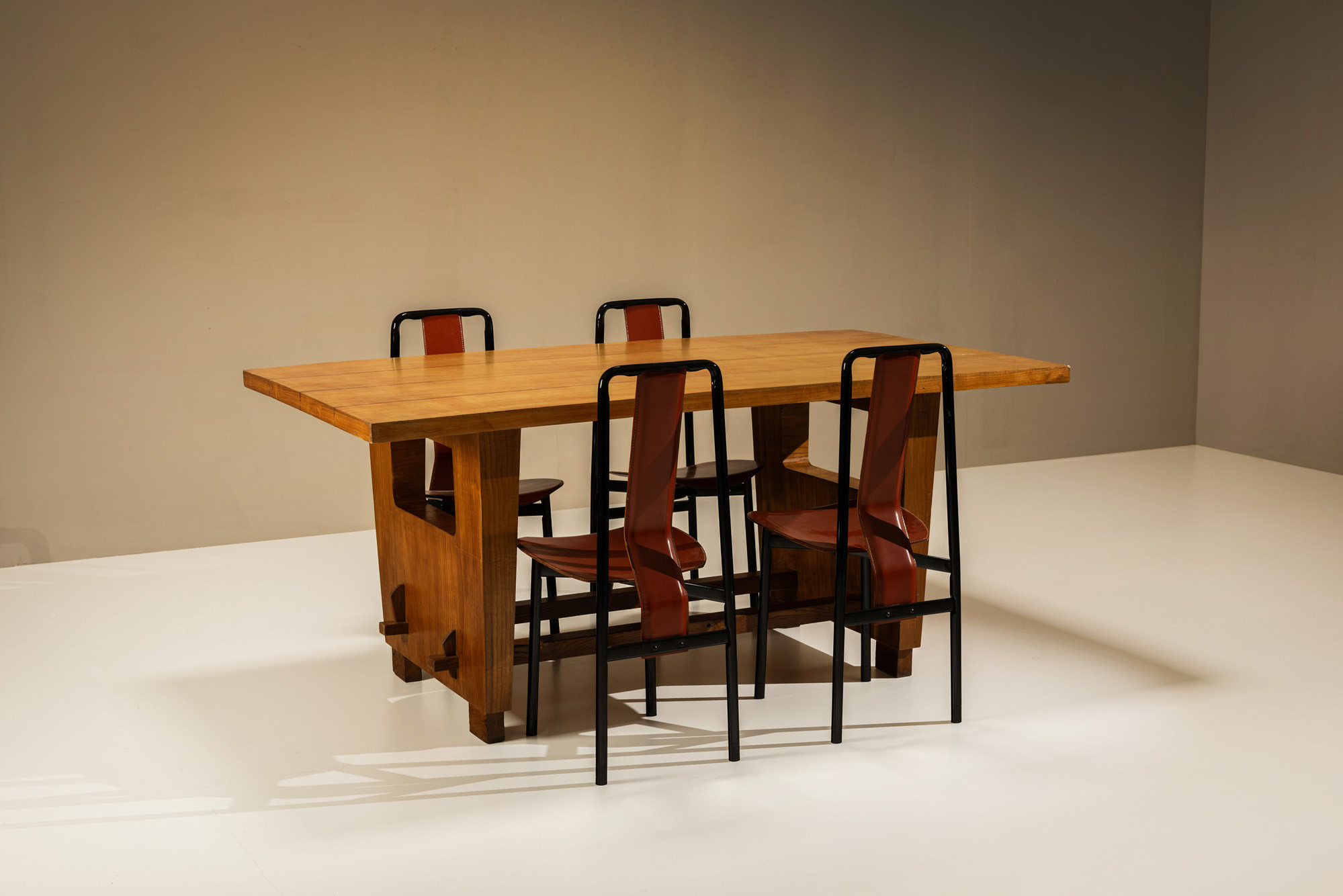
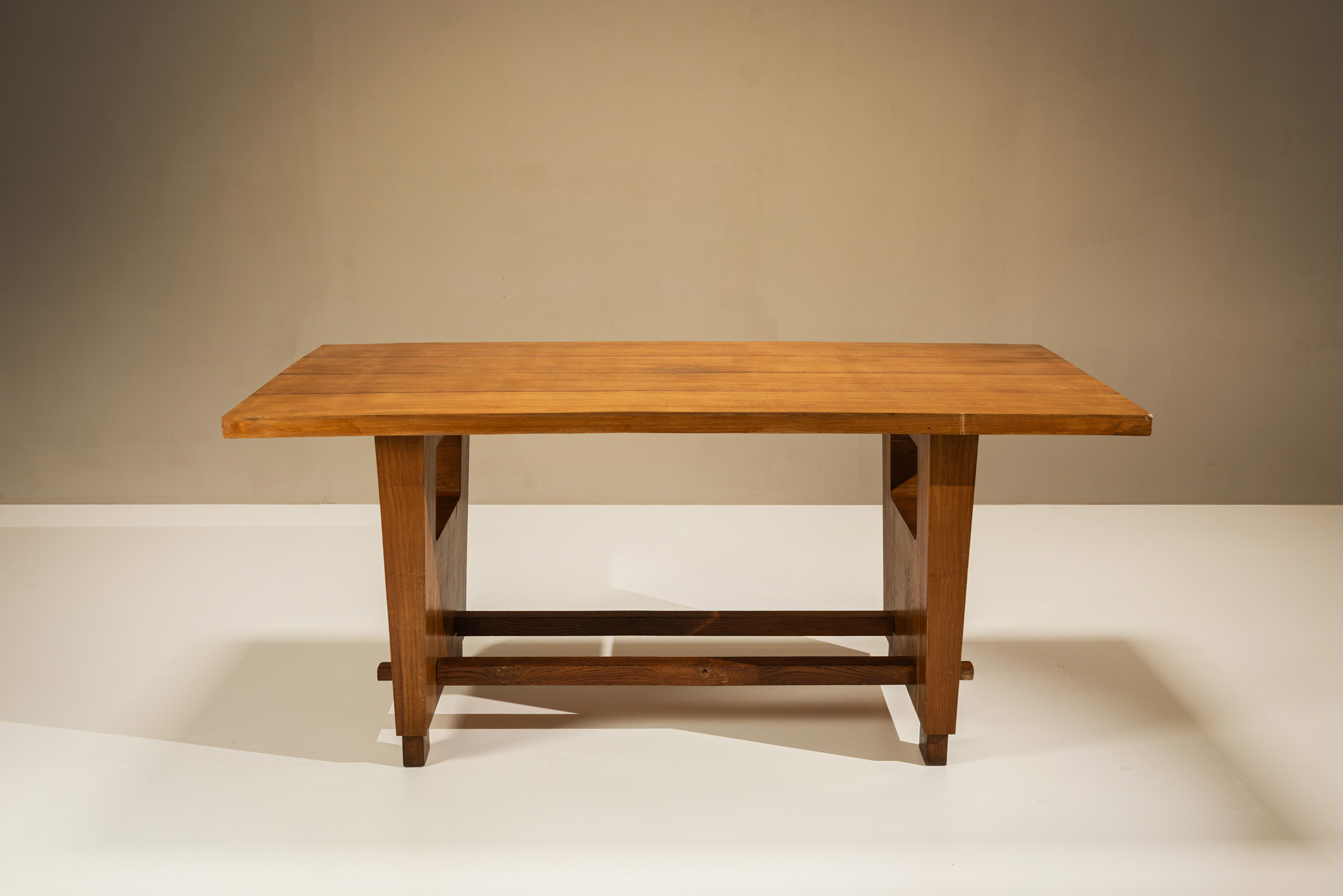
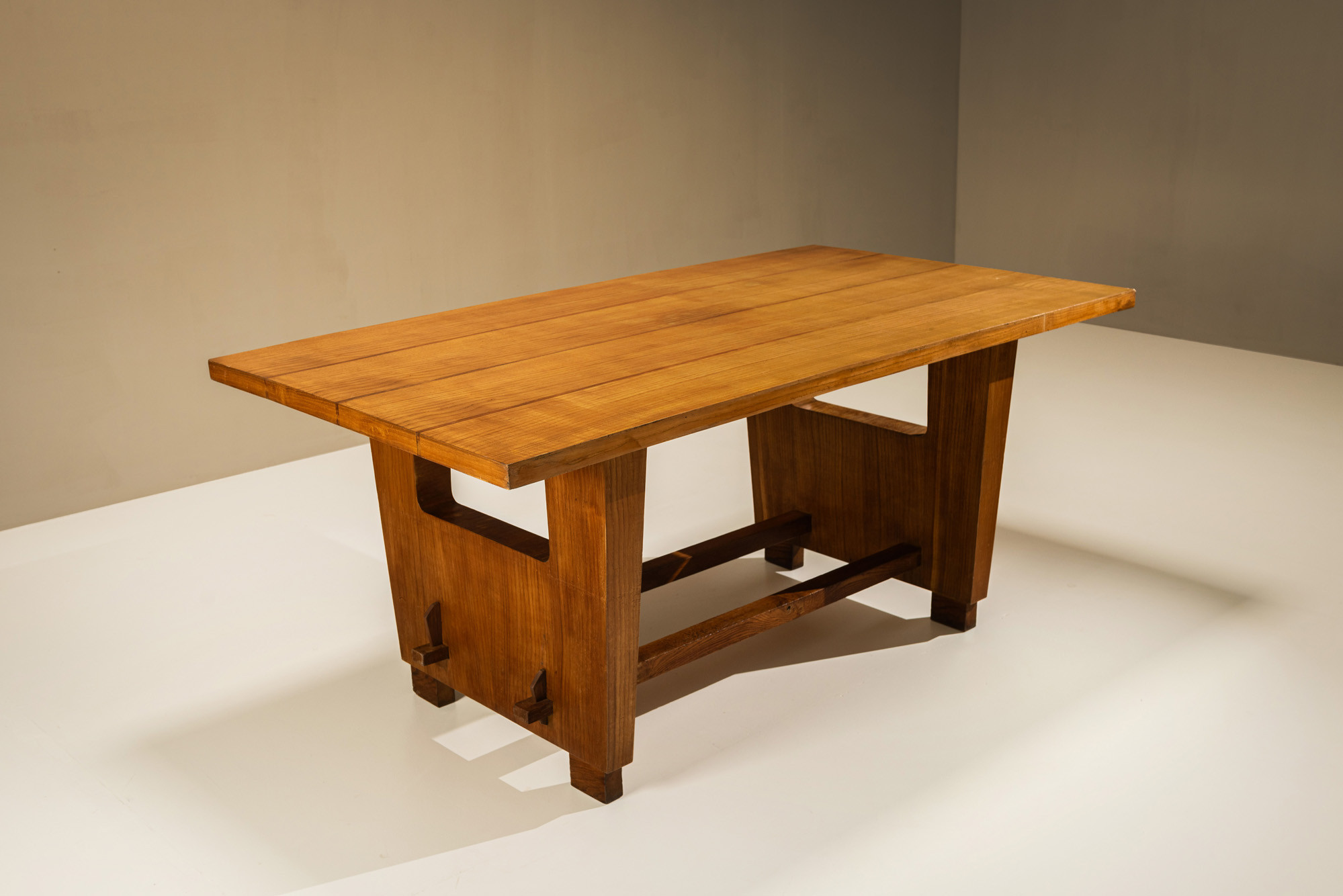
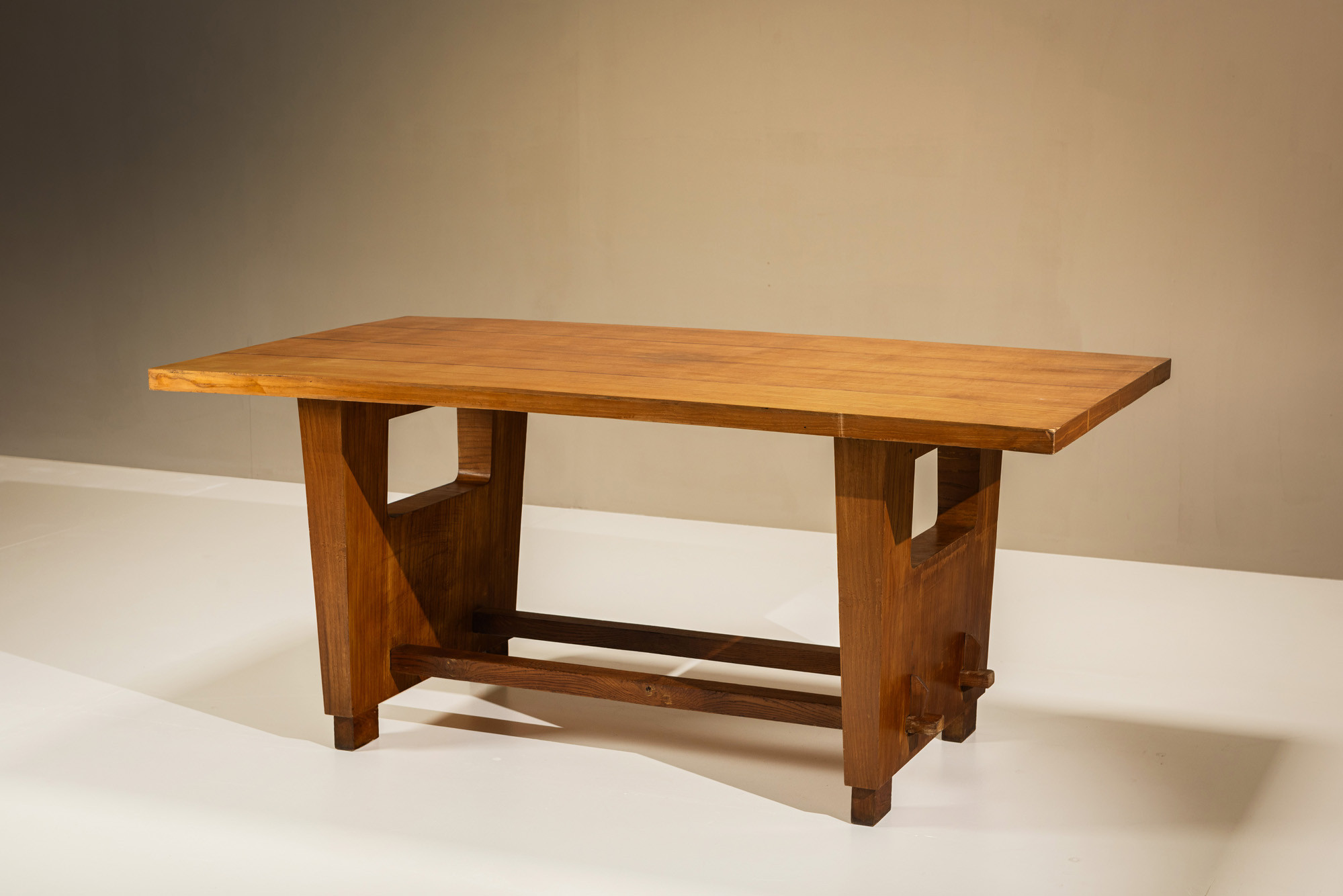
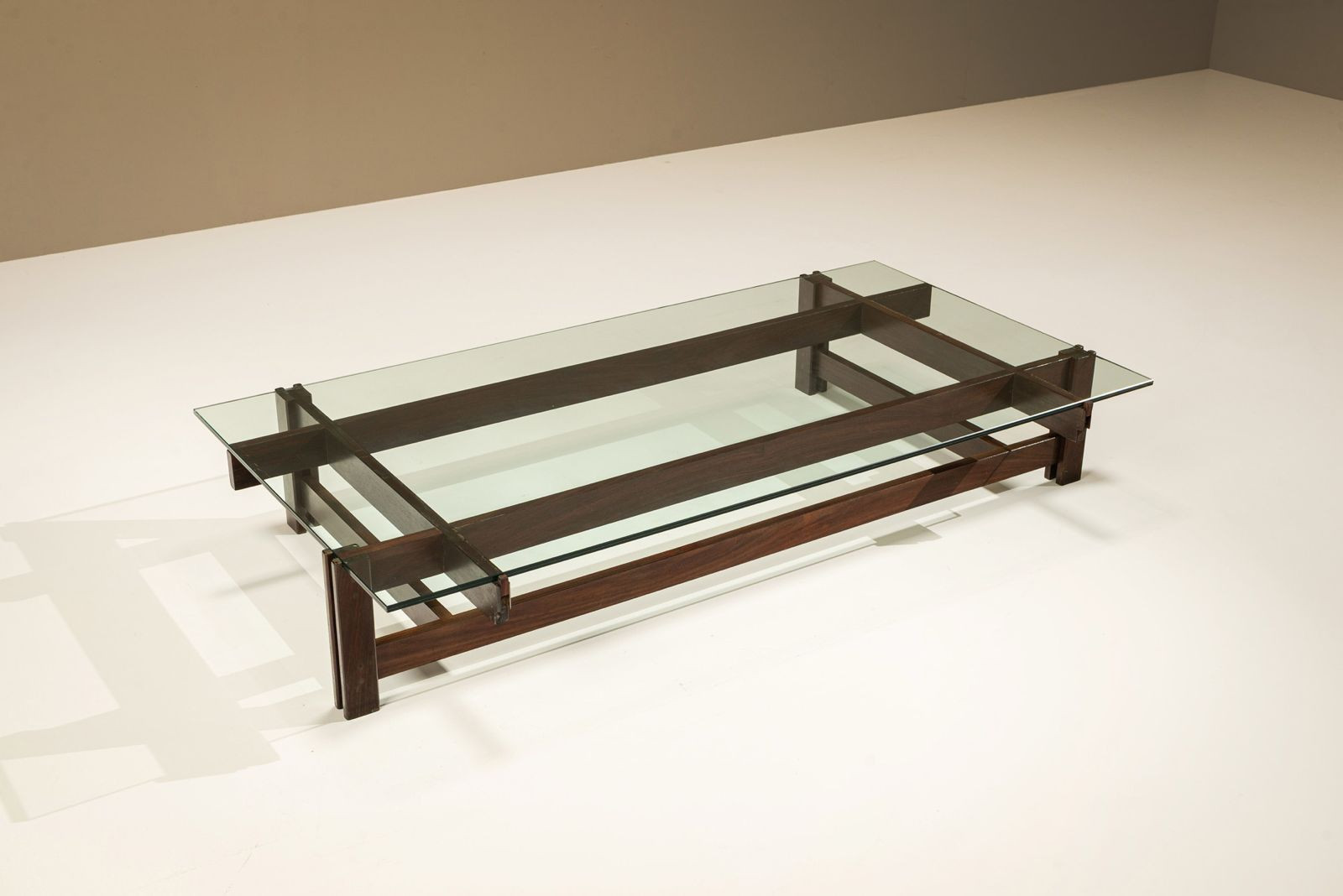
This Italian wooden table is dated to the 1950s and can be used as either a dining table or a console. Its photographed form is direct and weight-bearing, built around a broad rectangular top and two solid end supports, with cut-out openings and darker stretchers breaking up what would otherwise read as a closed base.
Design
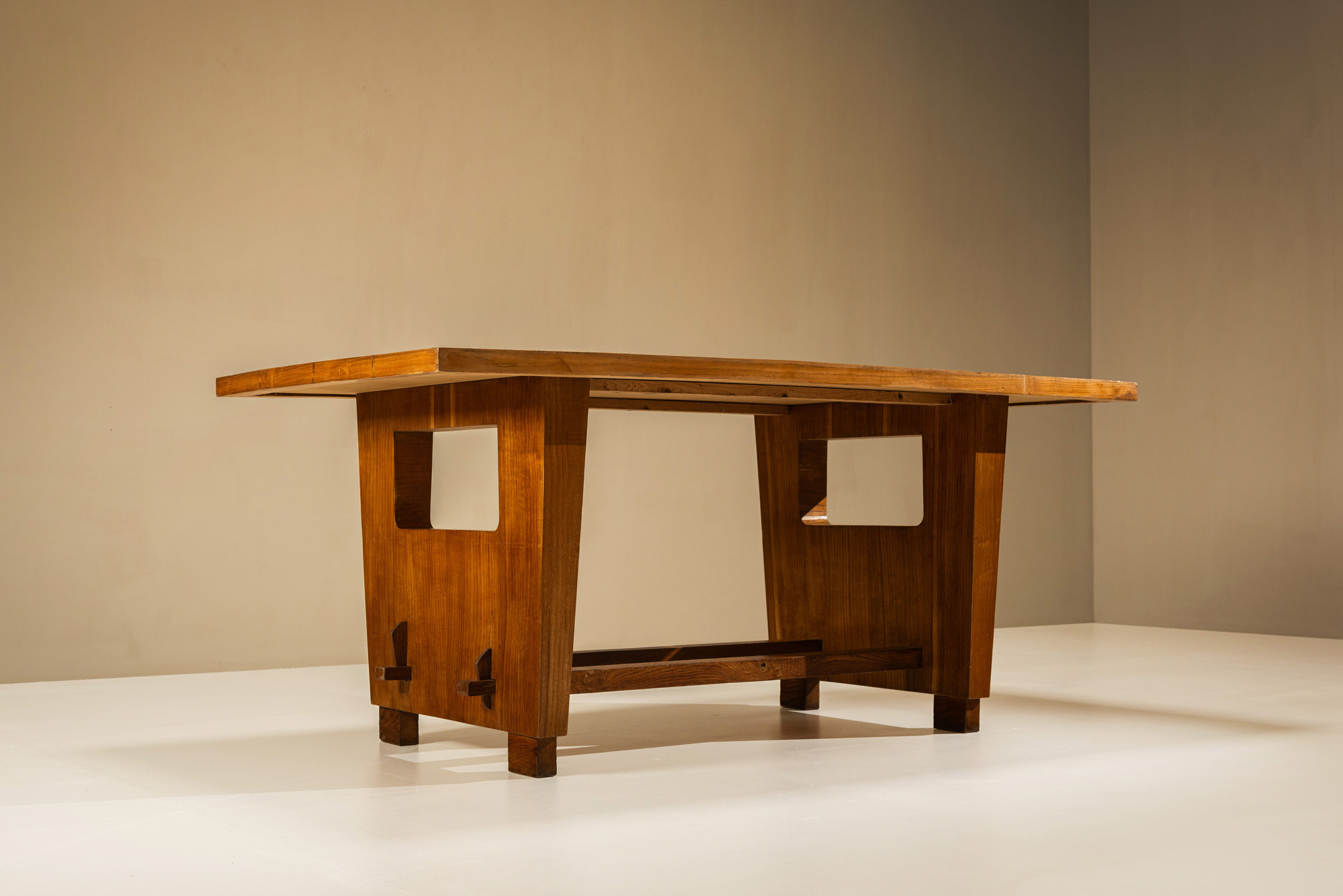
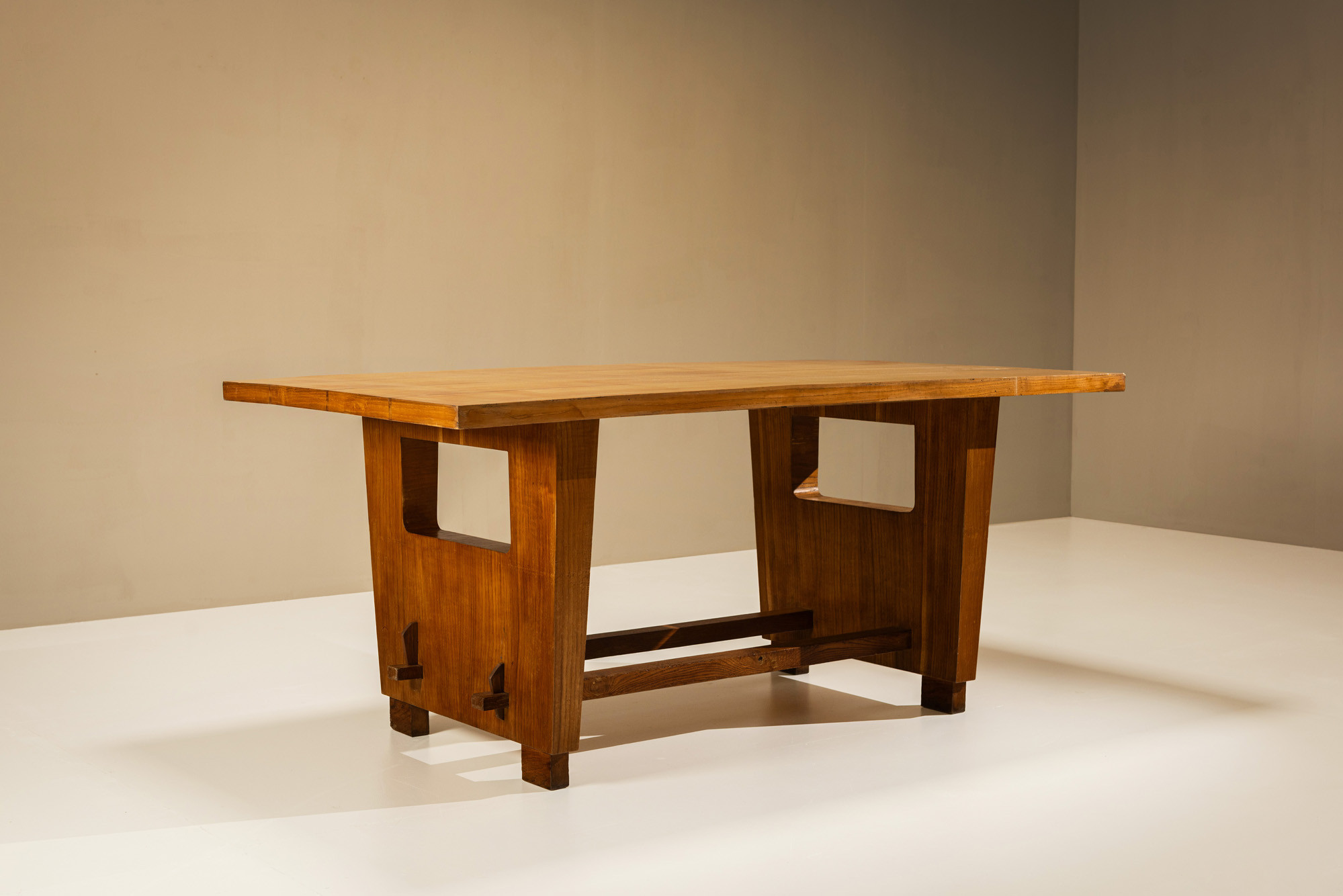
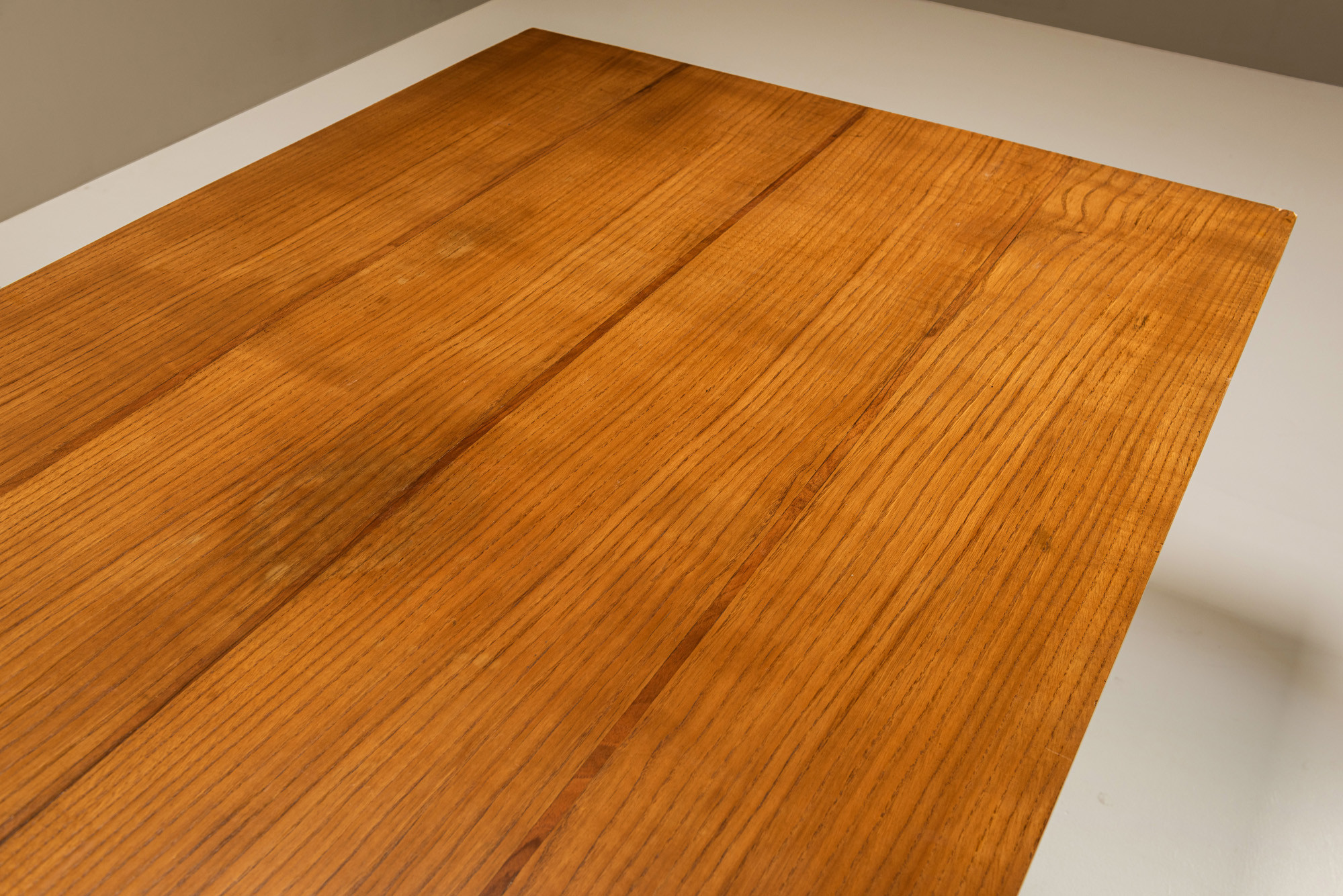
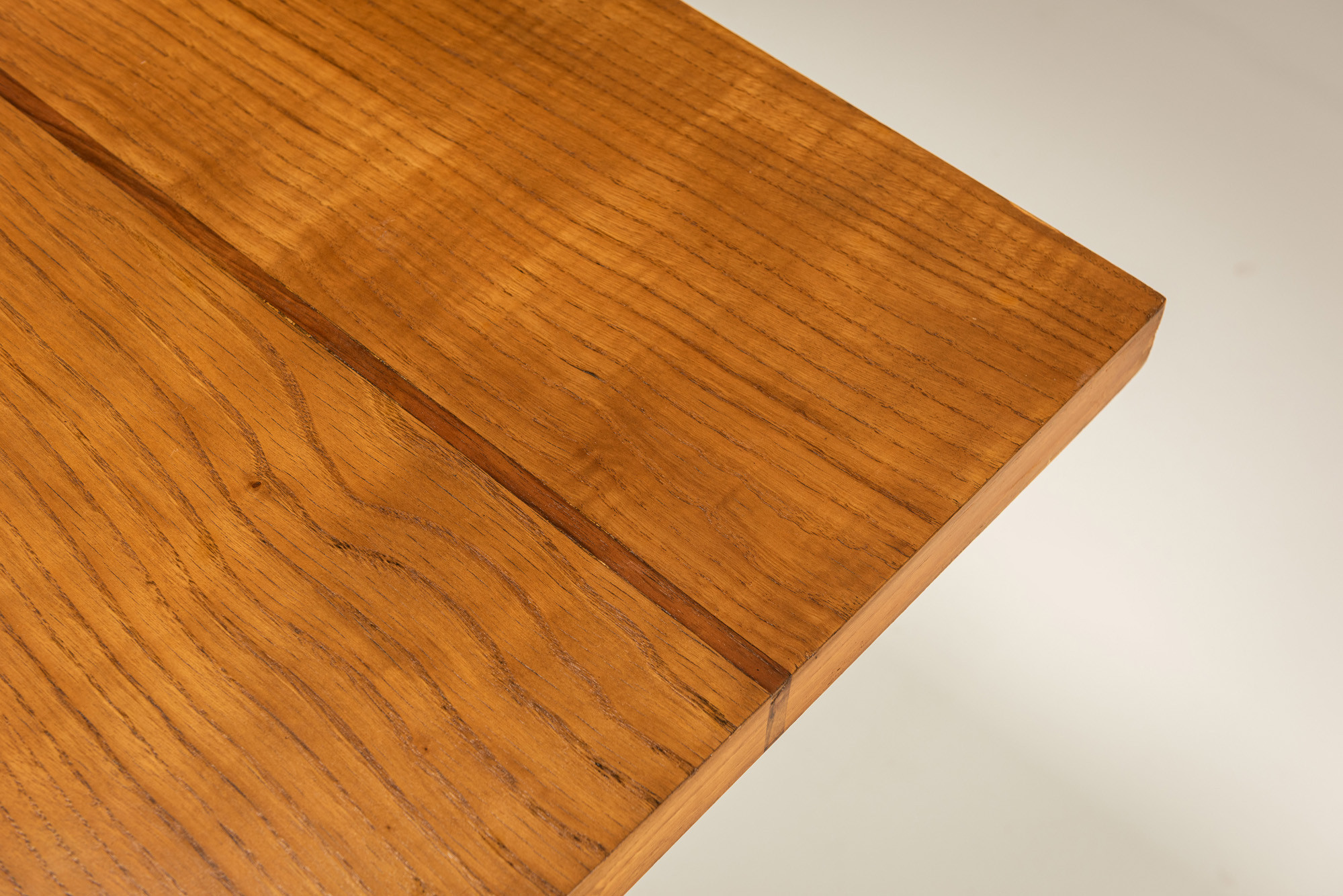
The table is organised around a broad rectangular top that projects beyond the supports on all sides. In the photographs the surface is formed from several long boards running lengthwise, so the grain reads in parallel bands across the full span rather than as one continuous sheet. This gives the top a gently varied surface, with darker seams and changes in tone marking the joins between boards. The edge remains comparatively thin in relation to the mass below, and that overhang creates a clear shadow line around the base when the table is seen from standing height or in three-quarter view.
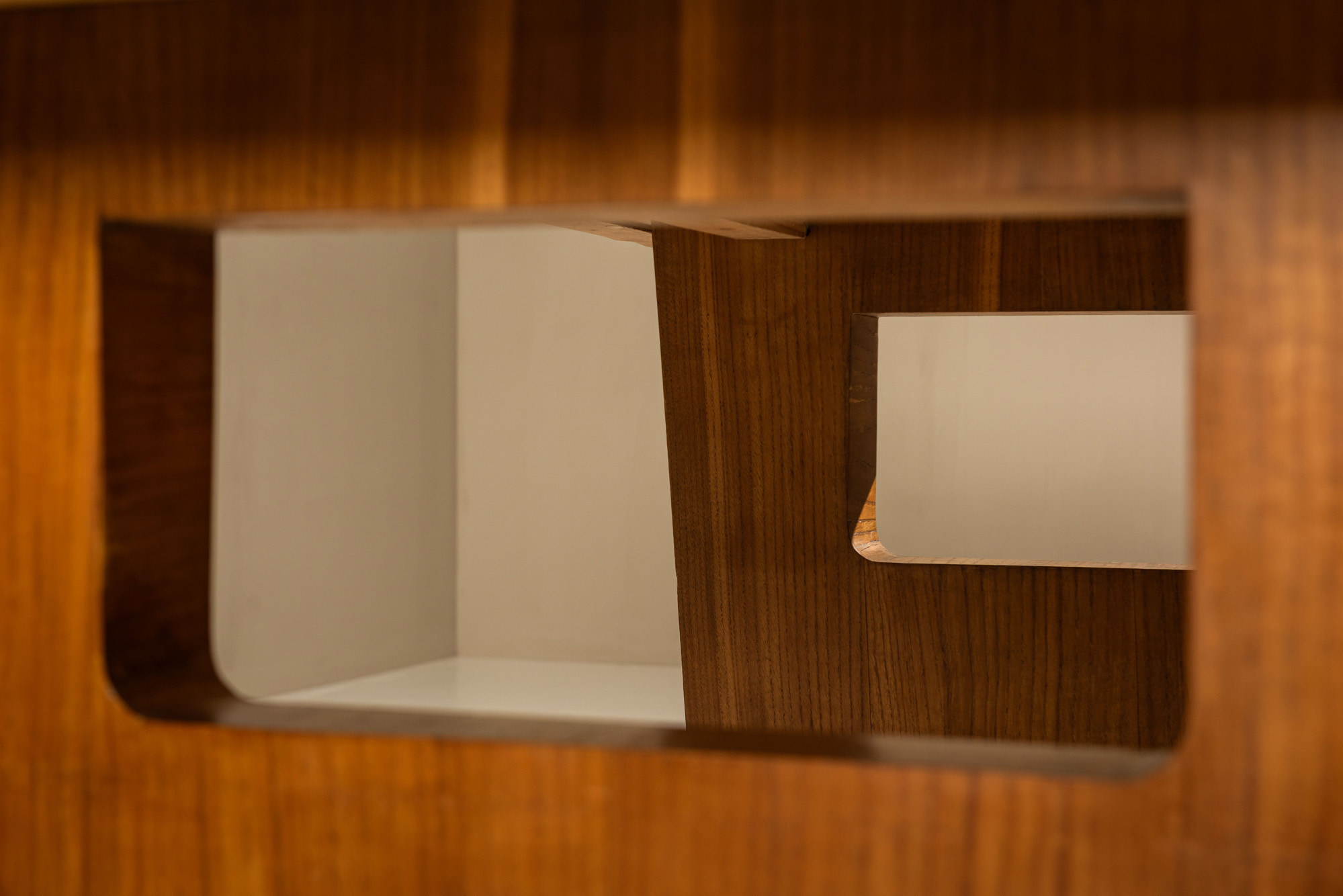
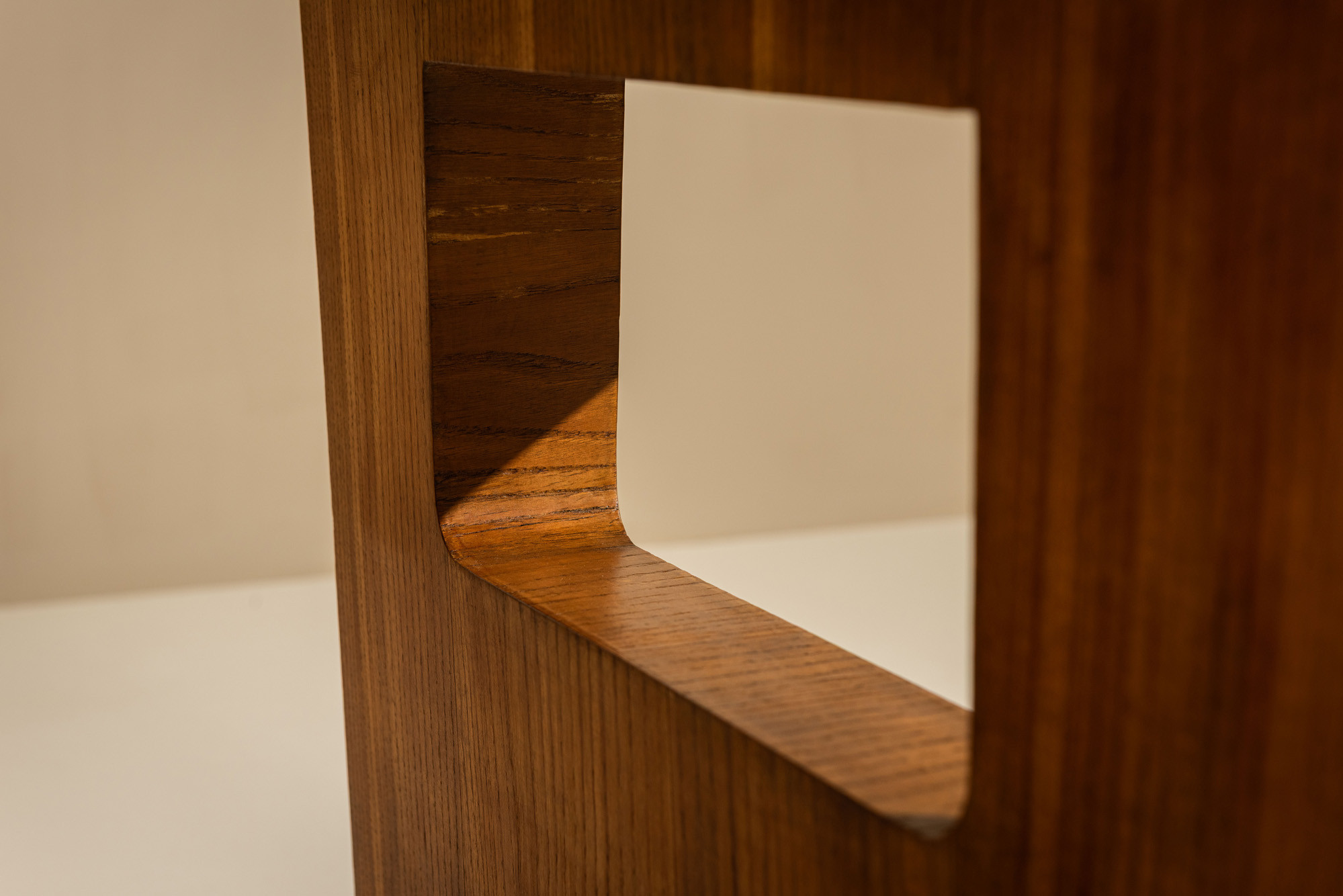
Below the top, the supporting structure is reduced to two slab-like end panels rather than four separate legs. Each support broadens towards the floor and is pierced near the upper section by a rounded rectangular opening. That cut-out alters the reading of the base from different angles: from a distance the ends appear solid and architectural, but closer views show light passing through the openings, which prevents the understructure from becoming too dense. The rounded inner corners of these apertures soften the otherwise straight-sided profile and make the thickness of the timber easier to read.
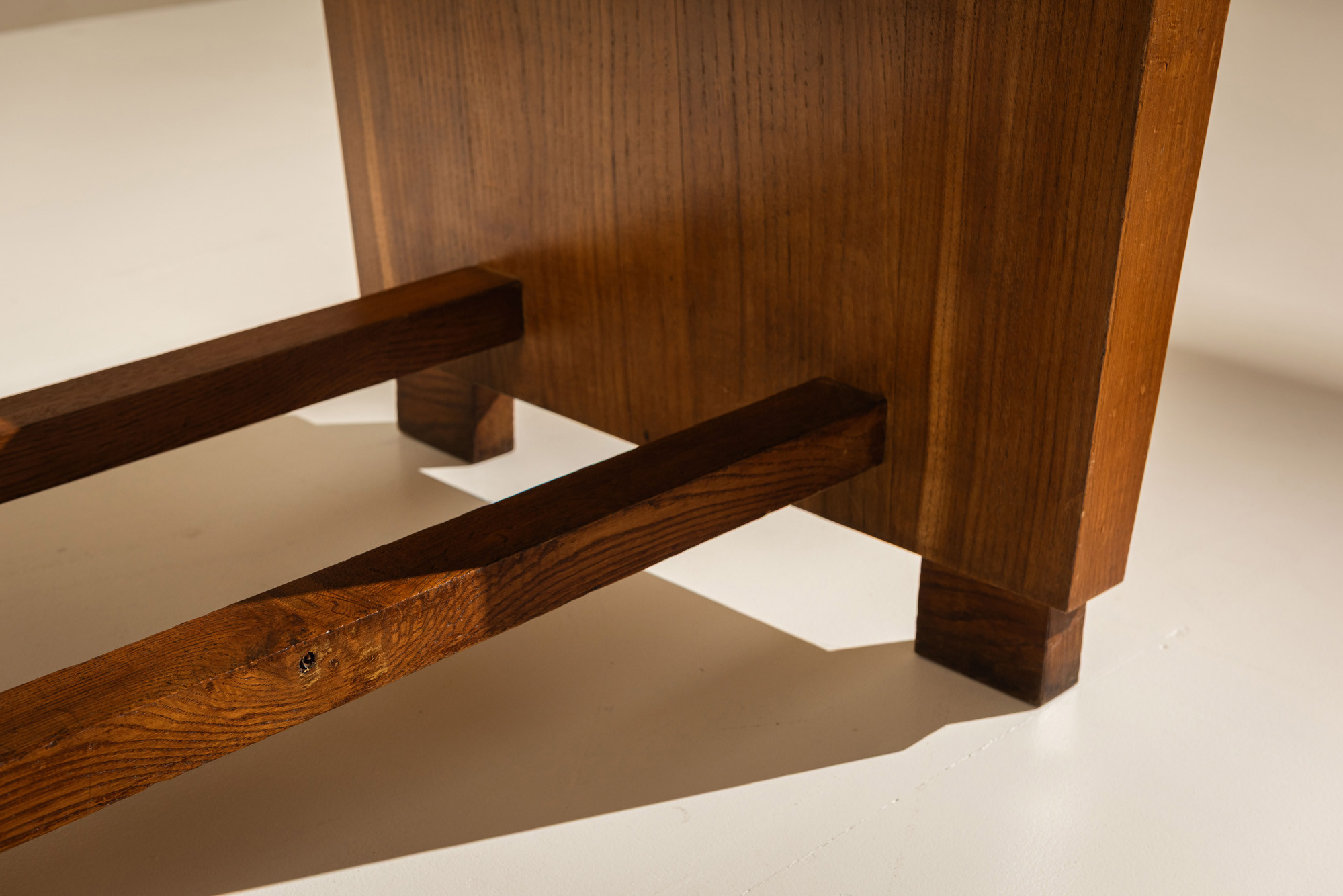
The relation between the end supports and the connecting members is one of the table's more active details. Two darker horizontal stretchers run low between the slabs, set well beneath the top and held clear of the floor by short block feet. This places most of the visual weight in a horizontal band near the base, leaving an open central void above it. The underside photographs also show a longitudinal support beneath the top, aligning the upper surface with the lower framework. Together these elements make the construction legible: broad planes at the ends, long rails between them, and a top that spans over the whole arrangement.
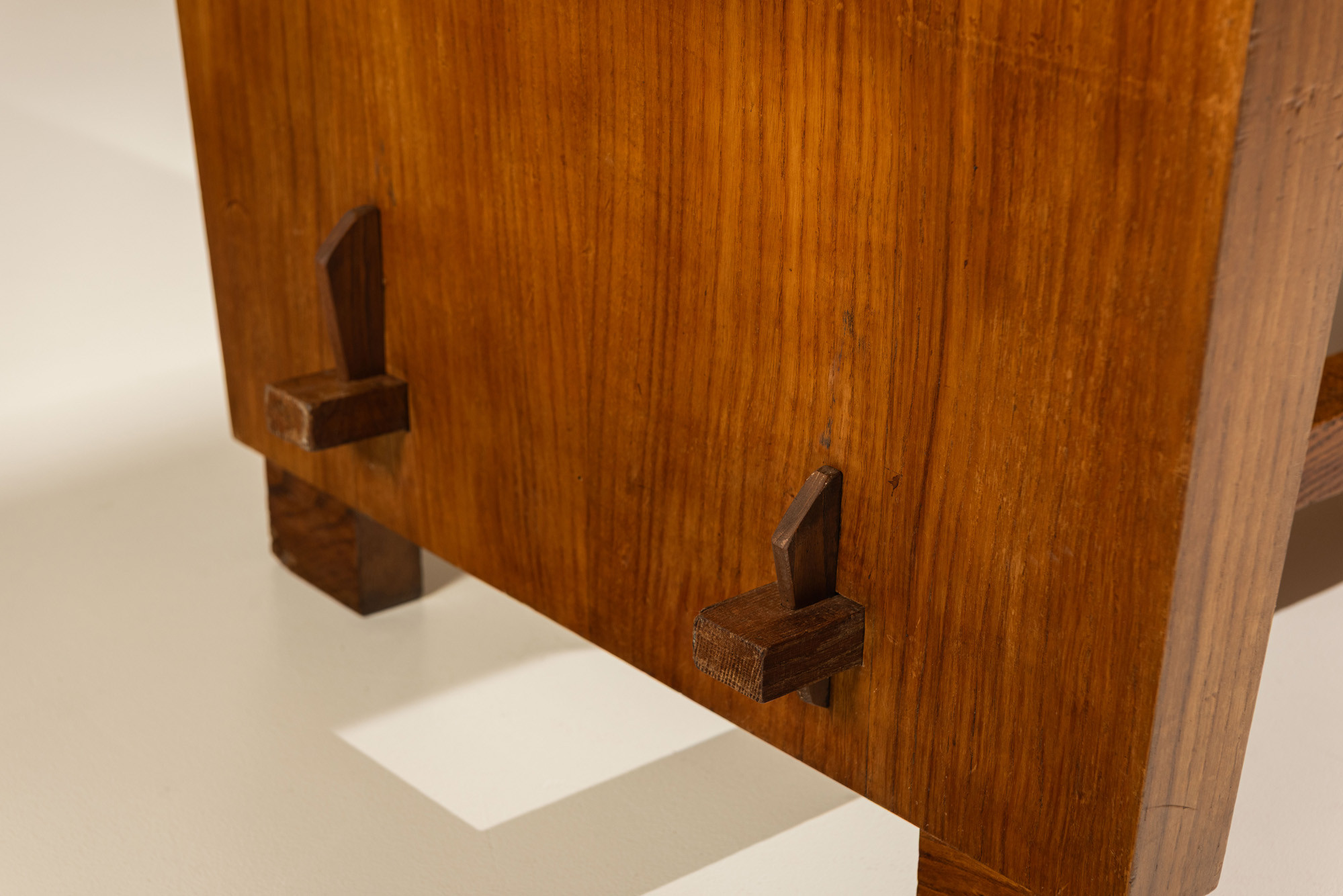
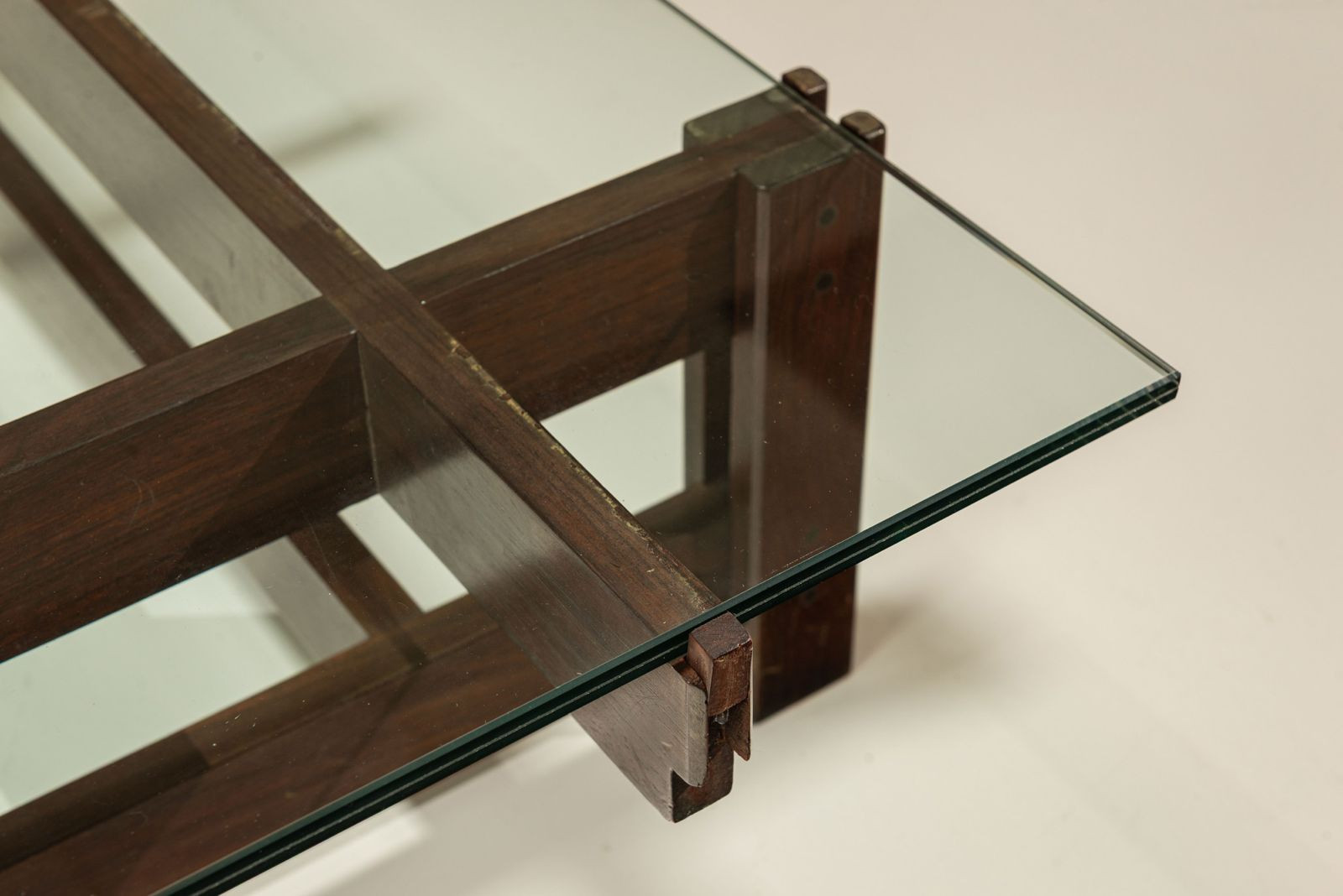
Small projecting wooden details near the lower outer face of one support add another layer of articulation. These peg- or wedge-like elements stand proud of the flat panel and draw attention to the joinery instead of leaving the side completely plain. Their darker tone echoes the lower stretchers, creating a visual link between the side details and the base rails. Close views of the surface show that the table's appearance depends as much on its timber pattern as on its silhouette: the top carries long, dark grain lines and tonal shifts from board to board, and these continue the table's emphasis on linear construction from the surface down into the supports.
Condition
Vintage condition with visible age and use. The photographs show surface wear and patina as part of the rustic and vintage style of the table. The table top is slightly bend.

Table arrived very well crated, seller made process seamless.
I just received the absolutely gorgeous credenza yesterday. It was professionally packaged and delivered just as promised. I cannot more highly recommend AtKris Studio.
Excellent responsiveness, and with wonderful curatorial chops!