€
2950
€
2950
€
Available
Available
Available
Dimensions
Height: 43 x Width: 80 x Depth: 80 cm - Height: 16 7/8 x Width: 31 1/2 x Depth: 31 1/2 inches
Worldwide delivery
These transport prices are an indication and might change due to circumstances.
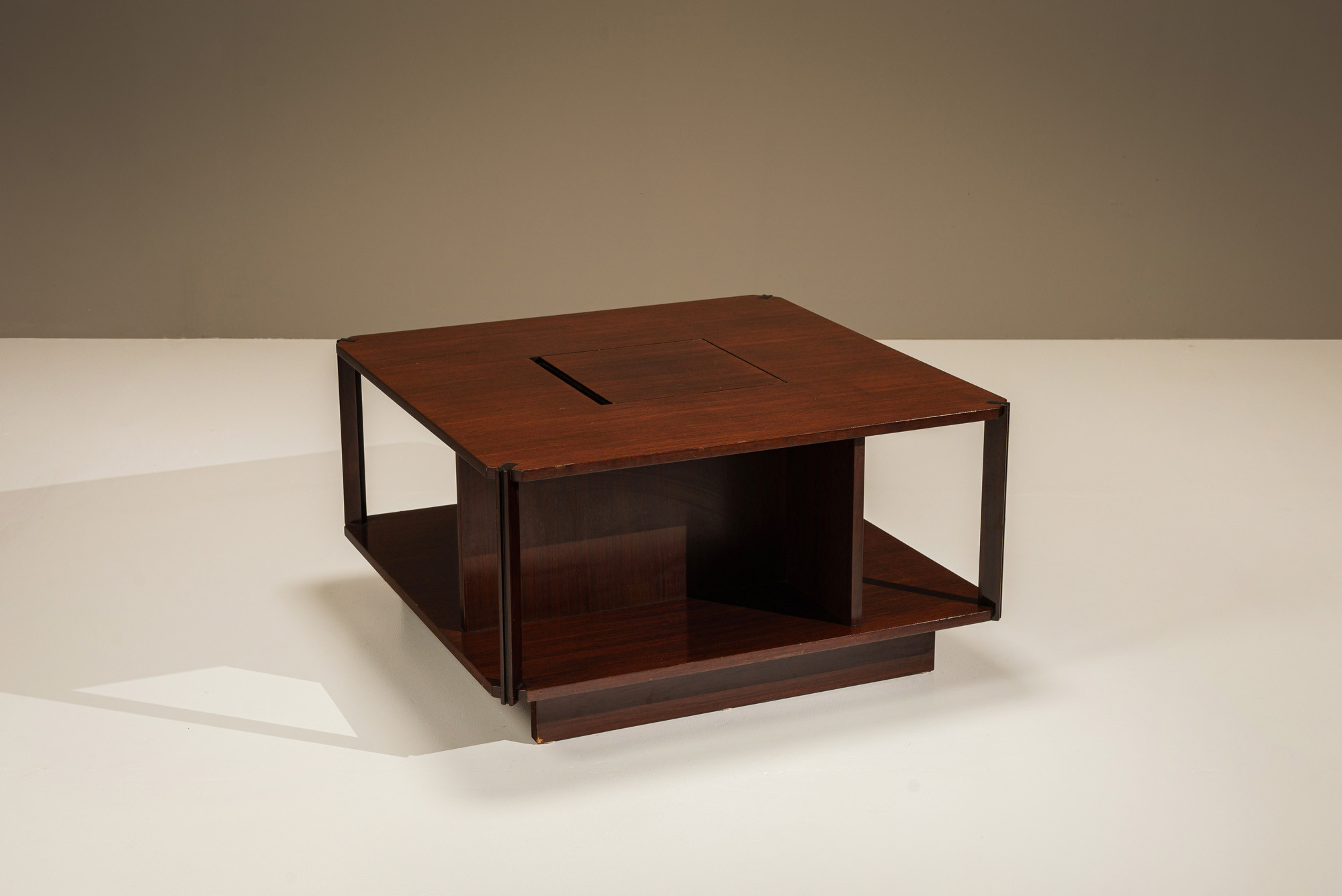
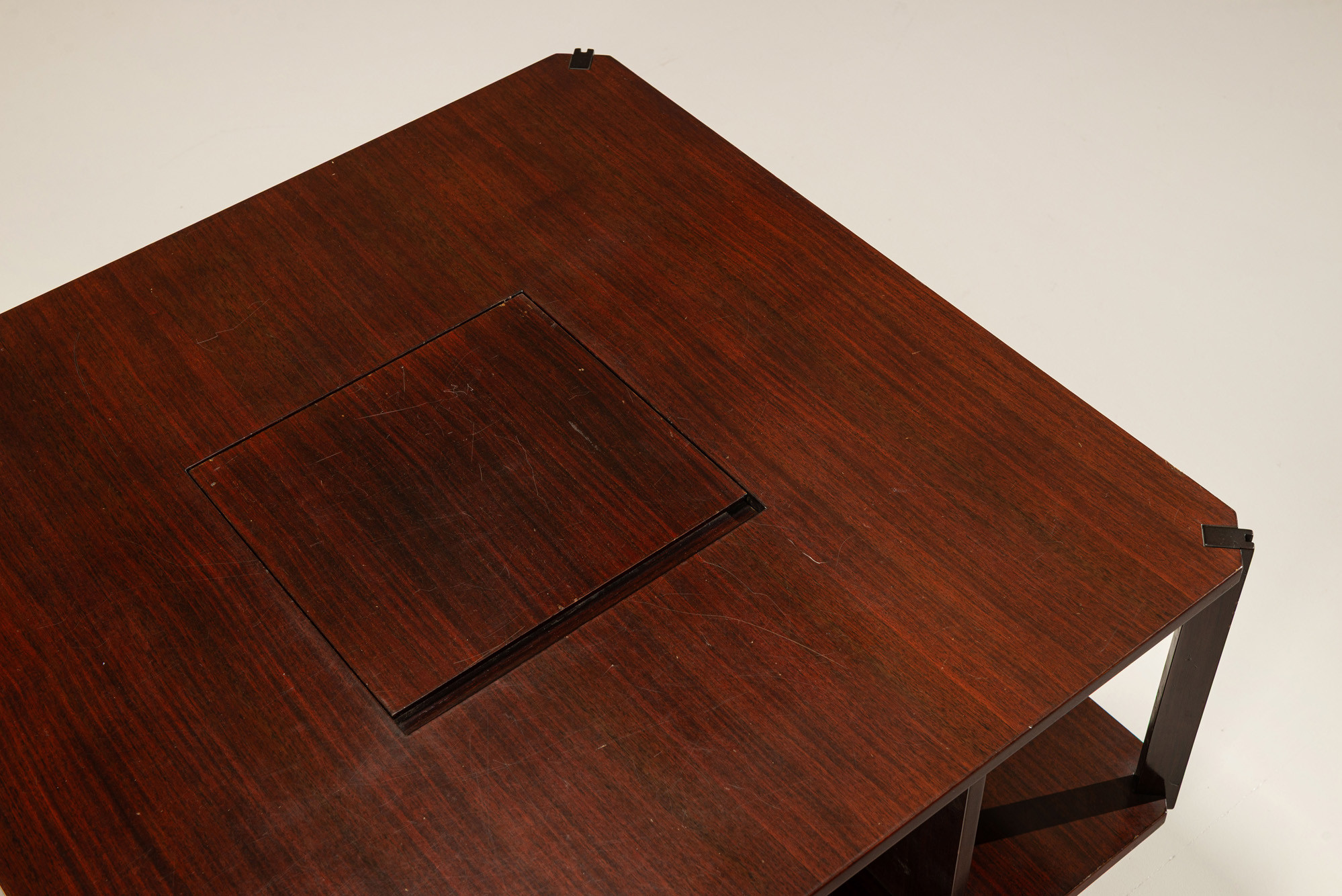
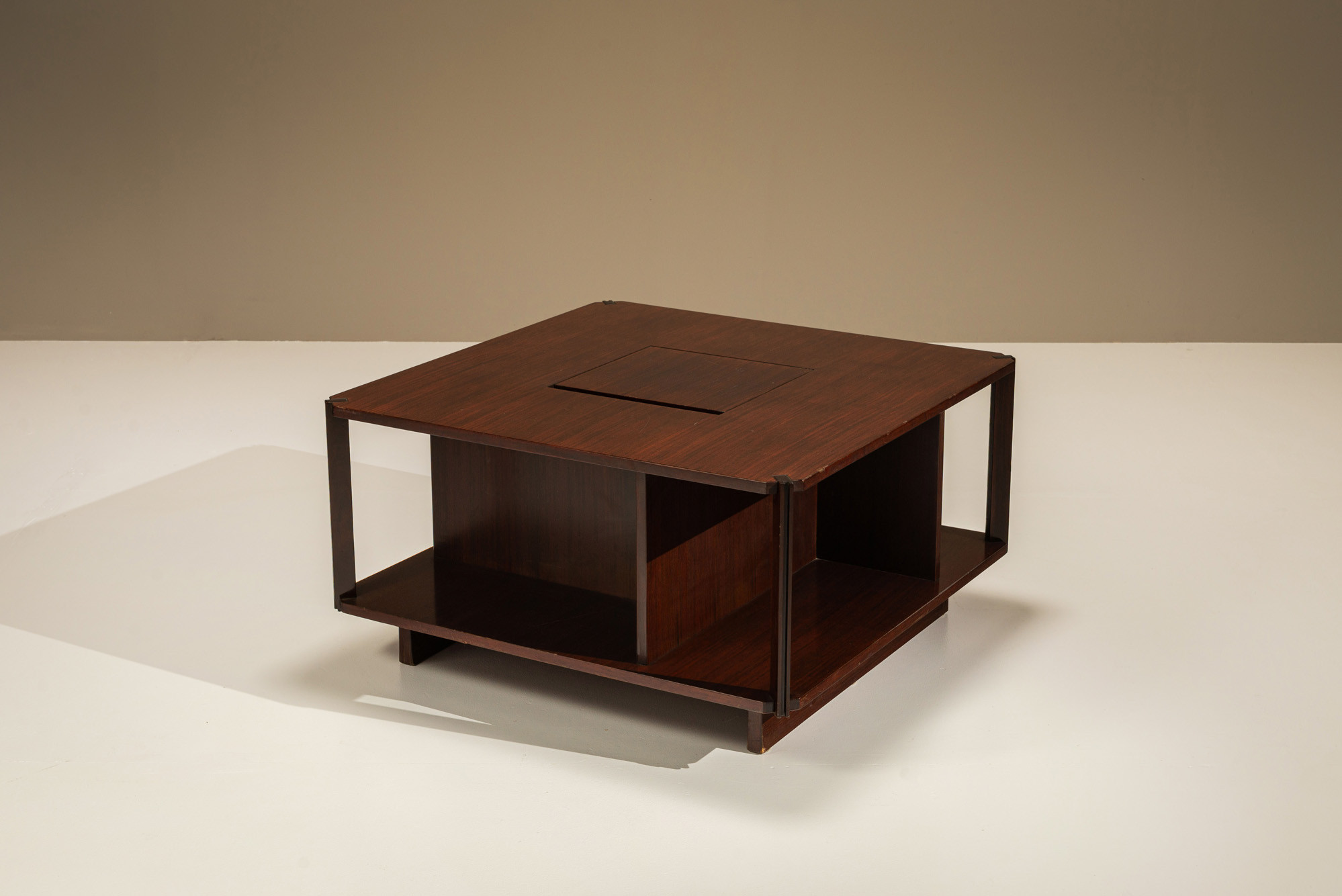
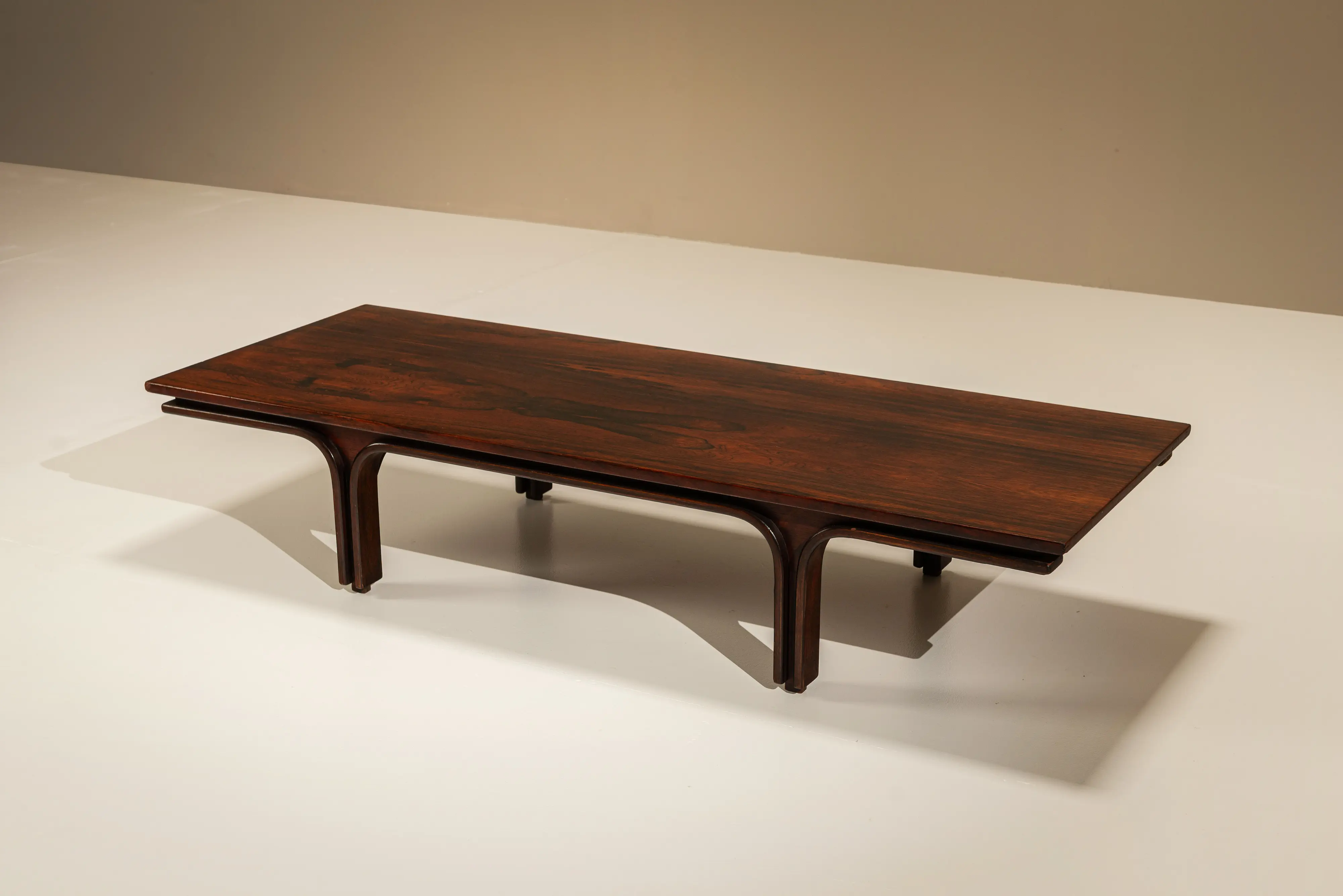
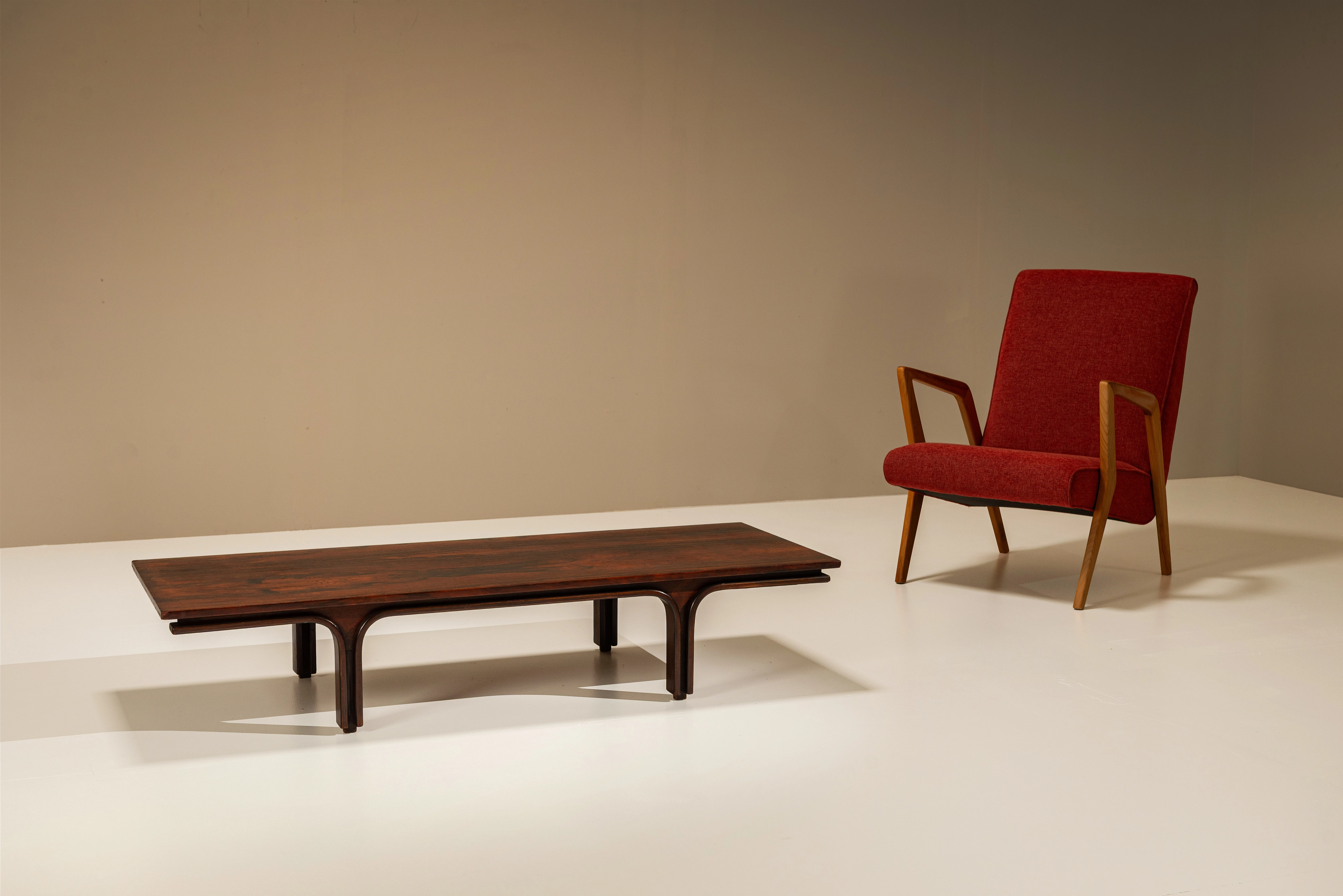
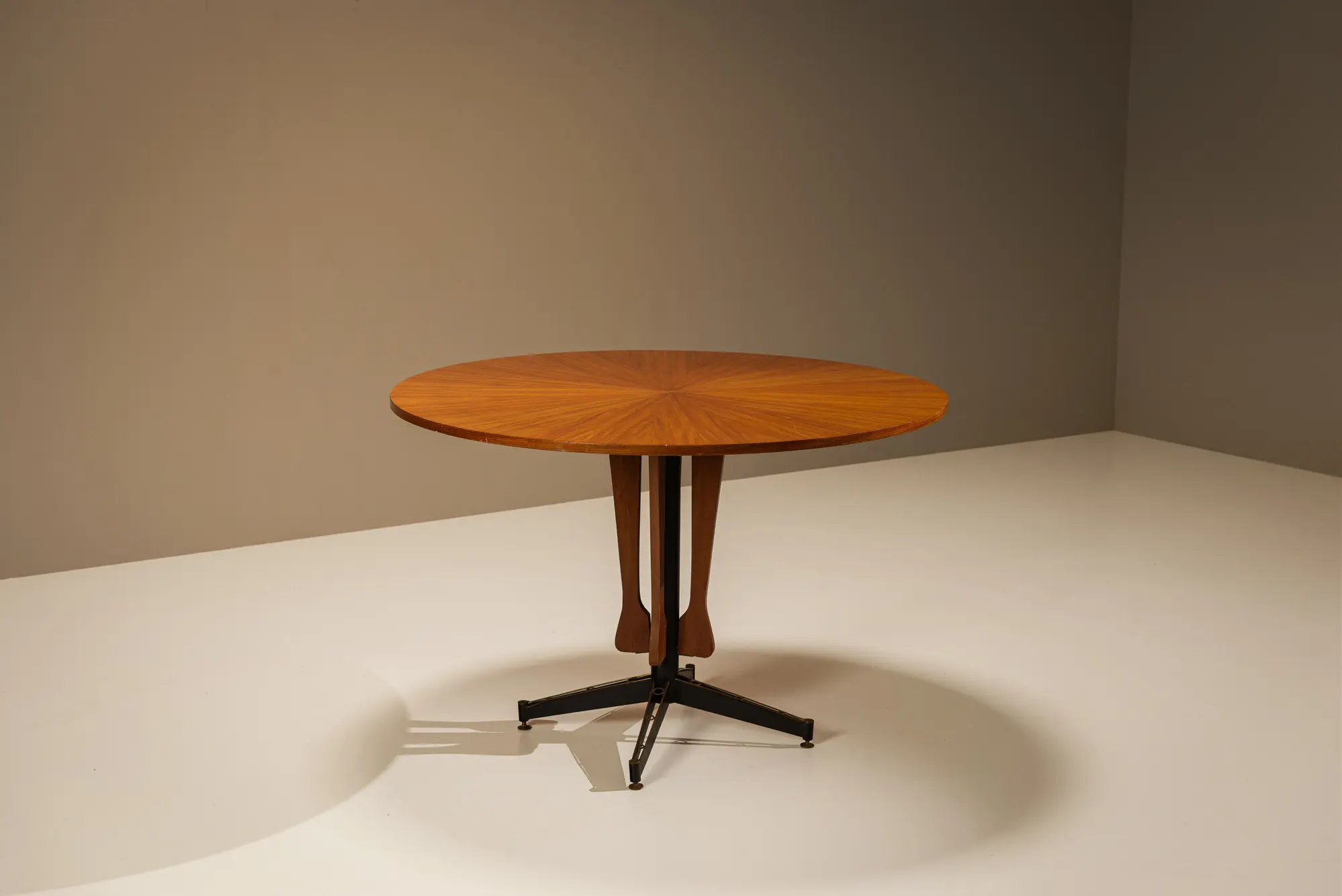
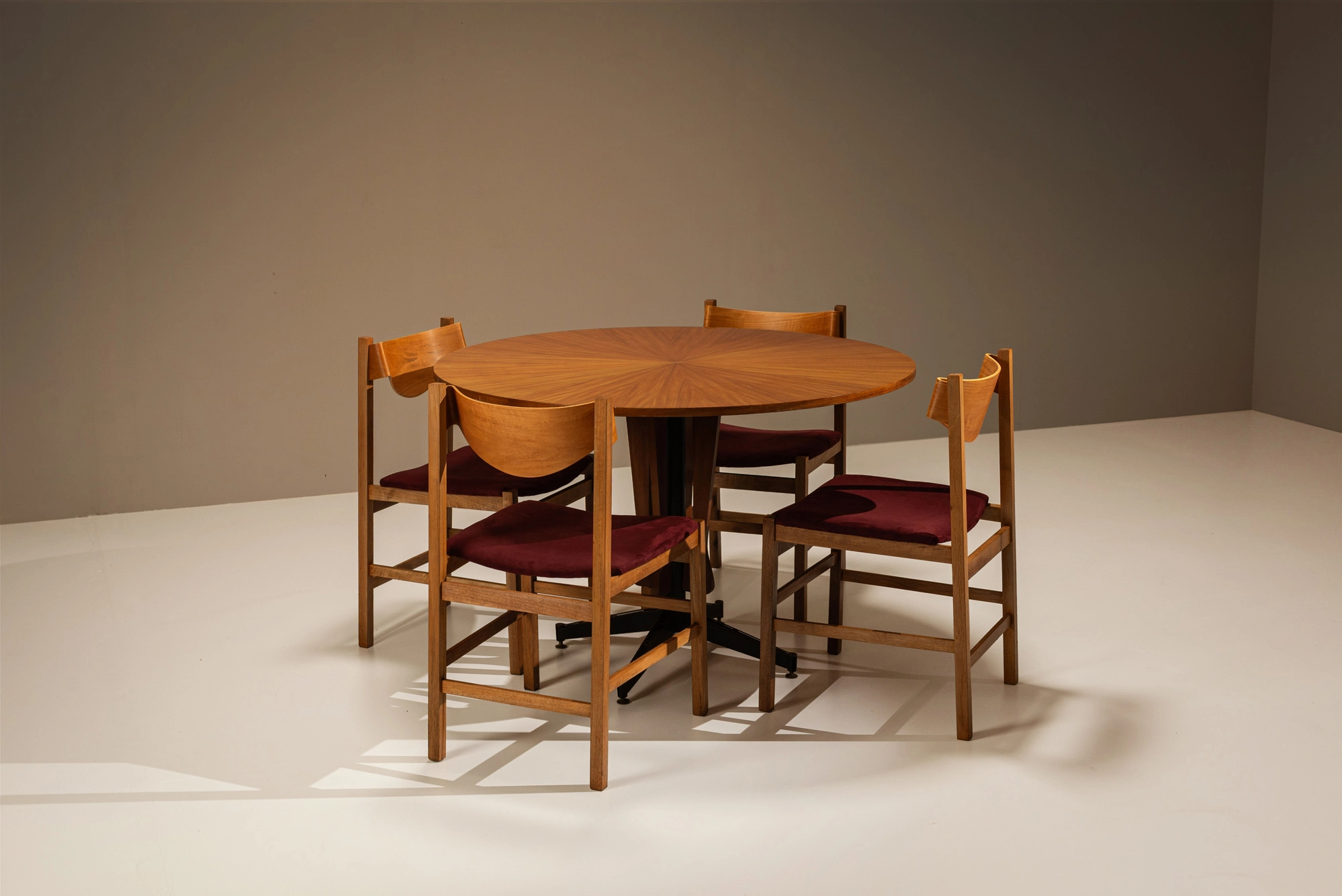
Gianfranco Frattini worked across furniture and interiors in post-war Italy, bringing an architectural clarity to many of his tables and storage pieces. This square coffee table, attributed to Frattini and dated there to the 1960s, is built as a low open volume with a recessed base and a compartment set into the top.
Design
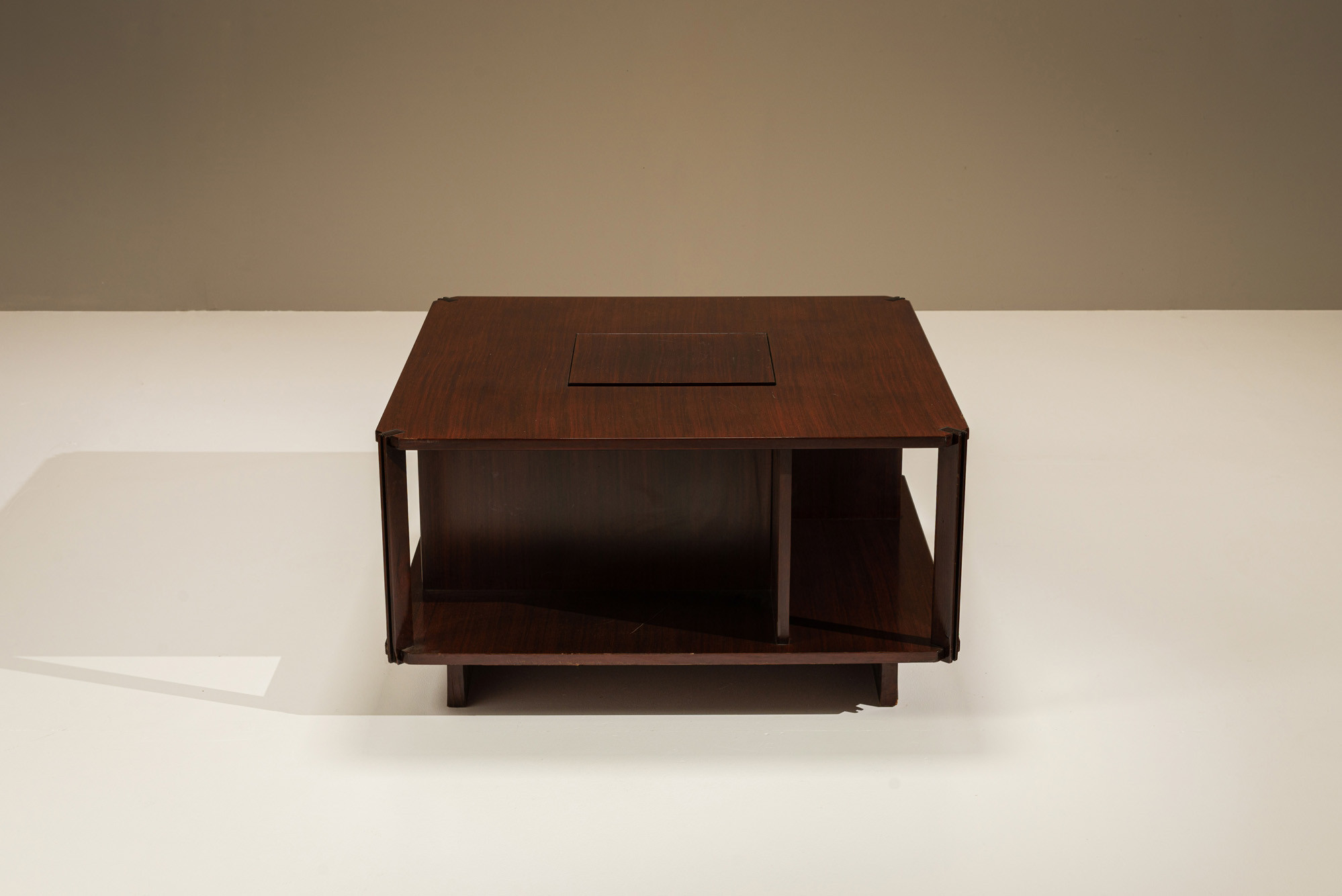
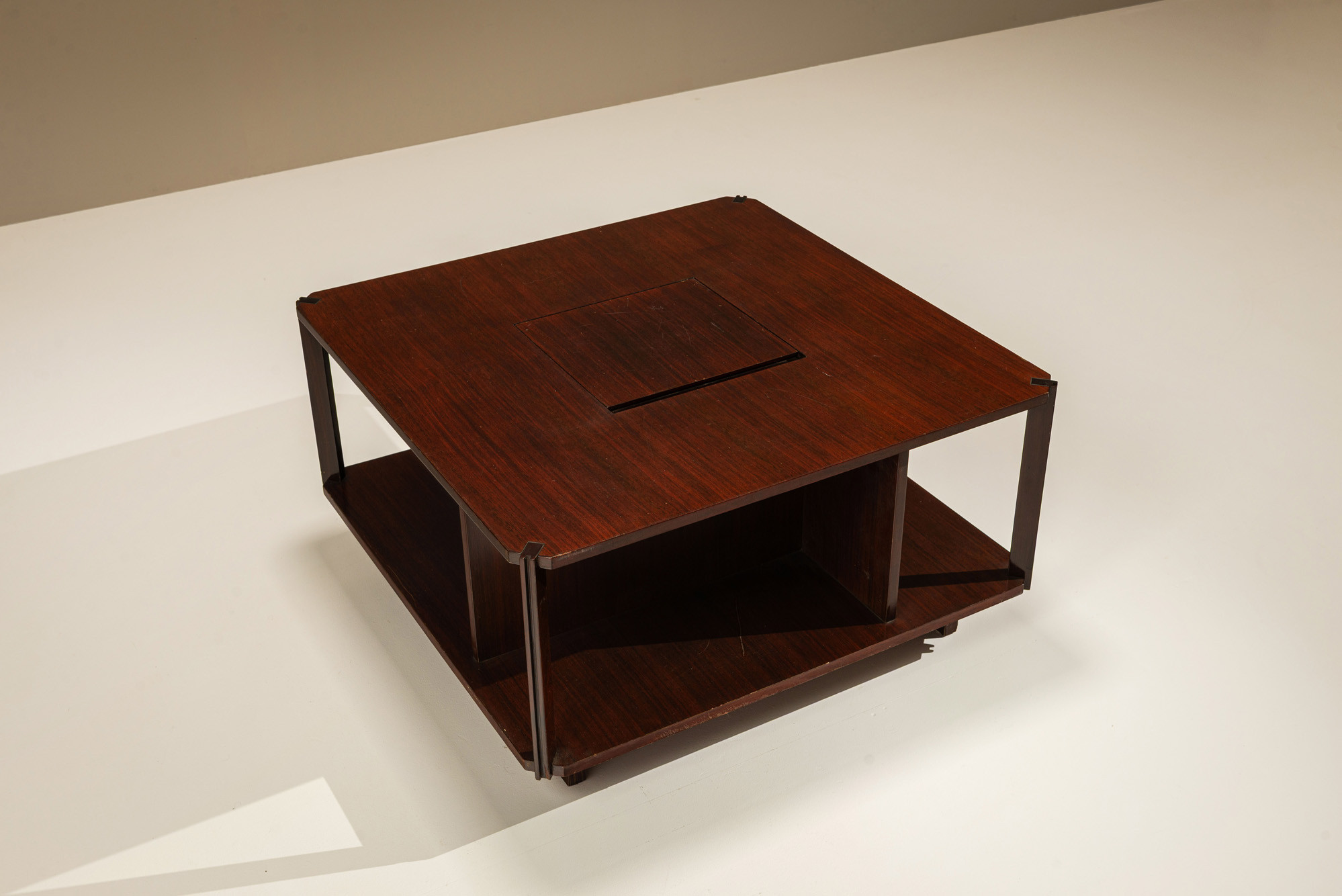
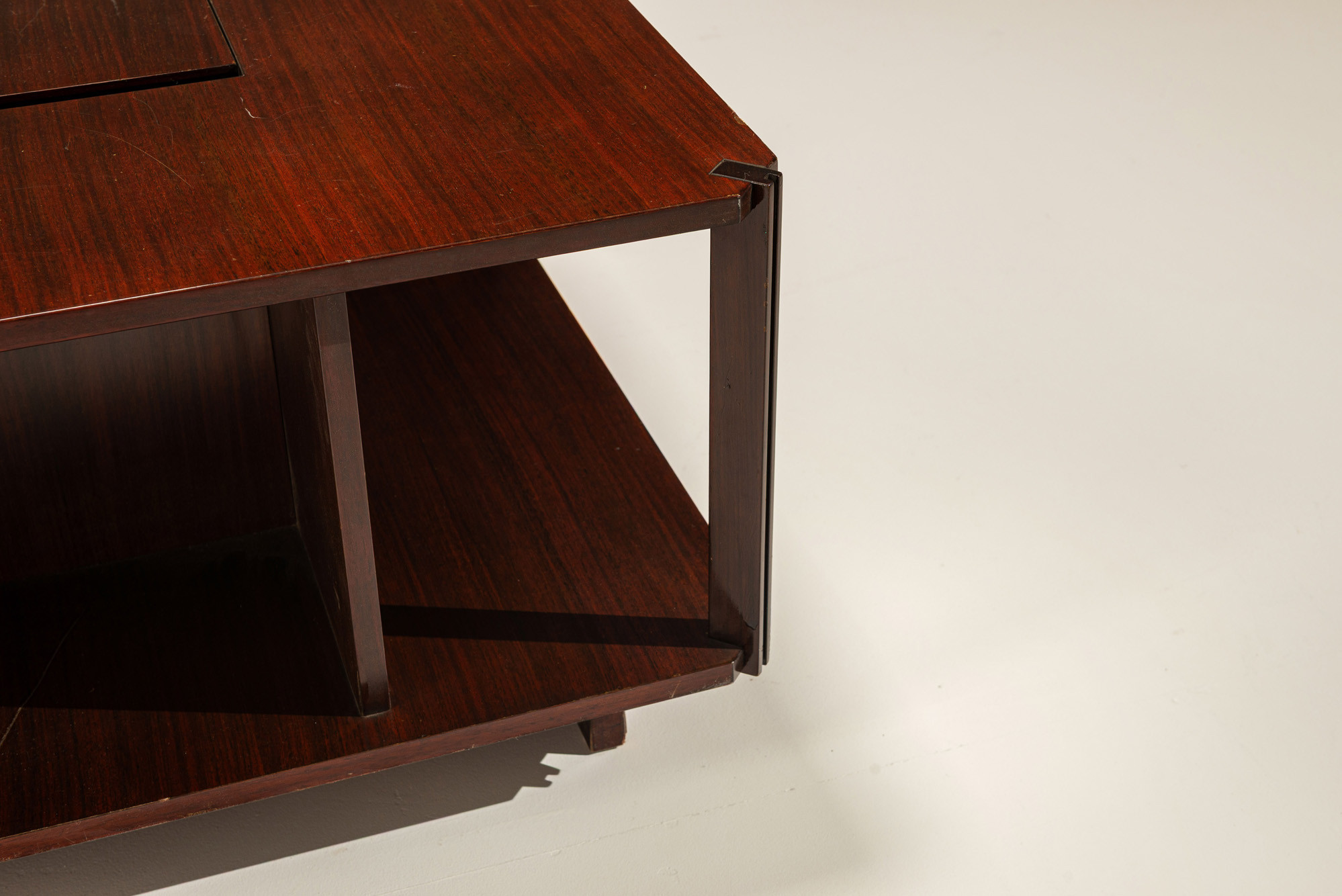
The table is organised around a broad square top carried above a second, slightly smaller square shelf, so the piece reads as two horizontal planes separated by open space. That spacing keeps the form low and dense without turning it into a closed box. From above, the top presents a nearly uninterrupted field of dark linear grain, and the square outline is kept clear by the thin overhang beyond the lower level. Seen from lower angles, that upper plane projects beyond the supports and casts a narrow shadow line around the body, which sharpens the profile of the piece.
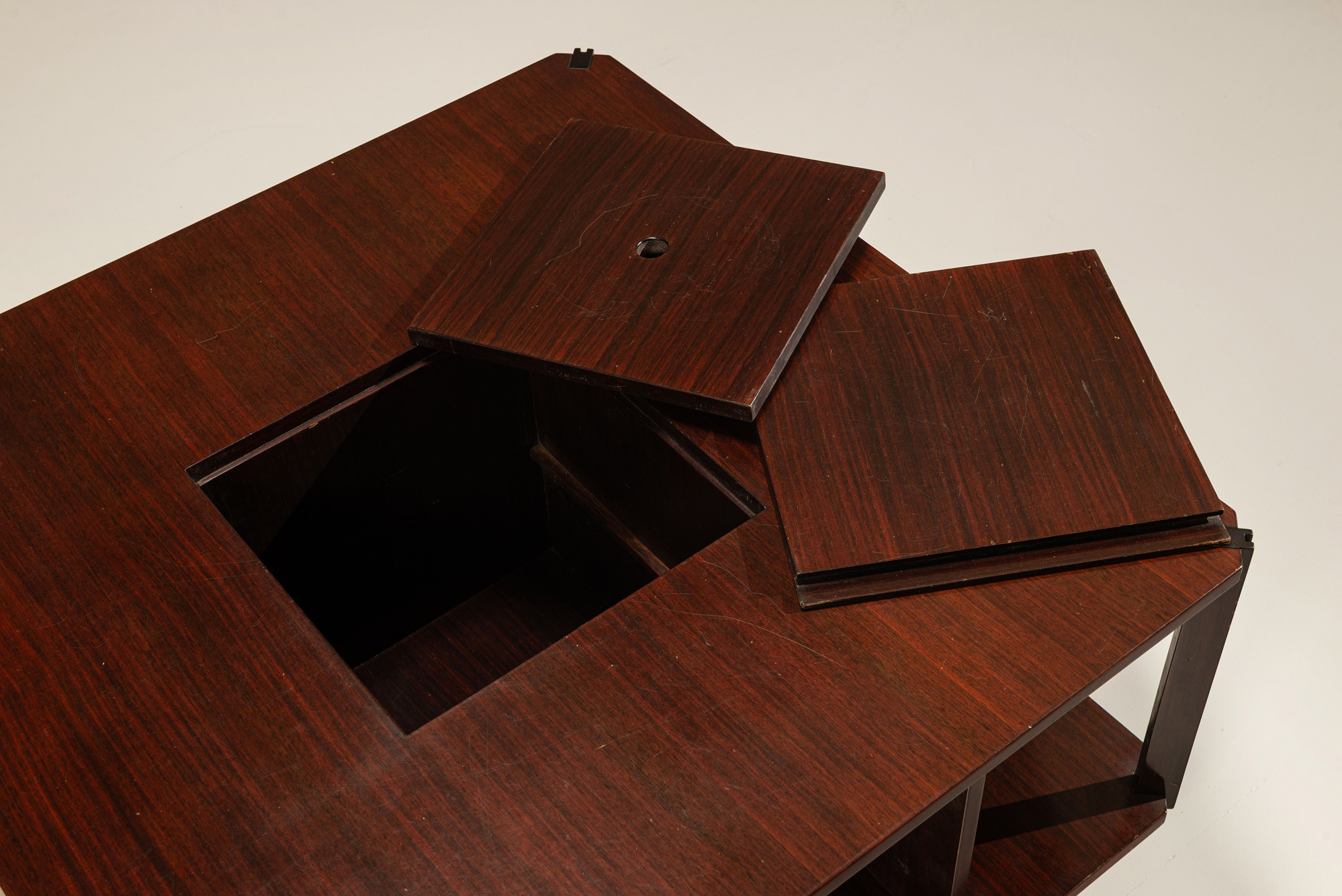
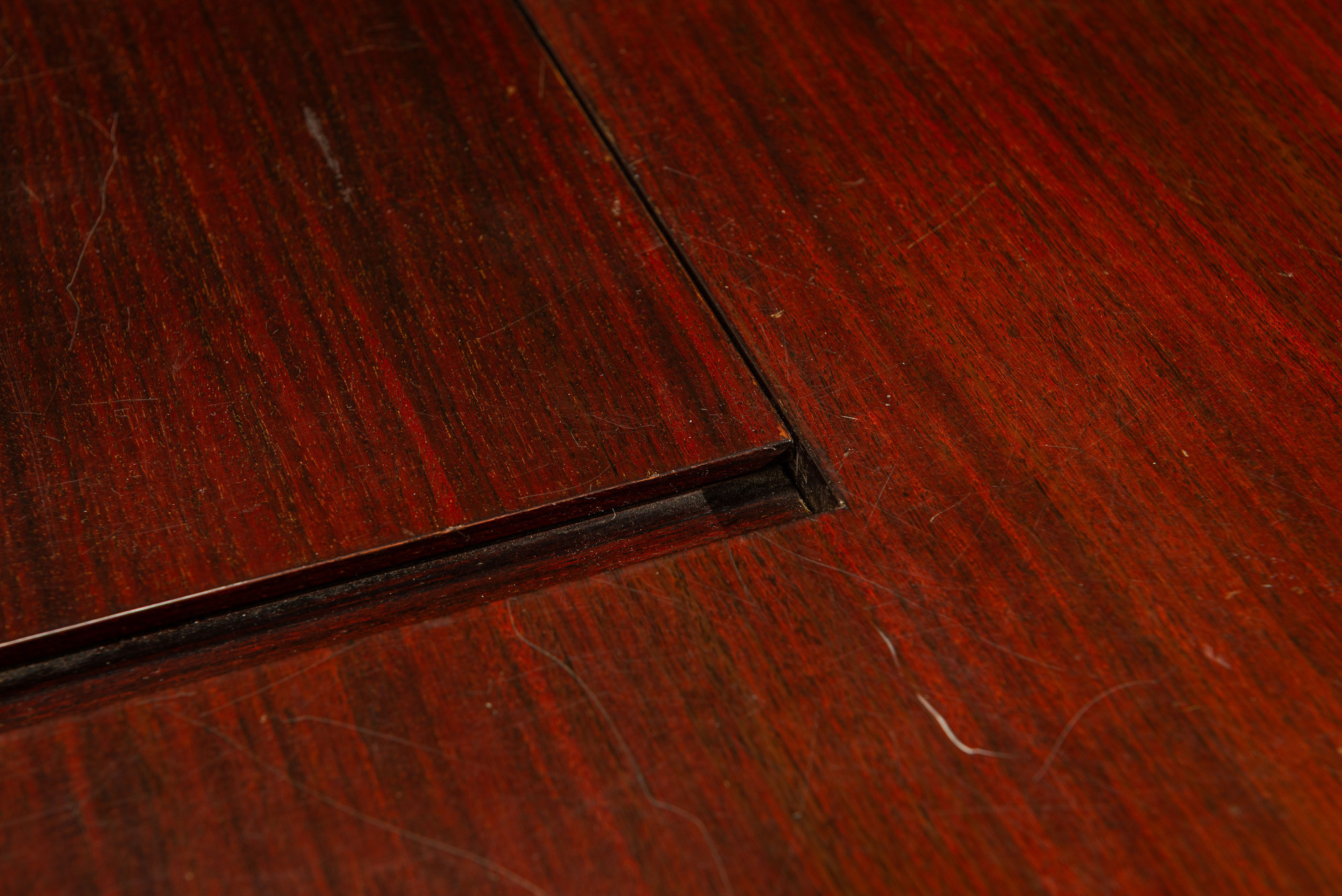
At the centre of the top, the square compartment introduces the table's most worked detail. Two sliding panels meet within a recessed opening, rather than using a single lift-out lid, so the surface can be opened in stages and still retain part of its top plane. In the photographs one panel has been removed, showing a circular finger hole and the thickness of the board, together with the dark void of the compartment below. When closed, the narrow perimeter joint and central meeting line remain visible, breaking the larger top into a measured arrangement of outer square and inner square rather than leaving it as one continuous slab.
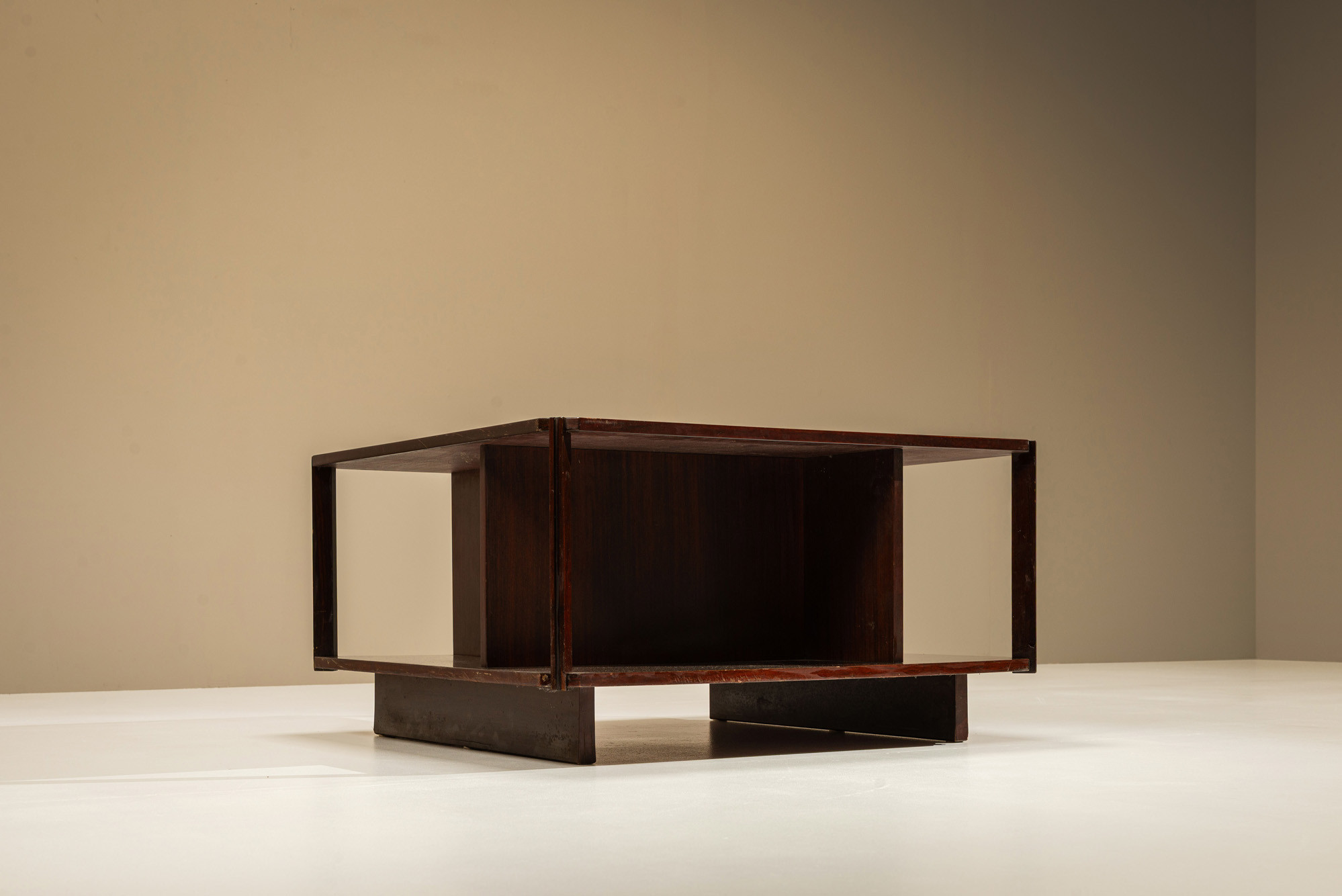
Beneath the top, the lower structure is left open on all sides and divided by vertical partitions set inward from the perimeter. These panels create a central compartment and flanking open bays, giving the table usable storage without filling the whole volume. The arrangement is easiest to read in three-quarter view, where the internal partitions stand behind the outer corner uprights and produce a sequence of parallel verticals through the body. This layered construction changes the table's appearance as it is approached: from one angle the centre reads as a solid block, and from another the side bays open up and make the piece appear lighter.
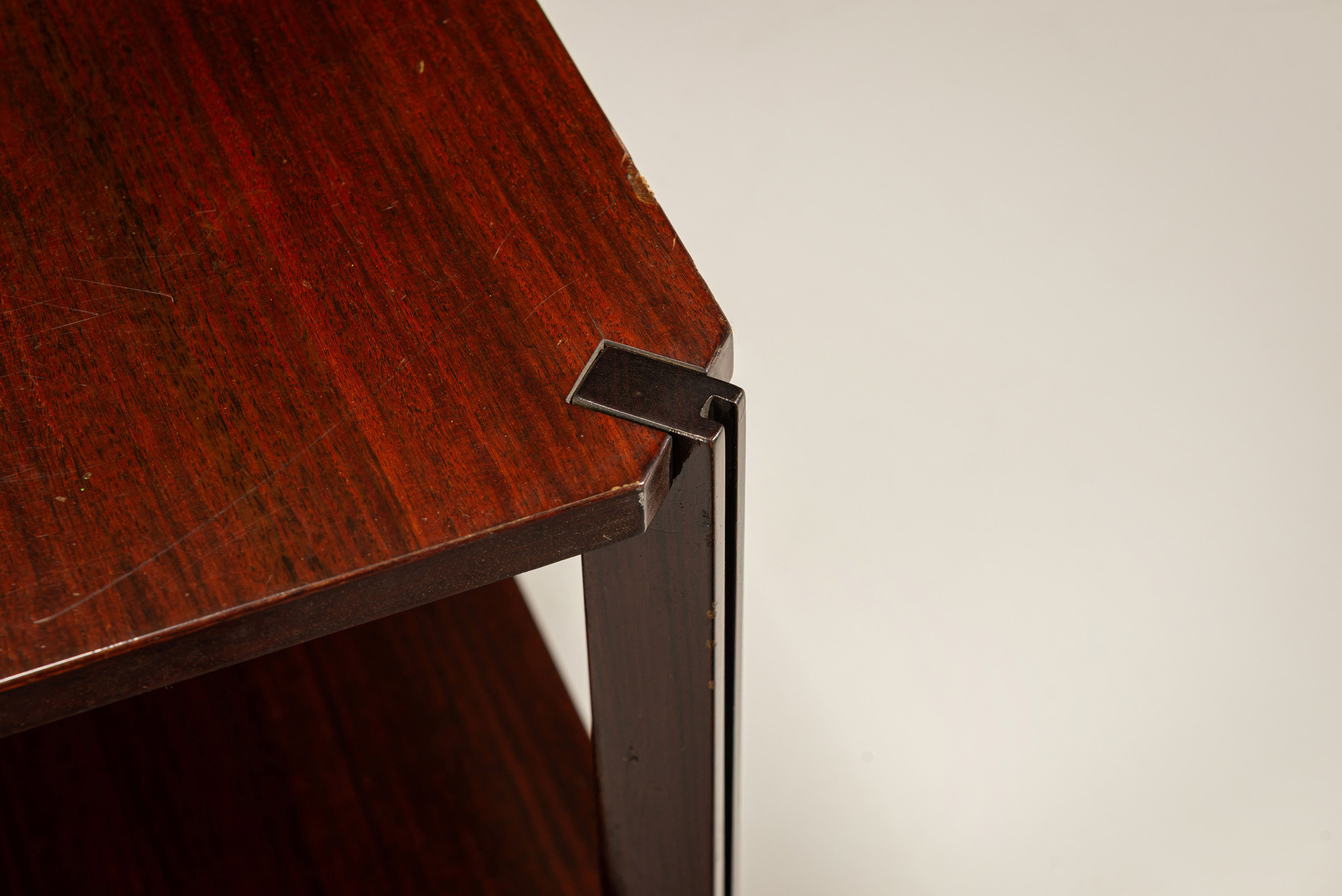
The outer corners are defined by dark vertical framing elements that continue past the junction of top and lower shelf and finish with small projecting tabs at the upper corners. Those details make the corners read as separate structural lines rather than simple mitred edges. Below, the whole body is raised on a recessed plinth formed by two broad supports, set well in from the perimeter. That setback leaves the lower shelf apparently floating above the floor and reduces the visual footprint of the table. In side view, the combination of projecting top, open middle and withdrawn base gives the piece a stepped profile, moving from broad square above to narrower support below rather than descending in one solid mass.
Condition
Vintage condition with visible wear from age and use. The photographs show scratches and surface marks across the top, wear and small losses at parts of the edges and corners, rubbing to the finish, and minor knocks around the lower base. This piece will be checked by our restoration department before shipping.

I just received the absolutely gorgeous credenza yesterday. It was professionally packaged and delivered just as promised. I cannot more highly recommend AtKris Studio.
Excellent responsiveness, and with wonderful curatorial chops!
This bar is amazing. Beautiful and exactly as described. A custom crate (which was a work of art itself) was built in order to ship the piece to the U.S. The bar arrived in perfect condition without a scratch. I will say that take the crate apart was not easy and was a two-person job. But worth it in the end